The Three Decades Deadlock: Does The ASEAN Nuclear-Weapon-Free Zone Protocol Still Matter?

The Three Decades Deadlock: Does The ASEAN Nuclear-Weapon-Free Zone Protocol Still Matter?

Vol. VII / No. 14 | September 2026

Authors:

Rangga Aria Wijaya-Undergraduate Student, Department of International Relations, Universitas Indonesia


Summary

Since 1995, ASEAN has already had its own nuclear-weapon-free zone, named the SEANWFZ (Southeast Asia Nuclear Weapon Free Zone). Yet, the protocol that was supposed to bind the nuclear-weapon states was left in a deadlock. The concern surrounding the geographical coverage and the scope of the negative security assurance (NSA) has been the main reason for this prolonged delay. Three decades later, ASEAN remains committed in pursuing the protocol. This commentary then questions the relevance of the protocol for ASEAN. It finds that the protocol still matters for two reasons. First, the original mandate of SEANWFZ also includes managing external threats, and failure in one dimension will degrade the institution as a whole. Second, external threats are still looming and even growing, with the existence of AUKUS. But relevance is not the overall reason why ASEAN is still pursuing the protocol. The contemporary geopolitical situation, such as China’s nuclear policy and AUKUS, that provides the impetus for ASEAN to sustain the momentum toward it.

Keywords: ASEAN, AUKUS, China, nuclear weapon, SEANWFZ

Introduction

The Southeast Asian Nuclear-Weapon-Free Zone (SEANWFZ) was established in 1995 to prevent any of the ASEAN member states from owning nuclear weapons that were proliferating post the Cold War. The more important issue at that time was also to legally bind the five nuclear weapon states (NWS), which are the United States, Russia, the United Kingdom, France, and China. Therefore, SEANWFZ was also accompanied by an additional protocol. The plan was for the five NWS to sign the protocol, which would prohibit them from using or threatening to use nuclear weapons within the zone, and also give ASEAN the NSA.

However, SEANWFZ remains the only nuclear-weapon-free zone (NWFZ) that does not have a single signature from the NWS. The two main concerns from NWS are (1) the expansive geographical coverage and (2) the extensive scope of the NSA. SEANWFZ has wider geographical coverage compared to the other NWFZs, which include the exclusive economic zones and continental shelves of its state parties. The NSA requested by SEANWFZ also uses the words “within the zone.” This means that not only can the NWS not use them against the zone’s states, but they also cannot use them against any states from inside the zone. A series of negotiations and consultations to solve these issues have been done for years with no significant outcome. This has resulted in a deadlock that’s been going on for three decades. Until recently, SEANWFZ showed signs of life, as in July 2025 ASEAN finally accommodated China by letting it be the first to sign the protocol. Not long after, in May 2026, the 48th ASEAN Summit also reaffirmed ASEAN’s commitment to keep pursuing the realisation of the protocol.

This decision has raised a question that will be the main discussion in this commentary: why is ASEAN still trying to pursue the SEANWFZ Protocol despite its three decades of deadlock? As for the ongoing delay, doubting its relevance is to be expected, especially since ASEAN is doing just fine without it—or at least that’s how it seems at first glance. For that purpose, this commentary will reassess the relevance of the SEANWFZ Protocol to understand why it still matters for ASEAN, particularly by considering recent developments in the region.


Institutional Balancing: The Fundamental Purpose of SEANWFZ

In reassessing its relevance, understanding the institution’s original purpose is a necessary step. There are, of course, many perspectives that could explain why. But this commentary borrows an argument from Kai He’s (2007) paper, which explains that states use institutions as a balance-of-power instrument, known as institutional balancing. He notes that states will use institutions to balance internal challenges as well as external threats. Therefore, based on this theory, the relevance of an institution will be seen in how it serves both of these for member states.

For Southeast Asia, the internal challenge back during the Cold War was the fear of nuclear proliferation that could spread inside the region, whether self-owned or deployed by the NWS. But only by the end of the Cold War did ASEAN manage to create an institution specific to tackle this concern. Thus, the SEANWFZ Treaty itself was the internal balancing instrument, as it contains the binding agreement that no ASEAN members could possess nuclear weapons. But an external balancing instrument was also needed, as an external threat has also existed since the Cold War, which is the NWS itself. Therefore, that’s what the additional protocol was for.

Kai He also emphasizes that both dimensions work mutually influencing, which means weakness in one dimension will affect the other. While SEANWFZ seems to be going well in managing internal challenges, the other was not so much. The dangerous thing is that the commitment of ASEAN countries not to acquire nuclear weapons was supposed to be complemented with guarantees from the NWS through the NSA. Failure to secure this will undermine ASEAN’s commitment to the treaty, which threatens the existence of SEANWFZ itself. Eventually, pursuing the protocol every year became a mandatory routine, as complete abandonment will invite nuclear proliferation among its members.

SEANWFZ in a New Era: The Problem with AUKUS

Almost three decades later, the external threat that the SEANWFZ Protocol meant to balance still exists, or in fact is growing, considering recent developments in the region. A particularly contentious moment came in 2021, when the United States (US), the United Kingdom (UK), and Australia announced their new regional alliance in the Indo-Pacific, called AUKUS. Its main programme, as well as ASEAN’s biggest concern, was the three-phase building of Australia’s nuclear-powered submarine capabilities. This means that the US and UK, which strain SEANWFZ by not signing its protocol, are now sharing their nuclear technology with a non-nuclear-weapon state that shares a border with Southeast Asia.

ASEAN members’ response towards this AUKUS plan remains “nuanced,” with Indonesia and Malaysia being the most vocal in expressing the region’s concern. Their concerns are mainly focused on the nuclear proliferation issue, which came from the fact that nuclear-powered submarine reactors have near—if not reaching—weapon-grade uranium enrichment levels. While it is true that Australia has shown its commitment to the non-proliferation regime, ASEAN is concerned that this programme model, if left unchecked, could be followed by other countries as a way to achieve a covert nuclear weapons programme.

However, there was a noticeable “change in tone” with Indonesia and Malaysia’s statements in 2023 that could be said to be more “accommodating.” Some suggest that ASEAN’s stance was tamped down thanks to AUKUS diplomacy, especially Australia’s. This commentary, however, begs to differ. ASEAN does not seem to back down from its original stance. AUKUS diplomacy just shows ASEAN that they are uncompromising about this, leading ASEAN to choose a different strategy rather than going head-to-head with one of the most powerful alliances. This strategic shift was seen in July 2025, with ASEAN—led by Malaysia—finally welcomed China to sign the SEANWFZ Protocol individually.


ASEAN Strategic Shift towards China

Prior to China’s meeting with Malaysia in January 2025, ASEAN decided to finally explore the possibility of allowing NWS to sign and ratify the protocol individually. Before this, ASEAN always had a “package deal” policy, where all NWS disputes were to be resolved collectively, and the accession was to be done simultaneously. This policy has always been the one issue that prevents SEANWFZ from achieving any single NWS signature. For example, SEANWFZ almost achieved China’s signature in 2012, had it not been for ASEAN’s decision to delay until the other NWS reached an agreement.

China’s support for SEANWFZ can already be traced back to 1999, with only one reservation, that single concern was the South China Sea, as China feared that the protocol would undermine its interests in the disputed territory. The deal in 2012 was supposed to resolve this, with ASEAN and China having agreed to sign a Memorandum of Understanding (MoU) prior to signing the protocol. This willingness to pursue SEANWFZ was part of China’s dual-track approach in nuclear policy. With this approach, China manages to project itself as a leader in supporting the non-proliferation regime, while still expanding its nuclear arsenal.

Meanwhile, for SEANWFZ, China’s approach is an opportunity. With AUKUS still lurking as a threat, inviting its main challenger inside is similar to calling in reinforcements. China’s participation could create a ripple effect that will confront AUKUS. First, it could accelerate Russia’s accession, which will pressure the remaining NWS, including the US and UK, to also sign. Second, China could amplify ASEAN’s voice in delegitimizing any nuclear presence, especially the nuclear-powered submarine, within the zone. In the end, China’s policy provided the political window to realise SEANWFZ’s protocol.


Does the SEANWFZ Protocol Still Matter?

Going back to the question, theoretically, yes, because the original mandate of SEANWFZ also includes managing external threats, as failure in one dimension will degrade the whole institution itself. Empirically, also yes, because the external threats are still looming, and even growing with the existence of AUKUS. But relevance is not the overall reason why ASEAN is still pursuing the protocol. With China’s consistency, ASEAN does it because it still sees a possibility of realising it one day. The urgency generated by AUKUS has recently compelled ASEAN to accelerate its engagement with the opportunities presented by China.

Indonesia on The Brink: Will Indonesia Face a Financial Crisis

Indonesia on The Brink: Will Indonesia Face a Financial Crisis

Vol. VII / No. 13 | September 2026

Authors:
Keziah Friskila Roostee – An undergraduate student of international relations at Universitas Indonesia with an interest in IPE and business, and sustainable development.


Summary

Reflecting on the 1998 Asian financial crisis and the 2008 global financial crisis, large-scale financial disruptions are characterized by massive capital flight, which devalues currencies and equities, and precipitates recession. This commentary argues that crisis-like symptoms emerged in Indonesia during the first half of 2026, exacerbating existing vulnerabilities in the national economy. Despite several government efforts, vulnerabilities persist. To prevent future financial crises, the government must strategically manage the weakening economy and rebuild public trust.

Keywords: financial crisis, currency stability, capital flight

External Shock and Internal Vulnerabilities Leading to Economic Downturn in the First Half of 2026

The escalation of Middle East conflicts has exposed Indonesia’s economic vulnerability to the global energy crisis. The Strait of Hormuz, a chokepoint carrying 20% of global oil consumption and 84% of Asia’s crude supply, saw disrupted trade that drove Brent crude prices up 13% by late February 2026. As a net oil importer, Indonesia felt this directly. In April 2026, two Pertamina tankers carrying two million barrels of crude oil were stranded in the strait. Despite the Foreign Minister’s claims of a secure national supply, anxiety manifested in restricted subsidized fuel purchases, energy conservation campaigns, and mandatory Work From Home for civil servants every Friday starting March 2026.

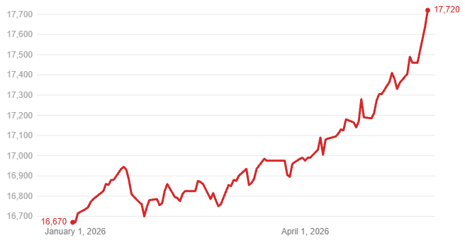
Beyond energy, supply chain disruptions in the Strait of Hormuz rippled through the domestic economy. Consumer goods and raw material price increases burdened households and industries. Essential material prices like plastic spiked 80%, squeezing businesses. This inflation worsened as the rupiah hit a historic low of surpassing its June 1998 crisis-era level of 16.650.

Movements in the Rupiah Exchange Rate, January–May 2026
Source: CNBC

Consequently, the real sector slowed, with declining Consumer Confidence Index and Manufacturing PMI from February to April 2026 signaling reduced household spending and contracted manufacturing activity.

However, this external shock is not a single provoking factor. It exposed two conditions of Indonesia’s existing systemic vulnerabilities. First, living costs are rising faster than incomes, echoing the 2008 crisis, where U.S. household debt outpaced income growth (Mian and Sufi, 2014: 76-9). The depreciating rupiah’s impact on living costs is expected to be felt more intensely in the second half of 2026. Although the government has yet to raise the price of subsidized fuel, non-subsidized fuel hikes have inflated logistics costs, while reliance on imported wheat, soybeans, and sugar is pushing up food prices, squeezing Indonesia’s already wage-stagnant middle class and making it harder for households to build lasting asset value.

Second, fiscal space is narrowing under heavy government spending. The Free Nutritious Meals (MBG) program alone is projected to cost Rp320 trillion this year, about 10% of the 2026 revenue budget, drawing skepticism from The Economist over its execution. Compounding this, even assuming global oil prices reach USD100 per barrel, the government has committed to maintain fuel subsidies while maintaining a 2.92% budget deficit. Besides the danger of reaching the legal 3% ceiling, economists have been warning that fiscal capacity can only bear this commitment in the short term.

By the end of March 2026, government spending surged 31.4% against 10.5% revenue growth. If global economic turmoil does not subside, the cost of maintaining fuel subsidies will become increasingly expensive, forcing the government to take on more debt within a limited fiscal space. Historically, unregulated debt surges preceded both the 1998 and 2008 crises (Oatley, 2012: 328-30), underscoring the need to preserve fiscal space as a safety net.

The Burning Wick: Eroding Institutional Trust Provoking Financial Crises

Beyond global shocks and domestic vulnerabilities, growing concern over the checks and balances among the executive, legislature, and central bank has further unsettled investors. The February 2026 appointment of Thomas Djiwandono—the President’s nephew—to Bank Indonesia’s Board of Governance was widely viewed as a threat to institutional independence. Following that appointment and the continuously weakening rupiah, the revised P2SK law expanded Bank Indonesia’s mandate to support economic growth. According to Mukhamad Misbakhun—Chair of the House of Representatives Commission XI—this is necessary to achieve President Prabowo’s 8% growth target. In July 2026, public concerns about the weakening institution were reinforced as the Bank Indonesia’s governor, Perry Warjiyo, resigned before his term ended, an announcement that alone knocked the Composite Stock Price Index (IHSG) down by 0.17% and weakened the Rupiah to Rp18,009/USD.

The fallout has been visible in markets. The IHSG has declined and 18 companies were dropped from the Morgan Stanley Capital International (MSCI) index, triggering capital flight from stocks and government bonds between April and May 2026, a contrast to rising equity indices in regional peers like Japan, China, and Singapore. International outlets including Bloomberg and the Strait Times have documented a “sell Indonesia” trend among global investors. Domestically, panic shows up in currency hoarding: in June 2026, Bank Indonesia reported that rupiah-denominated deposits grew 6.3 percent year-over-year, while foreign-currency deposits surged nearly three times faster, at 18.5 percent.

However, while capital flight has been happening, in fact, Indonesia’s current macroeconomic indicators are relatively stable compared to the 1998 financial crisis, except for a record low of the Rupiah.

Indicators19982026
Rupiah’s Exchange Rate Against the U.S. DollarRp 17.000~Rp 18.000~
Inflation (year-on-year)77,6%2,42% – 4,76%
GDP Growth (year-on-year)-13,7%+5,61%
Foreign Debt-to-GDP Ratio148%29,5%

Source: Central Statistics Agency (BPS) and Bank Indonesia

However, complacency would be a mistake. The rupiah ranks among the world’s ten weakest currencies, and continuous weakening would trigger a larger domino effect on the economy, such as declining purchasing power and costlier imports of essentials like fuel and fertilizer. The government has to be careful, especially as the US-Iran stalemate leaves the Hormuz Strait’s reopening uncertain. Should investor confidence erode further, the result could be speculative attacks, the same dynamic that catalyzed the 1998 crisis (Stiglitz, 2022:94).

Responding to Crisis Tendencies and Preventing a Worse Future Scenario

In response to the current turmoil, the government has not been passive. On the fiscal side, it has trimmed budgets, sustained subsidies for the real sector, and cut the free-meal program’s allocation. On the monetary side, Bank Indonesia raised its benchmark interest rate (BI Rate) to 5.25% and deployed over USD10 billion in foreign exchange reserves to defend the rupiah.

Officials have also tried to talk up confidence, such as the Finance Minister’s projection of a stronger Rupiah and the National Economic Council (DEN) chairman, Luhut Binsar Pandjaitan, assured global investors that Indonesia’s economy remains relatively strong, pointing to 5.61% first-quarter growth. Yet rhetoric alone has proven less persuasive to markets than concrete evidence of institutional credibility. What has moved markets is action: on August 10, 2026, President Prabowo nominated Destry Damayanti, BI’s acting governor and a career central banker, as the sole candidate for the permanent governorship, rather than a more politically-aligned figure. The rupiah strengthened roughly 0.75 percent on the news, reversing months of anxiety over the central bank’s independence.

To avert a future crisis, four priorities remain. First, stabilizing the rupiah is vital to protect domestic purchasing power and anchor global investor confidence. The President and DPR RI should carefully appoint credible people to fill the central bank’s governor role. Though the nomination of Destry still awaits parliamentary confirmation, the market reaction lends credence to a credible, independence-preserving leadership at Bank Indonesia for restoring investor trust.

Second, Indonesia should pursue energy independence. Despite ranking second in energy resilience from natural gas and coal by a JPMorgan report, Indonesia’s massive transport sector remains dangerously dependent on crude oil, and the rolling blackouts from PLN in Java underscore the need for more strategic governance beyond commodity optimization. As a net oil importer facing production decline and consumption rise, energy diversification is a long-term strategy for energy security. The current B50 initiative may be one of the building blocks, and it should be supported for quality and access improvement.

The last and most important point is trust. As markets’ positive reaction to Destry Damayanti’s nomination suggests, maintaining market confidence requires preservation of Bank Indonesia’s independence. Additionally, ensuring that numerical growth is translated into the market is also crucial so that it is felt by society. Therefore, trust could grow from where it naturally emerges.


Conclusion

Although Indonesia’s macroeconomic indicators remain relatively stable compared to 1998, a financial crisis remains possible if domestic vulnerabilities are left unaddressed. A weakening rupiah combined with an economic slowdown signals the kind of instability that erodes global investor confidence. To mitigate this risk, the government must prioritize rupiah stability to prevent capital flight, accelerate energy self-reliance as a long-term hedge against global uncertainty, and continue rebuilding the public and institutional trust that ultimately underpins financial stability.

Accessibility