Okt 29, 2025 | event
Depok, Oktober 2025
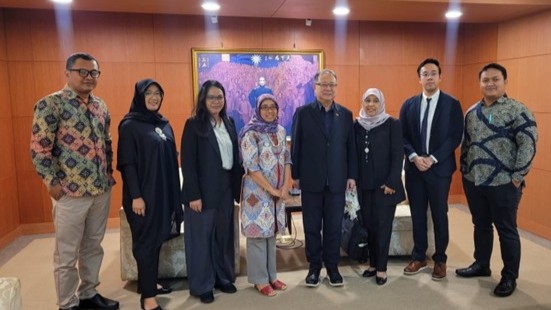
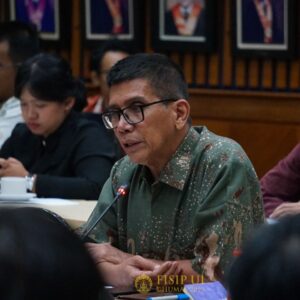
Asra Virgianita, Ph.D., Associate Professor dan Wakil Direktur Center for International Relations Studies (CIReS), LPPSP FISIP UI, mewakili Departemen Hubungan Internasional FISIP Universitas Indonesia sebagai delegasi resmi dalam Program Kunjungan Delegasi ke Taiwan 2025. Program ini merupakan agenda tahunan yang disponsori oleh Taipei Economic and Trade Office (TETO) Jakarta, dan dikoordinasi oleh The Habibie Center, dengan melibatkan berbagai institusi di Indonesia, termasuk perwakilan universitas, lembaga riset, dan think tank.
Program ini mengusung tema “Strengthening Taiwan–ASEAN Cooperation Amid Geopolitical and Economic Dynamics in the Indo-Pacific”, menjadi ruang dialog strategis bagi para pemangku kepentingan yang berperan penting dalam isu hubungan internasional, pembangunan regional, serta penguatan kerja sama antara berbagai institusi di Taiwan dan Indonesia melalui pendekatan people-to-people connectivity.


Kegiatan yang berlangsung pada tanggal 19–25 Oktober 2025 ini diisi dengan serangkaian pertemuan dan diskusi bersama berbagai institusi di Taiwan. Tujuannya adalah memperkuat sinergi antara berbagai institusi di Taiwan dan negara-negara ASEAN, khususnya Indonesia, melalui pertukaran gagasan, eksplorasi peluang kerja sama, serta pemahaman bersama terhadap tantangan kawasan.
Partisipasi Departemen Hubungan Internasional FISIP UI mencerminkan komitmen institusi dalam mendorong keterlibatan akademisi Indonesia dalam forum-forum strategis kawasan. Selain itu, keikutsertaan ini juga merupakan bentuk konkret dari upaya memperkuat program internasionalisasi, membangun jejaring kerja sama, serta memperluas kontribusi akademik dalam diplomasi regional yang inklusif dan berkelanjutan.***
Okt 20, 2025 | event
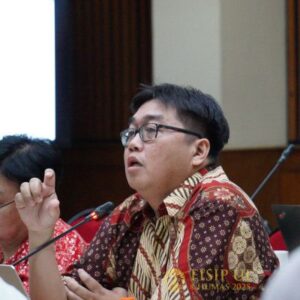
Depok, 20 Oktober 2025 — Dalam rangka memperingati empat dekade perjalanan akademik Departemen Hubungan Internasional, Fakultas Ilmu Sosial dan Ilmu Politik, Universitas Indonesia (HI FISIP UI), diselenggarakan lokakarya internasional bertajuk “Global South Voices: Four Decades of Excellence and Contemporary Approaches in International Relations Education.”
Kegiatan ini bertujuan untuk merefleksikan perkembangan keilmuan Hubungan Internasional (HI) di Indonesia serta meninjau kembali relevansi pendekatan Global South dalam pendidikan dan penelitian HI kontemporer. Melalui forum akademik ini, HI FISIP UI menegaskan posisinya sebagai institusi yang aktif mendorong dekolonisasi pengetahuan dan pedagogi dalam studi HI.
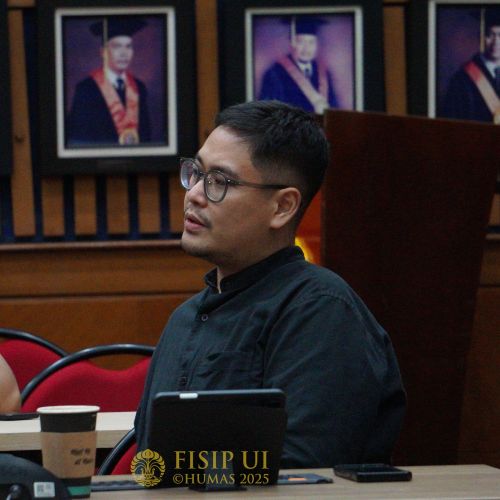
Workshop ini menghadirkan akademisi dari berbagai negara, antara lain Oscar A. Gomez, Ph.D. (Ritsumeikan Asia Pacific University, Jepang), Shi Yuning, Ph.D. (Xiamen University, Tiongkok), Dr. Manoj Kumar (O.P. Jindal University, India), dan Khoo Ying Hooi, Ph.D. (Universiti Malaya, Malaysia). Para pembicara mendiskusikan berbagai pendekatan teoritis dan metodologis yang menekankan pentingnya pengalaman dan perspektif Selatan Global sebagai sumber epistemik yang sahih.

Dalam paparannya, Oscar A. Gomez, Ph.D. menekankan perlunya reposisi epistemologis dalam pendidikan HI dengan menyatakan bahwa, “Global South memiliki pengalaman historis dan pengetahuan lokal yang harus menjadi bagian dari arus utama kajian internasional.”
Sementara itu, Prof. Evi Fitriani, Profesor Ilmu Hubungan Internasional FISIP UI, menegaskan pentingnya nilai kemanusiaan dalam pengajaran HI. “Empat puluh tahun perjalanan HI UI membuktikan bahwa pendidikan HI tidak sekadar menyampaikan teori, tetapi juga menanamkan tanggung jawab etis terhadap keadilan global,” ujarnya.
Diskusi panel meliputi empat bidang utama: teori Hubungan Internasional dan dekolonisasi pengetahuan, ekonomi politik internasional dari perspektif Global South, keamanan internasional non-tradisional, serta transnasionalisme dan demokrasi dalam konteks regional Asia Tenggara.
Dari sesi International Political Economy, Shi Yuning menyoroti kebutuhan untuk mengembangkan kerangka analisis ekonomi politik yang lebih mandiri di Asia Tenggara, sementara Manoj Kumar menekankan pentingnya memasukkan isu-isu keamanan non-tradisional seperti perubahan iklim dan keamanan digital dalam kurikulum HI.
Sebagai penutup, Shofwan Al Banna Choiruzzad, Ph.D. menyampaikan bahwa momentum empat dekade ini merupakan kesempatan untuk memperkuat peran HI FISIP UI dalam mengartikulasikan gagasan-gagasan akademik dari Global South ke ranah global. Ia menegaskan bahwa, “Refleksi 40 tahun ini merupakan tonggak penting untuk menegaskan peran Indonesia bukan hanya sebagai penerima pengetahuan, tetapi sebagai penghasil pengetahuan global yang berakar pada pengalaman Selatan.”
Peringatan empat dekade ini memperlihatkan kesinambungan antara tradisi akademik yang telah dibangun sejak 1985 dan komitmen Departemen HI UI untuk terus berkontribusi pada pengembangan studi HI yang lebih inklusif dan kontekstual. Melalui kolaborasi lintas kawasan Selatan-Selatan, HI FISIP UI menegaskan kembali visinya sebagai pusat keunggulan akademik yang adaptif terhadap dinamika global.
Okt 11, 2025 | event
Diskusi Publik dan Peluncuran Riset Cluster
Palestine: Updates from the Ground and Call for Global Solidarity”
Sabtu, 11 Oktober 2025 | Luring Auditorium Juwono Sudarsono, FISIP UI
Depok, 11 Oktober 2025 – Departemen Hubungan Internasional, Fakultas Ilmu Sosial dan Ilmu Politik Universitas Indonesia (FISIP UI) resmi meluncurkan klaster riset baru yaitu Solidaritas Selatan, Pembangunan, dan Transformasi Tata Kelola Dunia Berkeadilan yang diketuai oleh Asra Virgianita, Ph.D. (Associate Professor, Departemen HI UI). Klaster ini dibentuk sebagai bagian dari komitmen akademik FISIP UI untuk memperkuat kajian kritis terhadap dinamika solidaritas global, khususnya dari perspektif negara-negara Global South, dalam menghadapi ketimpangan struktural dalam tata kelola dunia.
Peluncuran ini ditandai dengan penyelenggaraan seminar publik yang diinisiasi klaster tersebut bertajuk “Palestine: Updates from the Ground and Call from Global Solidarity”. Tema ini dipilih sebagai salah satu bentuk dorongan memperkuat solidaritas atas isu kemanusiaan terbesar yang secara nyata terjadi. Genosida, pendudukan, dan sistem apartheid yang terus berlangsung telah merampas hak hidup, kebebasan, dan martabat jutaan rakyat Palestina. Di tengah kebuntuan diplomasi negara, solidaritas global dari masyarakat sipil seperti Global Sumud Flotilla dan BDS (Boycott, Divestment and Sanctions) menjadi kekuatan penting dalam memperjuangkan keadilan. Palestina adalah cermin kegagalan sistem internasional, sekaligus panggilan moral bagi dunia untuk bertindak.
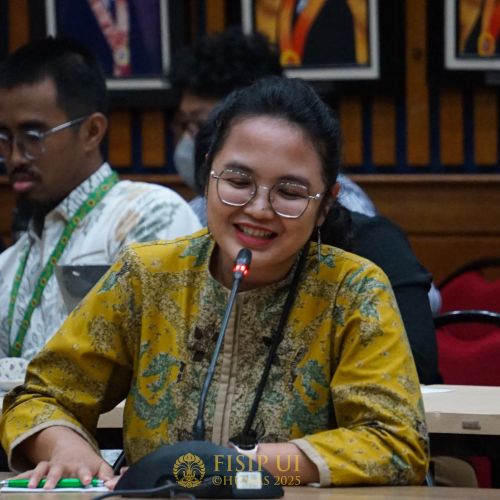
Seminar ini menghadirkan lima pembicara utama: Saleh Hijazi (Palestinian Activist, BDS National Committee Palestine), Shabnam Palesa Mohamed (International Legal Coalition for Palestine), Apurva G (Asia-Pacific Coordinator, BDS national Committee), Aisyah Nahwa Fahira (Secretary General, UI Students for Justice in Palestine), dan Shofwan Al-Banna Choiruzzad, Ph.D. (Associate Professor, Departemen HI UI), dan dipandu oleh A.E. Yeremia Lalisang, Ph.D. (Ketua Program Sarjana HI FISIP UI). Seminar ini bertujuan untuk mendiskusikan situasi Palestina dari perspektif pelaku gerakan akar rumput yang secara serius dan gigih memperjuangkan isu Palestina di berbagai level, baik itu lokal, nasional, regional, maupun internasional serta upaya memperkuat solidaritas global, khususnya di antara negara-negara Global South. Acara dihadiri oleh mahasiswa, peneliti, jurnalis, serta perwakilan organisasi masyarakat sipil.
Dalam sambutannya, Broto Wardoyo, Ph.D., selaku Ketua Departemen Hubungan Internasional FISIP UI, menyebutkan bahwa kegiatan ini merupakan kelanjutan dari komitmen akademik Departemen HI dalam menyoroti isu Palestina sebagai persoalan kemanusiaan global. “Diskusi dan riset semacam ini adalah bagian dari tanggung jawab moral akademisi untuk terus membangun empati lintas bangsa,” ujarnya.
Sementara itu, Nurul Isnaeni, Ph.D., Wakil Dekan I FISIP UI, menggarisbawahi relevansi kerja sama antarnegara Global South dalam memperjuangkan keadilan global. Menurutnya, “Isu Palestina telah melampaui dimensi politik, dan kini menyentuh inti kemanusiaan. Solidaritas transnasional harus diwujudkan dalam riset, advokasi, dan kolaborasi akademik.”
Sebagai Ketua Klaster Riset, Asra Virgianita, Ph.D., menegaskan dalam paparannya bahwa pembentukan klaster ini bertujuan memperkuat narasi Global South dan menghadirkan perspektif lokal dalam studi hubungan internasional. “Kami ingin menegaskan bahwa suara Global South adalah bagian penting dalam menyeimbangkan wacana global yang selama ini didominasi oleh Global North,” tuturnya. Lebih dari sekadar ruang akademik, klaster ini diharapkan menjadi wadah strategis lintas batas untuk menghasilkan pemikiran kritis dan solutif berbasis perspektif Global South atas berbagai bentuk ketidakadilan. Klaster ini juga ditujukan untuk memperkuat posisi Universitas Indonesia sebagai pusat riset yang unggul dan berdampak, sekaligus menjadi institusi terdepan dalam membangun jejaring akademik, advokasi, dan solidaritas antarnegara Global South.

Solidaritas Global dan Suara Akar Rumput
Saleh Hijazi melalui paparannya menegaskan bahwa genosida dan sistem apartheid terhadap rakyat Palestina masih berlangsung. Ia menyerukan peran people power dan kebijakan luar negeri yang lebih tegas dari Indonesia. “Gencatan senjata bukan akhir, melainkan awal dari perjuangan menghentikan pembantaian,” tegasnya.
Dari perspektif hukum internasional, Shabnam Palesi Mohamed menyoroti kegagalan sistem hukum global dalam melindungi rakyat Palestina. Ia memperkenalkan inisiatif Truth and Reconciliation Commission for Palestine dan menekankan pentingnya art activism sebagai perlawanan kultural. “Perjuangan hukum harus disertai perjuangan naratif dan budaya,” ujarnya.
Apurva G menambahkan bahwa negara-negara Global South memiliki tanggung jawab moral untuk memperkuat solidaritas terhadap Palestina. Ia menilai bahwa gerakan boikot, divestasi dan sanksi menjadi alat efektif untuk menekan rezim Israel.
Dari kalangan mahasiswa, Aisyah Nahwa Fakhira menyerukan semangat “Let’s Globalize Intifada,” sebagai bentuk kebangkitan solidaritas lintas generasi. Ia menegaskan bahwa gerakan mahasiswa, seperti UI Students for Justice in Palestine (UISJP), berperan penting dalam menghidupkan kesadaran publik dan menolak normalisasi dengan entitas pro-Zionis.
Menutup sesi pembicara, Shofwan Al-Banna Choiruzzad, Ph.D. menekankan bahwa perjuangan Palestina tidak boleh berhenti pada wacana diplomatik semata. “Indonesia harus konsisten dengan mandat konstitusinya untuk menentang segala bentuk penjajahan,” ujarnya, sembari menegaskan pentingnya solidaritas global dan diplomasi publik.
Refleksi dan Penutup
Dalam sesi tanya jawab, para pembicara menyoroti pentingnya bottom-up movement dalam mendorong perubahan kebijakan luar negeri Indonesia agar lebih tegas mendukung Palestina. Mereka menegaskan perlunya dekolonisasi wacana akademik yang masih didominasi oleh pandangan Barat, serta pentingnya menghubungkan gerakan rakyat dengan kebijakan publik.

Menutup acara, Shabnam Palesi Mohamed menyampaikan pesan pembebasan yang kuat dikutip dari pemikiran Ayundhati Roy (aktivis India): “Perlawanan tidak hanya dengan senjata, tapi juga melalui budaya, seni, dan narasi. Dunia lain bukan hanya mungkin — kita sedang menuju ke sana.”
Melalui seminar publik dan kehadiran klaster riset ini, diharapkan tercipta ruang strategis untuk pengembangan pengetahuan berbasis perspektif Global South, advokasi, kolaborasi lintas disiplin dan lintas negara, dalam memperkuat solidaritas dan memperjuangkan keadilan global.
Penulis: Tim Klaster Riset Solidaritas Selatan, Pembangunan dan Transformasi Tata kelola Dunia Berkeadilan
Sep 23, 2025 | event, IPGSC
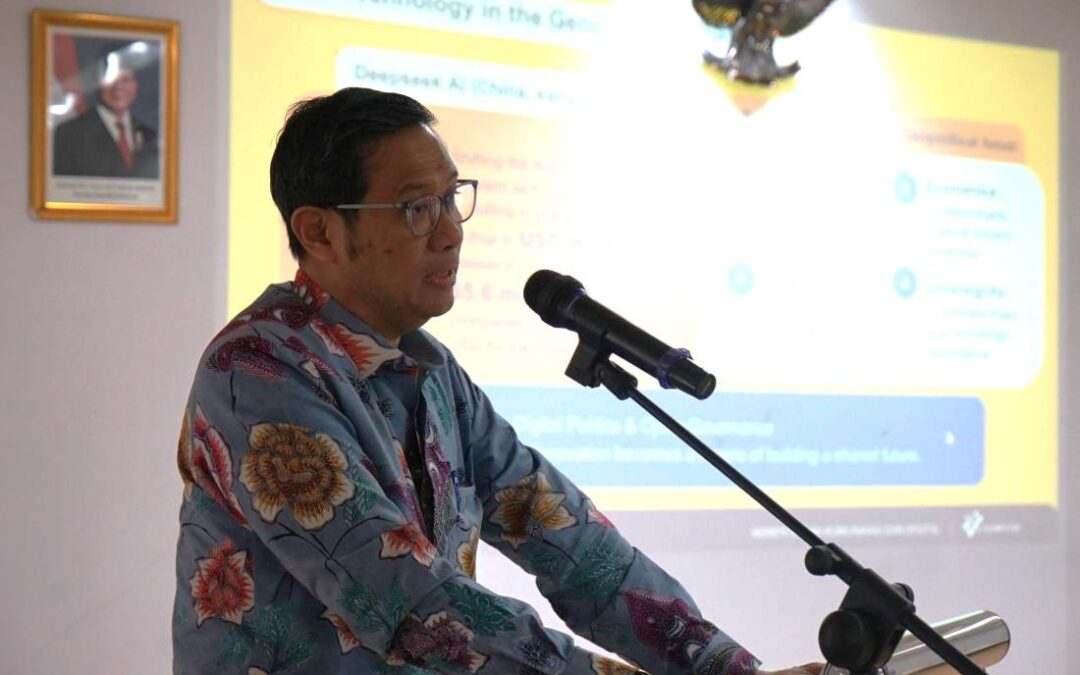
At the International Postgraduate Student Conference (IPGSC) organized by the Graduate Program in International Relations, Universitas Indonesia, on October 23-24, 2025, Raden Wijaya Kusumawardhana—Expert Staff to the Minister of Communication and Digital Affairs for Social, Economic, and Cultural Affairs—representing the Minister of Communication and Digital Affairs, delivered a keynote address on the dynamics of artificial intelligence (AI), geopolitics, and cyber threats in the digital era.
Raden Wijaya emphasized that the world is now entering a phase where data and algorithms have become strategic commodities, and digital technology functions as the infrastructure of global power. AI not only impacts economic and social innovation but also plays a role in shaping and competing for global power.
AI and the Shift in Global Technology Power
In his address, Raden Wijaya highlighted how the emergence of DeepSeek from China has disrupted the dominance of Western AI companies. With an investment of only 6.5 million USD, this technology caused the global AI market valuation to drop from approximately 1 billion USD to 969 million USD, demonstrating how rapidly and competitively the global technology ecosystem is evolving.
He also underscored that conflicts such as Iran-Israel and the Russia-Ukraine war have shown a surge in AI use in defense operations, intelligence analysis, and autonomous weaponry. Factors such as AI’s dual-use nature, its connection to the microchip industry, the ability of states possessing superior AI to shape international standards, and the risks of technological dependency have become key reasons why AI is now a highly determinative geopolitical issue.
Emphasis on Cyber Threats: Threat Characteristics and Dual-Use Nuances
Raden Wijaya emphasized that cyber threats in the digital era possess increasingly complex characteristics, are borderless, and have a dual-use nature. Technology initially developed for civilian purposes can now be repurposed for offensive operations by both state and non-state actors.
First, cyber threats are dual-use in nature. Digital infrastructure, software, AI algorithms, and cloud computing technology designed to enhance civilian sector efficiency can easily be exploited for network penetration, sabotage, or intelligence operations. States utilize these capabilities in strategic competition, while non-state actors such as cybercriminals, hacktivist groups, and armed organizations can leverage them for data manipulation, hacking, or attacks on public services.
Second, the character of cyber threats is asymmetric. States with high capabilities can launch precision attacks on other countries’ critical infrastructure. However, at the same time, small groups with limited resources can even cause significant damage through malware, botnets, or zero-day vulnerability exploitation. This makes cyberspace an open operational field for both large and small actors.
Third, cyber threats are characterized by ambiguity and attribution difficulties. Attacks are often conducted through proxies—whether criminal groups, technology consultants, or independent actors—making it difficult to definitively identify the attacking state. AI technology exacerbates this complexity by accelerating attack automation, producing manipulative content at scale, and helping to discover system vulnerabilities with high precision.
Fourth, cyber threats are very often linked to information operations. Generative AI can produce disinformation and digital propaganda used by both states and non-state actors to influence public opinion, disrupt domestic stability, or delegitimize public institutions.
Through these points, he emphasized that cyber threats are not merely technical issues but strategic threats that challenge digital sovereignty, national security, and political stability. Indonesia must strengthen national cyber resilience, build deterrence mechanisms, and develop a digital talent ecosystem to ensure control over technology that is increasingly integrated into daily life.
Indonesia and Digital Sovereignty in the Era of AI Competition
Raden Wijaya affirmed that Indonesia needs to develop a digital strategy focused not only on innovation but also on security. Investment in digital talent development, AI research, microprocessor infrastructure, and protection of critical infrastructure forms the foundation for Indonesia’s digital sovereignty amid global competition.
In closing his keynote address at IPGSC, he emphasized that the future will not only be determined by who possesses the most advanced technology, but by who is capable of securing, managing, and defending that technology as part of national interests.
Sep 23, 2025 | IPGSC
In his keynote address at the International Postgraduate Student Conference (IPGSC), an international conference for postgraduate students in International Relations held at Universitas Indonesia on October 23-24, 2025, Dr. Sulistyo, Deputy for Cyber Security and Government and Human Development Codes at the National Cyber and Crypto Agency (BSSN), emphasized that cyberspace represents a unique strategic domain characterized by its borderless nature—transcending geographical boundaries, lacking singular jurisdiction, and operating without a single governing authority. This condition fundamentally distinguishes cyberspace from physical domains such as land, sea, and air.
According to Sulistyo, this borderless character makes cyberspace not merely a digital infrastructure, but an arena with significant consequences for international stability and security.“Cyberspace penetrates national borders and blurs traditional concepts of sovereignty. Threats can emerge from anywhere, be perpetrated by anyone, and impact anyone,” he stated.
Borderless Cyberspace and Challenges to State Sovereignty
Within the framework of international security, the transboundary nature of cyberspace presents serious challenges. Cyberattacks on critical infrastructure, misinformation, and data manipulation can cross national borders within seconds. This complicates attribution, law enforcement, and collective responses. The absence of geographical boundaries creates new challenges for states: how to defend sovereignty in a domain that lacks physical territory? How to enforce rules in a domain where the primary actors are not always states? This borderless character also creates opportunities for non-state actors—ranging from criminal hackers to state-sponsored groups—to execute cross-border operations without physically breaching territorial boundaries.
Sulistyo also emphasized that borderless cyberspace has transformed how states perceive security threats. Cyber conflicts can occur without declarations of war, military mobilization, or violations of conventional territorial boundaries—yet remain capable of crippling economies, influencing domestic politics, and disrupting regional stability. In the context of great power rivalry, cyberspace has become a new arena for strategic competition. Control over digital technology, AI, quantum computing, and next-generation telecommunications has now become an instrument of state power, deepening the geopolitical dimension of the cyber domain.
Indonesia’s Response: Diplomacy, Multilateral Cooperation, and Strengthening Cyber Resilience
Facing the challenges of borderless cyberspace, Indonesia is strengthening its cyber diplomacy based on the principles of its independent and active foreign policy. Indonesia strives to ensure that global cyberspace governance remains inclusive and is not co-opted by geopolitical competition that disadvantages developing countries. Through forums such as ASEAN, the UN, and various other international cooperation regimes, Indonesia promotes: the establishment of norms for state behavior in cyberspace, confidence-building measures, enhanced cooperation in handling cross-border incidents, and strengthening regional capacity to address cyber threats.
Sulistyo emphasized that in a boundaryless domain like cyberspace, national resilience heavily depends on a state’s ability to build adaptive, responsive, and sustainable systems. He identified three strategic agendas. First, strengthening national cyber security capacity, including modernizing cyber defense architecture. Second, intensive international collaboration, as no country can secure cyberspace independently. And third, developing competent cyber human resources capable of operating in the global digital ecosystem.
“Cyber security is international security. In a space that knows no borders, the security of one country is deeply connected to the security of others,” he concluded.
Jul 29, 2025 | event
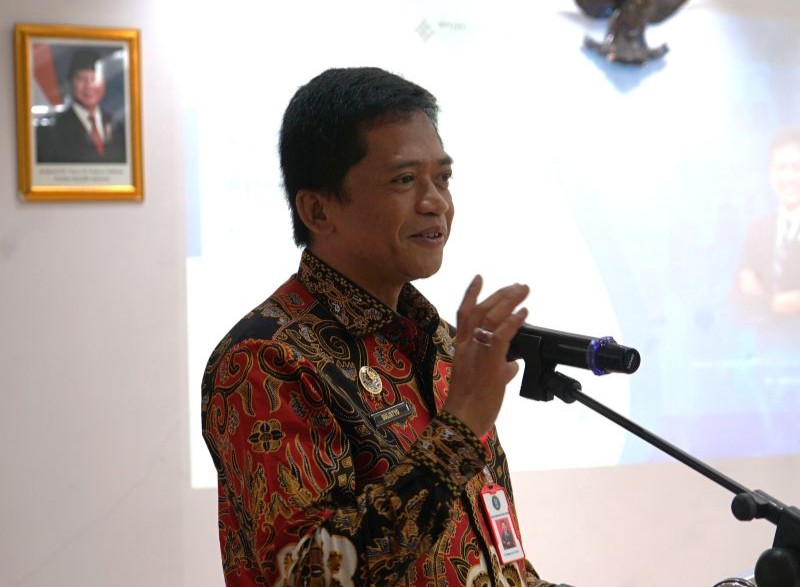
Depok, 22 Juli 2025 – Bagaimana cara meningkatkan kerjasama akademik Indonesia dengan India? Pertanyaan ini menjadi salah satu fokus diskusi yang digelar oleh Departemen Hubungan Internasional, Fakultas Ilmu Sosial dan Politik Universitas Indonesia Universitas Indonesia (FISIP UI), menghadirkan Konsul Jenderal Republik Indonesia Mumbai, Eddy Wardoyo. Diskusi diselanggarakan di Laboratorium Pembangunan Terintegrasi FISIP UI pada 22 July 2025, pukul 11.00 hingga 12.00.
Diskusi antara staf pengajar Departemen Hubungan Internasional dan Konsul Jenderal RI Mumbai berusaha mengeksplor isu-isu strategis untuk meningkatkan kerjasama antarakedua negara dalam bidang akademik. Saat ini Universitas Indonesia sudah memiliki kerjasama formal dengan beberapa universitas di India. Namun, perlu ditingkatkan lagi kerjasama dalam mengembangkan studi regional Asia Selatan mengingat peran negara-negara di Asia Selatan, yang semakin penting di kancah global.
Selama ini terdapat kesempatan beasiswa dari pihak India, namun peminat dari Indonesia masih relatif sedikit. Masih minimnya promosi dari pihak India pun menjadi salah satu faktor yang membuat kurangnya peminat. India pun perlu meningkatkan kembali soft power dengan target generasi-generasi muda di Indonesia sehingga akan lebih banyak generasi muda yang tertarik untuk menempuh studi di India.

Kerjasama lain yang perlu dikembangkan adalah dalam meningkatkan kedekatan antara komunitas akademik kedua negara. Kerjasama tersebut dapat dilakukan dengan mengirimkan para staf pengajar di India ataupun di Indonesia untuk menghadiri short course terkait kebijakan luar negeri dari masing-masing negara. Selain itu, potensi lainnya adalah dengan mengembangkan program kuliah tamu atau kuliah umum. Contohnya, para pengajar dari India dapat memberikan kuliah tamu dengan topik politik India kepada mahasiswa di Indonesia, ataupun sebaliknya.
Kegiatan ini menjadi momentum penting dalam mengembangkan kerjasama antara Indonesia dan India terutama dalam bidang akademik. Terdapat banyak potensi yang dapat dikembangkan oleh kedua negara. Regenerasi dalam studi Asia Selatan di Indonesia pun menjadi salah satu agenda penting agar dapat memberikan analisis dinamika politik luar negeri dan ekonomi global yang lebih komprehensif.