Indonesia on The Brink: Will Indonesia Face a Financial Crisis

Indonesia on The Brink: Will Indonesia Face a Financial Crisis

Vol. VII / No. 13 | September 2026

Authors:
Keziah Friskila Roostee – An undergraduate student of international relations at Universitas Indonesia with an interest in IPE and business, and sustainable development.


Summary

Reflecting on the 1998 Asian financial crisis and the 2008 global financial crisis, large-scale financial disruptions are characterized by massive capital flight, which devalues currencies and equities, and precipitates recession. This commentary argues that crisis-like symptoms emerged in Indonesia during the first half of 2026, exacerbating existing vulnerabilities in the national economy. Despite several government efforts, vulnerabilities persist. To prevent future financial crises, the government must strategically manage the weakening economy and rebuild public trust.

Keywords: financial crisis, currency stability, capital flight

External Shock and Internal Vulnerabilities Leading to Economic Downturn in the First Half of 2026

The escalation of Middle East conflicts has exposed Indonesia’s economic vulnerability to the global energy crisis. The Strait of Hormuz, a chokepoint carrying 20% of global oil consumption and 84% of Asia’s crude supply, saw disrupted trade that drove Brent crude prices up 13% by late February 2026. As a net oil importer, Indonesia felt this directly. In April 2026, two Pertamina tankers carrying two million barrels of crude oil were stranded in the strait. Despite the Foreign Minister’s claims of a secure national supply, anxiety manifested in restricted subsidized fuel purchases, energy conservation campaigns, and mandatory Work From Home for civil servants every Friday starting March 2026.

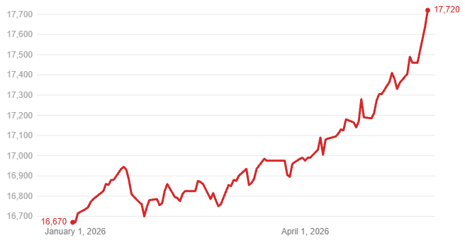
Beyond energy, supply chain disruptions in the Strait of Hormuz rippled through the domestic economy. Consumer goods and raw material price increases burdened households and industries. Essential material prices like plastic spiked 80%, squeezing businesses. This inflation worsened as the rupiah hit a historic low of surpassing its June 1998 crisis-era level of 16.650.

Movements in the Rupiah Exchange Rate, January–May 2026
Source: CNBC

Consequently, the real sector slowed, with declining Consumer Confidence Index and Manufacturing PMI from February to April 2026 signaling reduced household spending and contracted manufacturing activity.

However, this external shock is not a single provoking factor. It exposed two conditions of Indonesia’s existing systemic vulnerabilities. First, living costs are rising faster than incomes, echoing the 2008 crisis, where U.S. household debt outpaced income growth (Mian and Sufi, 2014: 76-9). The depreciating rupiah’s impact on living costs is expected to be felt more intensely in the second half of 2026. Although the government has yet to raise the price of subsidized fuel, non-subsidized fuel hikes have inflated logistics costs, while reliance on imported wheat, soybeans, and sugar is pushing up food prices, squeezing Indonesia’s already wage-stagnant middle class and making it harder for households to build lasting asset value.

Second, fiscal space is narrowing under heavy government spending. The Free Nutritious Meals (MBG) program alone is projected to cost Rp320 trillion this year, about 10% of the 2026 revenue budget, drawing skepticism from The Economist over its execution. Compounding this, even assuming global oil prices reach USD100 per barrel, the government has committed to maintain fuel subsidies while maintaining a 2.92% budget deficit. Besides the danger of reaching the legal 3% ceiling, economists have been warning that fiscal capacity can only bear this commitment in the short term.

By the end of March 2026, government spending surged 31.4% against 10.5% revenue growth. If global economic turmoil does not subside, the cost of maintaining fuel subsidies will become increasingly expensive, forcing the government to take on more debt within a limited fiscal space. Historically, unregulated debt surges preceded both the 1998 and 2008 crises (Oatley, 2012: 328-30), underscoring the need to preserve fiscal space as a safety net.

The Burning Wick: Eroding Institutional Trust Provoking Financial Crises

Beyond global shocks and domestic vulnerabilities, growing concern over the checks and balances among the executive, legislature, and central bank has further unsettled investors. The February 2026 appointment of Thomas Djiwandono—the President’s nephew—to Bank Indonesia’s Board of Governance was widely viewed as a threat to institutional independence. Following that appointment and the continuously weakening rupiah, the revised P2SK law expanded Bank Indonesia’s mandate to support economic growth. According to Mukhamad Misbakhun—Chair of the House of Representatives Commission XI—this is necessary to achieve President Prabowo’s 8% growth target. In July 2026, public concerns about the weakening institution were reinforced as the Bank Indonesia’s governor, Perry Warjiyo, resigned before his term ended, an announcement that alone knocked the Composite Stock Price Index (IHSG) down by 0.17% and weakened the Rupiah to Rp18,009/USD.

The fallout has been visible in markets. The IHSG has declined and 18 companies were dropped from the Morgan Stanley Capital International (MSCI) index, triggering capital flight from stocks and government bonds between April and May 2026, a contrast to rising equity indices in regional peers like Japan, China, and Singapore. International outlets including Bloomberg and the Strait Times have documented a “sell Indonesia” trend among global investors. Domestically, panic shows up in currency hoarding: in June 2026, Bank Indonesia reported that rupiah-denominated deposits grew 6.3 percent year-over-year, while foreign-currency deposits surged nearly three times faster, at 18.5 percent.

However, while capital flight has been happening, in fact, Indonesia’s current macroeconomic indicators are relatively stable compared to the 1998 financial crisis, except for a record low of the Rupiah.

Indicators19982026
Rupiah’s Exchange Rate Against the U.S. DollarRp 17.000~Rp 18.000~
Inflation (year-on-year)77,6%2,42% – 4,76%
GDP Growth (year-on-year)-13,7%+5,61%
Foreign Debt-to-GDP Ratio148%29,5%

Source: Central Statistics Agency (BPS) and Bank Indonesia

However, complacency would be a mistake. The rupiah ranks among the world’s ten weakest currencies, and continuous weakening would trigger a larger domino effect on the economy, such as declining purchasing power and costlier imports of essentials like fuel and fertilizer. The government has to be careful, especially as the US-Iran stalemate leaves the Hormuz Strait’s reopening uncertain. Should investor confidence erode further, the result could be speculative attacks, the same dynamic that catalyzed the 1998 crisis (Stiglitz, 2022:94).

Responding to Crisis Tendencies and Preventing a Worse Future Scenario

In response to the current turmoil, the government has not been passive. On the fiscal side, it has trimmed budgets, sustained subsidies for the real sector, and cut the free-meal program’s allocation. On the monetary side, Bank Indonesia raised its benchmark interest rate (BI Rate) to 5.25% and deployed over USD10 billion in foreign exchange reserves to defend the rupiah.

Officials have also tried to talk up confidence, such as the Finance Minister’s projection of a stronger Rupiah and the National Economic Council (DEN) chairman, Luhut Binsar Pandjaitan, assured global investors that Indonesia’s economy remains relatively strong, pointing to 5.61% first-quarter growth. Yet rhetoric alone has proven less persuasive to markets than concrete evidence of institutional credibility. What has moved markets is action: on August 10, 2026, President Prabowo nominated Destry Damayanti, BI’s acting governor and a career central banker, as the sole candidate for the permanent governorship, rather than a more politically-aligned figure. The rupiah strengthened roughly 0.75 percent on the news, reversing months of anxiety over the central bank’s independence.

To avert a future crisis, four priorities remain. First, stabilizing the rupiah is vital to protect domestic purchasing power and anchor global investor confidence. The President and DPR RI should carefully appoint credible people to fill the central bank’s governor role. Though the nomination of Destry still awaits parliamentary confirmation, the market reaction lends credence to a credible, independence-preserving leadership at Bank Indonesia for restoring investor trust.

Second, Indonesia should pursue energy independence. Despite ranking second in energy resilience from natural gas and coal by a JPMorgan report, Indonesia’s massive transport sector remains dangerously dependent on crude oil, and the rolling blackouts from PLN in Java underscore the need for more strategic governance beyond commodity optimization. As a net oil importer facing production decline and consumption rise, energy diversification is a long-term strategy for energy security. The current B50 initiative may be one of the building blocks, and it should be supported for quality and access improvement.

The last and most important point is trust. As markets’ positive reaction to Destry Damayanti’s nomination suggests, maintaining market confidence requires preservation of Bank Indonesia’s independence. Additionally, ensuring that numerical growth is translated into the market is also crucial so that it is felt by society. Therefore, trust could grow from where it naturally emerges.


Conclusion

Although Indonesia’s macroeconomic indicators remain relatively stable compared to 1998, a financial crisis remains possible if domestic vulnerabilities are left unaddressed. A weakening rupiah combined with an economic slowdown signals the kind of instability that erodes global investor confidence. To mitigate this risk, the government must prioritize rupiah stability to prevent capital flight, accelerate energy self-reliance as a long-term hedge against global uncertainty, and continue rebuilding the public and institutional trust that ultimately underpins financial stability.

Rethinking ASEAN’s Role in Protecting Migrant Workers under the Kafala System

Rethinking ASEAN’s Role in Protecting Migrant Workers under the Kafala System

Vol. VII / No. 12 | August 2026

Authors:
Muhammad Atiqurrahman, Sania Idayu Virginia & Izzadin Rashaad Lubis – Undergraduate Program Department of International Relations, Faculty of Social and Political Sciences, Universitas Indonesia

Summary

Gulf countries have consistently remained as a major destination for migrant workers from Southeast Asia. Despite ASEAN’s longstanding commitments to migrant worker protection, exploitation and violation of migrant workers continue to happen under a sponsorship mechanism known as the Kafala System. This article showcases ASEAN’s institutional challenges in protecting its citizens abroad. Existing regional mechanisms rely heavily on non-binding norms and bilateral diplomacy, limiting ASEAN’s ability to collectively influence labour governance beyond Southeast Asia.

Keywords: Kafala system, Gulf country, Migrant Worker, Rights, Consensus

Introducing The Kafala System

Over the past few decades, Gulf countries such as Saudi Arabia, the United Arab Emirates, Qatar, Kuwait, Bahrain, and Oman have become major destinations for migrant workers from Southeast Asia (Varia, 2008). In 2024, around 4.3 million ASEAN migrants were located in Western Asia, with the Gulf states serving as key destinations particularly for Filipino and Indonesian workers (International Labour Organization, 2025).

An important point to highlight is that many of these workers are employed under the Kafala system, a labor sponsorship system widely practiced across the Gulf countries. Under this system, migrant workers are only allowed to enter and work in a Gulf country if they have a sponsor who is responsible for their visa, residence permit, employment contract, and repatriation (Malaeb, 2015). As a result, migrant workers become highly dependent on their sponsors and are often unable to freely change jobs, leave the country, or maintain their legal status without employer approval.

Domestic workers often face greater exposure to exploitation and abuse under this system. As domestic work is often viewed as low-skilled labor, legal protections for domestic workers tend to be much weaker than those in formal sectors. Their vulnerability is further intensified by the fact that they work within private households, where state oversight is limited, access to legal assistance remains constrained, and cases of abuse are often difficult to detect (Malaeb, 2015). Many workers also remain trapped in exploitative working conditions due to migration-related debt, fear of losing income, or concerns about being sent home without financial gains (Longva, 1999).

The high number of human rights violations against migrant workers in Gulf countries, which include forced labor, unpaid wages, human trafficking, physical abuse, and sexual harassment, highlights a prevalent issue with said system (Malaeb, 2015). Data from the International Organization for Migration (IOM) shows that human trafficking has become a serious threat along migration routes to GCC countries. In the UAE, for example, the government identified 121 trafficking victims between 2024 and 2025, including victims from Indonesia, Myanmar, and the Philippines (U.S. Department of States, 2025). This situation is particularly ironic given that recent data shows Gulf countries remain highly dependent on migrant labor (International Organization for Migration, 2024). By exposing millions of ASEAN migrants to persistent exploitation and human rights violations, the Kafala system presents a challenge that extends beyond individual states and demands a more coordinated regional response.


ASEAN’s Framework for Migrant Protection

ASEAN’s institutional response to migrant worker protection rests on two principal instruments, the 2007 Cebu Declaration  (Association of Southeast Asian Nations, 2012) and the 2017 ASEAN Consensus (Association of Southeast Asian Nations, 2017), both of which set out shared principles for sending and receiving states within Southeast Asia. Neither instrument imposes binding legal obligations on member states, and both remain confined in practice to intra-regional labour flows rather than the far larger corridors connecting Southeast Asia to the Gulf.

Adopted at the 12th ASEAN Summit in January 2007, the Cebu Declaration asked receiving and sending states to uphold the dignity of migrant workers, cooperate on cases involving undocumented workers through no fault of their own, and facilitate consular access for workers in detention (Association of Southeast Asian Nations, 2007). As a declaration rather than a treaty, it carried no enforcement mechanism and explicitly avoided regularising the status of undocumented workers. By tasking ASEAN bodies with developing a follow-up instrument, a mandate that took a full decade to fulfil. That same follow-up process led to the establishment of the ASEAN Committee on the Implementation of the ASEAN Declaration on the Protection and Promotion of the Rights of Migrant Workers (ACMW), the sectoral body that has carried this agenda ever since (Association of Southeast Asian Nations, 2022).

The ASEAN Consensus on the Protection and Promotion of the Rights of Migrant Workers was eventually signed at the 31st ASEAN Summit in Manila on 14 November 2017, under the Philippines’ ASEAN chairmanship (International Labour Organization, 2017). The consensus affirms protection against passport confiscation and excessive recruitment fees, guarantees fair remuneration and safe working conditions, and recognises migrant workers’ right to join trade unions (Association of Southeast Asian Nations, 2017). Yet it remains, by ASEAN’s own description, a “living and evolving document” precisely because it is not legally binding (Association of Southeast Asian Nations, 2017). Implementation was left to a subsequent Action Plan (2018-2025) which the ACMW oversees and periodically reviews through member states’ self-assessments (International Labour Organization, 2020).

The ACMW convenes regularly as a subsidiary body under the ASEAN Labour Ministers Meeting, its sixteenth meeting in Jakarta in 2023 being one recent example, to track the Action Plan’s progress and coordinate new instruments (Association of Southeast Asian Nations, 2023). In recent years, ASEAN has adopted several supplementary declarations that broaden this framework’s scope, including instruments on the portability of social security benefits, the protection of migrant workers and their families during crises, and the placement of migrant fishers (Association of Southeast Asian Nations, 2023). ASEAN has also institutionalised the ASEAN Forum on Migrant Labour, an annual multi-stakeholder platform, first convened in 2008, that brings together governments, employers, workers’ organisations, and civil society to generate policy recommendations (Association of Southeast Asian Nations, 2022). These developments show a framework that keeps expanding in ambition. Yet, every instrument in it remains a declaration, a consensus, or a work plan rather than a binding legal commitment, and its design still centres on labour mobility within Southeast Asia.

In practice, however, the protection of ASEAN migrant workers in the Gulf has continued to depend primarily on bilateral diplomacy. Following the 2018 diplomatic dispute over the treatment of Filipino domestic workers, the Philippines negotiated a bilateral agreement with Kuwait that introduced stronger protections for domestic workers (Government of the Republic of the Philippines & Government of the State of Kuwait, 2018). Likewise, Indonesia resumed the deployment of domestic workers to Saudi Arabia only after securing additional labour protection measures through bilateral negotiations after the enforcement of its moratorium (Naila, 2026). These initiatives demonstrate that bilateral diplomacy can improve protections for migrant workers, but their benefits remain confined to the nationals of individual negotiating states rather than establishing common regional standards across ASEAN.

Only recently has ASEAN begun engaging the Gulf as a bloc. The inaugural ASEAN-GCC Summit, held in Riyadh in October 2023, produced a joint statement in which both sides agreed to encourage cooperation on orderly and safe labour mobility and to jointly counter trafficking linked to recruitment practices (Association of Southeast Asian Nations and Gulf Cooperation Council, 2023). This commitment sits within the broader GCC-ASEAN Framework of Cooperation (2024-2028), and the relationship was elevated again at the second ASEAN-GCC Summit in Kuala Lumpur in May 2025, though its accompanying declaration concentrated overwhelmingly on trade, investment, and energy cooperation rather than labour protection (Association of Southeast Asian Nations, 2025). Neither summit has yet produced a dedicated instrument on migrant worker protection comparable to the Cebu Declaration or the ASEAN Consensus.


ASEAN’s Future Role in Migrant Worker Protection

Given these institutional limitations, ASEAN’s most realistic contribution lies not in creating new legal obligations, but in strengthening regional coordination. Because labour-sending states continue to negotiate separately with Gulf countries, ASEAN member states have yet to leverage their collective position as one of the world’s largest sources of migrant labour (Association of Southeast Asian Nations, 2023). A more coordinated regional approach could help harmonize protection standards, facilitate information sharing among member states, and strengthen ASEAN’s collective voice in engagements with Gulf Countries. By coordinating common priorities before engaging external partners, ASEAN would also be better positioned to reduce disparities in protection among its member states and encourage more consistent labour governance across migration corridors to the Gulf.

Rather than establishing new institutions, ASEAN could make greater use of existing mechanisms such as the ACMW. Although the ACMW currently functions primarily as a consultative body, its existing mandate provides a foundation for deeper cooperation among member states. Beyond facilitating dialogue, it could serve as a platform for exchanging best practices, coordinating responses to emerging labour rights concerns, and promoting more consistent approaches to migrant worker protection in engagements with destination countries. Expanding the ACMW’s coordinating role would strengthen regional cooperation without departing from ASEAN’s principle of non-interference.

The 2026 Philippine Chairmanship presents a timely opportunity to advance this agenda. As one of ASEAN’s largest migrant-sending countries, with around 10% of its population working abroad, the Philippines has a robust repertoire of migrant protection mechanisms (Asis, 2017). Its leading role in regional cooperation, such as the Cebu Declaration, serves as a paramount proof of this nation’s commitment to protecting migrant workers (Presidential Communication Office, 2026). Although ASEAN cannot reform the Kafala system on its own, strengthening the role of the ACMW could enable it to serve as a pivotal mechanism for coordinating ASEAN member states’ diplomatic leverage and aligning their external engagement with the region’s longstanding commitment to protecting millions of Southeast Asian migrant workers.

Stabilization Without Transformation: Why UN Peacekeeping in Liberia Failed to Deliver Human Security?

Stabilization Without Transformation: Why UN Peacekeeping in Liberia Failed to Deliver Human Security?

Vol. VII / No. 11 | August 2026

Authors:
Lanja Manohisoa Epifaniah – Master’s Programme in International Relations, Faculty of Social and Political Sciences, Universitas Indonesia

Summary

Between 2003 and 2020, The United Nations Mission in Liberia (UNMIL) was one of the largest and most expensive peacekeeping operations in UN history. It suppressed large-scale violence, organized credible elections and formally rebuilt state institutions. Yet by 2020, Liberia’s Human Development Index stood at 0.48, more than half the population lived in poverty, and the health system had collapsed under the stress of the 2014 Ebola crisis. This article argues that UNMIL’s limited human security outcomes are explained by a structural deficit of local ownership: the failure to transfer decision-making authority, ensure inclusive participation, build autonomous institutional capacity, and align reforms with Liberian social and political realities. Applying Donais’s (2012) Local Ownership Framework to 15 years of UNMIL documentation and post-conflict evidence, it appears that the mission achieved stabilisation without transformation: institutions were formally rebuilt, but lacked the legitimacy and autonomy to endure international withdrawal.

Keywords: UNMIL, Human Security, Local Ownership, Peacebuilding, United Nations Peacekeeping

A Warning from Monrovia

In December 2025, Sweden announced it would close its embassy in Monrovia and wind down decades of development aid to Liberia, following earlier cuts by the United States and the European Union. For a country whose police, courts and clinics still lean heavily on money from the United States, mainly through USAID, and a small group of European partners such as Sweden and Ireland (AllAfrica, 2025).

The United Nations Mission in Liberia, known as UNMIL, was at its peak one of the largest and most expensive peacekeeping operations in UN history. It ended fourteen years of civil war, organised three peaceful elections, and helped rebuild a national army and police force from collapse. On paper, it worked. Yet by 2020, when UNMIL packed up and left, Liberia’s Human Development Index, the United Nations’ composite score for health, education and income, stood at just 0.48, placing the country among the ten least developed nations on Earth (UNDP, 2020). More than half the population lived in poverty (World Bank, 2024).


The Peacekeeping Paradox in Liberia

Liberia presents a puzzle standard peacekeeping metrics cannot resolve. UNMIL ended two decades of civil war, established a transitional government, ran three elections with minimal violence, and rebuilt the Armed Forces of Liberia (AFL) and Liberian National Police (LNP) from collapse. By the measures that peacekeeping evaluation typically privileges—violence suppression, institutional reconstruction, electoral facilitation—UNMIL performed well. Liberia’s Human Development Index score of 0.48 in 2020 ranked it among the 10 least developed nations globally, showing little change from the post-war benchmark despite international investment exceeding US$4 billion over 15 years by 2022 (UNDP, 2020; World Bank, 2024).

Liberia’s development indicators barely moved. This same gap, real success at stopping violence paired with institutions too fragile to stand alone, has shown up elsewhere: Congolese police posts fell into disrepair within weeks of each peacekeeper handover in the Democratic Republic of Congo (Africa Center for Strategic Studies, 2024), and security gains in South Sudan have unravelled wherever peacekeepers drew down without a transition plan (United Nations University, 2026). The question worth asking is not whether UNMIL succeeded, but why on-paper success failed to translate into a Liberia that could stand on its own two feet.


Why Rebuilding Institutions Wasn’t Enough

Political scientist Timothy Donais offers one answer through the idea of local ownership (Donais, 2012). His argument, in brief: post-conflict rebuilding only lasts if the people who will live inside the resulting institutions genuinely control them, not merely staff them. Donais breaks ownership into four ingredients: who actually holds decision-making power, whose voices shape reform, whether local institutions can function without permanent outside support, and whether reforms fit a country’s real social and political life rather than an imported template. Reform that ticks these boxes on paper while failing them in practice is what he calls nominal ownership, performed for outsiders rather than built for insiders. Applying this lens to fifteen years of UNMIL’s record shows the mission built exactly that.


Four Ways Local Ownership Was Weakened

Authority. UNMIL operated under a UN Security Council mandate that gave its head, the Special Representative of the Secretary-General, sweeping oversight of the mission, while donor funding rules kept reform priorities answerable to international budgets rather than Liberian needs. The police were rebuilt under a model designed largely by DynCorp International, a private US security contractor regularly hired by the American government to train foreign police and military forces (Devex, n.d.), with little input from Liberian security culture (Search for Common Ground & SIPRI, 2011). The LNP remained 60% donor-dependent in its operational budget by 2024, relying primarily on funding from the United States through USAID, along with support from European partners such as Sweden and Ireland (UNDP, 2018).

Inclusiveness. UNMIL’s outreach machinery was built for people already visible to international institutions: politicians in Monrovia, registered civil-society groups, English speakers. Rural communities, women’s and youth groups, and customary authorities like the Poro and Sande societies—which have long governed land and dispute resolution across rural Liberia (Immigration and Refugee Board of Canada, 2016)—were treated as recipients of reform, not sources of it. Fifteen years was enough time to build a genuinely participatory process; the evidence suggests that effort never happened.”.

Institutional capacity.  The police force was trained up to roughly 4,000 officers using a US-derived model, yet by 2024 only 30 per cent of officers had received adequate post-reform training. With only one officer for every 850 citizens across a predominantly rural country, police coverage remained thin and operational capacity limited. That thin, undertrained force is also part of why the 2014 Ebola outbreak hit so hard: the same reliance on external capacity that left policing hollow had also left the health system without enough trained staff and functioning local institutions to respond once a shock arrived. All ten primary healthcare indicators fell during the crisis, and more people ultimately died from the collapse of routine care than from Ebola itself (Wagenaar et al., 2018). The outbreak did not create this fragility; it revealed capacity that had never really been there.

Contextual alignment. Liberia’s post-war institutions were often built to look right rather than fit right. Land reform frameworks implemented throughout much of UNMIL’s mandate resulted in 40.9% of Liberia’s traditionally held land being formally unrecognised as of 2020. Anti-corruption bodies were established on paper, and Liberia’s score on the Corruption Perceptions Index rose to a peak of 41 out of 100 in 2012 before falling back into the mid-20s within a decade, as international oversight receded (Transparency International, 2024). Reintegration programmes for ex-combatants were designed around a formal job market that absorbed under 8.7 per cent of young workers (International Labour Organization, 2017). Also, Liberia held three credible elections without ever confronting the patronage politics, the exchange of political loyalty for jobs, favours and protection, that had helped fuel the war in the first place and continues to entrench corruption in Liberian politics today (ISS Africa, 2025).


Stabilization Without Transformation

The cumulative effect of these four ownership deficits was a peacebuilding architecture that functioned adequately while external support was present and fragmented progressively when it was reduced. A youth non-employment rate of 23 per cent, a Human Capital Index of 0.32, poverty exceeding 50 per cent — these are not post-withdrawal failures attributable to Liberian governance after UNMIL departed. They are the downstream effects of institutional designs that never built the social embeddedness, financial autonomy, organizational capacity, and contextual legitimacy that self-sustaining institutions require.

The argument I am making is ultimately not about UNMIL specifically. The structural logic of UN peace operations is based on how they are institutionally positioned: accountable to member states rather than the host population, evaluated on quantifiable outcomes rather than social integration, and organised around the assumption that international expertise is both superior to and replaceable by local knowledge. These assumptions did not originate with UNMIL. The liberal peacebuilding framework within which UNMIL operated includes these features.Evidence from Liberia, based on fifteen years of documentation across five institutional domains, illustrates their consequences with unusual empirical clarity. Changing these assumptions requires not better implementation of the existing model, but a fundamental rethinking of what ownership means in practice.


Lessons for Future UN Mission

Four changes could help. Mandates should set binding, time-bound targets for transferring real authority, over agendas, budgets and decisions, throughout a mission’s life, not only as an exit condition. Participation should be rebuilt around community and customary structures, not just urban, English-speaking counterparts. Security reform should start by mapping what security arrangements already exist and enjoy local legitimacy, rather than importing a foreign template. And financing strategies should build toward fiscal independence from day one, since donor dependence on Liberia’s scale never appears suddenly; it accumulates from choices made across a mission’s lifespan.

Negotiating Green: Why China’s Green BRI Looks Different in Indonesia and Vietnam

Negotiating Green: Why China’s Green BRI Looks Different in Indonesia and Vietnam

Vol. VII / No. 10 | June 2026

Authors:
Rizka Bunga Shafira – Junior Fellow of Global South Solidarity, Development, and Transformation of Global Justice Research Cluster, Department of International Relations, Universitas Indonesia.


Summary

China’s Green Belt and Road Initiative (Green BRI) has been promoted as a commitment to sustainable overseas investment, yet its implementation varies considerably across partner countries. This article compares the Green BRI’s energy sector outcomes in Indonesia and Vietnam—two largest Southeast Asian economies that both drew major Chinese investment and pledged to decarbonise, yet diverged sharply, making them a natural test of what actually drives Green BRI outcomes. In Indonesia, Chinese capital remains locked into coal, sustained by a powerful coal oligarchy, fragmented regulation, and subsidies that disadvantages renewables. In Vietnam, a pivot toward renewable energy has taken hold, driven by centralised governance and proactive policy. The article argues that this divergence is shaped less by Beijing’s strategic intentions than by the domestic political economy and governance capacity of each recipient. The Green BRI works mainly as a legitimacy-building mechanism whose real-world impact is decided at home: Vietnam shows how deliberate policy can steer Chinese capital toward clean energy, while Indonesia shows that, without structural reform, it will remain green in name only.

Keywords: Energy Politics, China Overseas Investment, Domestic Context, Green Belt and Road

The Green BRI as Soft Power, Not Hard Policy

The Green BRI emerged in response to mounting international criticism that Chinese-funded infrastructure projects were causing ecological damage across the Global South (Hughes, 2019) Policy documents such as the “Guidance on Promoting a Green Belt and Road” (2017) and the Green Investment Principles (GIP) signalled China’s commitment to low-carbon development overseas (MEE of PR China, 2017). The energy sector became the focal point, commanding nearly 40 per cent of total BRI investment, making it the obvious arena where green ambitions would be tested.

Yet the picture on the ground is far more complicated. China itself remain deeply reliant on coal domestically, and its energy governance is fragmented between central and local authorities. State-owned enterprises with entrenched interests in fossil fuels continue to seek profitable overseas markets, especially as China’s own carbon pricing regime raises the cost of doing business at home (Harlan, 2020). This domestic pressure incentivises Chinese energy companies to invest in countries with less stringent environmental governance, where compliance costs are lower and returns are more predictable (Nedopil, 2021). In this context, the Green BRI functions less as a coherent environmental strategy and more as a soft power instrument—a way for Beijing to project international legitimacy while its companies pursue commercial logic abroad.


Indonesia: Coal Lock-In and the Weight of Oligarchy

Indonesia illustrates how domestic structural conditions can neutralize the green aspirations of the BRI. Between 2006 and 2022, China invested roughly 35 billion USD in Indonesia, with a quarter flowing into the energy sector—overwhelmingly into coal ((Jiaying & Xinyue, 2025). Despite Xi Jinping’s 2021 pledge to stop financing overseas coal-fired power plants, Indonesia remains the world’s largest recipient of Chinese coal investment at 15.7 billion USD, with Chinese-backed coal plants exceeding 9 GW of installed capacity by 2024. Much of this infrastructure supports the metal processing industry, particularly nickel downstream for electric vehicle batteries (Gu, 2024)—creating a paradox where the clean energy supply chain depends on fossil fuel-powered production.

Indonesia’s coal lock-in is not an accident of the market, it is the product of domestic political capture, and tracing how that capture works explain why Chinese money keeps flowing to coal. Coal oligarchs—hold enormous sway over national energy policy, a grip underwritten by the sector’s sheer fiscal weight: coal delivered IDR 124.4 trillion in non-tax state revenue alone (Prihandono & Widiati, 2023). Government policy entrenches this dependence: the 2014 National Energy Policy (Kebijakan Energi Nasional or KEN), enacted through Government Regulation No. 79/2014, sets the country’s energy-mix targets through 2050 and locks coal in as a backbone of domestic electricity, while the Domestic Market Obligation (DMO) requires producers to reserve part of their output for the local market (Wijaya, 2021), together treating coal as both a strategic export commodity and a core energy source.

Structural barriers further hamper renewables: fossil fuel subsidies have historically outweighed clean-energy support by roughly 26 to 1, and PLN’s grid monopoly complicates tariff talks with independent producers. Even Indonesia’s flagship renewable rule Presidential Regulation No.112 of 2022, which bans most new coal plants and targets a coal phase-out by 2050, undercuts them by capping the tariffs producers can charge PLN, often below break-even, leaving little room for positive returns.

As commercial actors, Chinese firms follow the incentives the host-country sets, and in Indonesia those incentives point to coal. China Huadian, one of China’s largest state-owned power producershas engaged  in Indonesia mainly through hydropower—its engineering arm built the 180 MW Asahan-1 plant in North Sumatera. Even so, major Chinese generators like it remain reluctant to enter solar and wind, citing unfavorable tariffs and regulatory uncertainty  (Liu et.al, 2023). PowerChina’s withdrawal from the 9GW Kayan hydropower project in North Kalimantan—initially valued at 27 billion USD (Satriastanti, 2025)—further illustrates that even large-scale renewable projects face serious implementation challenges. Coal investment, by contrast faces none of these obstacles, it plugs into guaranteed demand under the DMO and PLN’s long-term contracts, and benefits from politically connected concession-holders who can smooth permitting and land acquisition (Ordonez et.al, 2021). Where renewables must negotiate capped tariffs with a reluctant monopsony, coal offers certainty—and capital, Chinese or otherwise, follows certainty.

Vietnam: Centralized Governance and a Renewable Pivot

Vietnam presents a strikingly different trajectory. While Chinese investment in Vietnam’s coal sector once reached 20 billion USD by 2022, the trend has reversed sharply. The last Chinese-funded coal plant was completed in 2021, and Vietnam now holds the highest cancellation rate of Chinese-backed coal projects, having scrapped sic project totaling 600 MtCO2 (Do & Burke, 2024). From 2018 onward, renewable energy’s share in Chinese investment flows rose dramatically, with firms like Trina Solar and Power China Harbor building solar panel and wind turbine manufacturing facilities in the country (Wengel et.al, 2023). These investment position Vietnam not only as a market but as a regional hub for China’s green technology exports.

The policy architecture underpinning this shift is robust. Vietnam’s Power Development Plan 8 (PDP8)—its binding national electricity roadmap to 2030, commits to raising the renewable energy share to 28.5 percents by 2030 and reducing coal from 51 to 28 percent, with a net-zero target by 2050 (Socialist Republic of Vietnam, 2025). The Renewable Energy and Climate Change Law provides a legal foundation, while the Feed-in Tariff (FiT) mechanism—a guaranteed price the state pays renewable producers, introduced in 2014 and expanded in 2020, offers price certainty and long-term contracts that substantially reduce investment risk. Vietnam added 4,500 MW of solar photovoltaic capacity in 2019 alone, making it one of the fastest growing solar markets in Southeast Asia (Eeg, 2023).

The key differences lies in governance. Vietnam’s single-party system under the Communist Party allows greater policy consistency and centralized energy planning. There is no coal oligarchy of the kind that dominates Indonesian politics. The government can screen and direct foreign energy investments—including Chinese ones—to align with long term strategic goal, even amid South China Sea tensions (Hai, 2021). The Communist Party of Vietnam (CPV) leverages foreign investment to bolster economic performance and domestic legitimacy, creating conditions where Chinese companies must operate within the state’s framework rather than negotiating around entrenched private interests.

What the Comparison Reveals

Three conclusions emerge from this comparison. First, the Green BRI is not a monolithic policy applied uniformly across partner countries; its outcomes are shaped by each recipient’s governance capacity, political structure, and economic interests. Indonesia’s fragmented, oligarch-influenced regulation pulls Chinese investment toward fossil fuels, while Vietnam’s centralised governance steers it toward clean energy. Second, Chinese energy companies behave as commercial actors, investing in renewables where the conditions reward them and following the path of least resistance where they do not. Third, the Green BRI works more as a legitimacy-building badge for China’s international standing than as a binding environmental commitment.

The divergence is itself the proof. If Beijing’s intentions set the outcome, two countries drawing on the same Chinese capital, the same state-owned firms, and the same Green BRI rhetoric would not end up in opposite places—one deepening its coal fleet, the other building a solar and wind supply chain. They diverge precisely because the decisive variable sits on the recipient side: the domestic rules that decide whether coal or clean energy is the safer bet. Where Vietnam’s centralised state could set a feed-in tariff and a binding power plan and make them stick, Indonesia’s rules bend toward the incumbents who benefit from them. That is what it means to read the Green BRI as a mechanism rather than a master plan—its colour is mixed at home, in Jakarta and Hanoi, far more than in Beijing.

Conclusion

If that is right, a greener Belt and Road cannot be negotiated with Beijing alone, it depends on whether recipient governments build the rules that make clean energy the rational choice. For Indonesia, that leaves a practical agenda, and the divergence with Vietnam is not destiny: it reflects choices about rules, and rules can change. Curbing coal incumbents’ political influence, rationalising the subsidies that tilt the field 26-to-1, and building a bankable tariffs for clean-energy investment would alter the very risk calculation that now sends Chinese capital to coal. Until that happens, the Green BRI in Indonesia will remain green in name only, not because Beijing wills it, but because Jakarta’s own rules make coal the rational bet.

The Road Ahead: Populism and Japan’s ODA Strategy in ASEAN

The Road Ahead: Populism and Japan’s ODA Strategy in ASEAN

Vol. VII / No. 9 | May 2026

Authors:

Ahmad Fauzan Abbas – International Relations Graduate from Hasanuddin University


Summary

Populism in Japan is rooted in unresolved socioeconomic problems and dissatisfaction with the government. We then expand our discussion to assess the possible implications of populist aspirations towards Japan’s Official Development Assistance (ODA) programme in ASEAN. We found that the surge of populist campaigns in Japan has not gathered sufficient power to influence the flow of Japan’s ODA. This essay serves as a preliminary research on the growing literature that seeks to explain the rise of populism in Japan and its implications for Japan’s foreign policies.

Keywords: Populism, Official Development Assistance, Japan-ASEAN Relations

Populism In Japan

Japan’s Liberal Democratic Party’s (LDP) poor performance in the 2024 and 2025 elections has brought two implications. First, as the ruling party, the LDP’s consecutive losses in the 2024 and 2025 elections have weakened the party’s stance in the parliament (Govella, 2025). Grappling with this dilemma, Shigeru Ishiba, LDP’s sitting president and the prime minister of Japan, was forced to resign. After a tight LDP presidential election in the runoff, Sanae Takaichi soon assumed the party’s executive and the prime minister’s office. Second, the election campaign showed a rising concern regarding populist aspirations, which strongly correlates with the election result. The emergence of populist trends in Japan’s politics may be rooted in public dissatisfaction with socioeconomic problems. Key issues include the weakened Japanese economy and loose immigration policies  (Kimijima, 2025 ; Higuchi & Koo, 2025).

History has shown examples where populist regimes redirect their country’s foreign policy towards more hostile relations with others. Donald Trump is a notable example, with political scientists referring to him as a populist par excellence (Oliver & Rahn, 2016). Trump also shares the same narrative that immigrants enjoy the social benefits while the “true” citizens must endure economic hardship. His populism also pushes for re-orientation towards domestic issues. ASEAN countries then started to contemplate the impact of the populist wave in Japan that might influence how the Japanese view Official Development Assistance (ODA) in the region.


How Populism Influenced Foreign Aid?

There is still substantial debate among academics regarding the solid definition of populism (Mudde & Kaltwasser, 2017 ; Laclau, 2005). However, one shared element among them is the narrative of the “people majority” vs “elite minority”. This element is also highlighted in one of the most widely used approaches in the study of populism, the “ideational approach”. In this perspective, populism is seen as a thin-centered ideology. The society then separated into two clusters: “the pure people” against “the corrupt elite”. This approach believes that politics should express the general will of the people (Mudde, 2004).

Political scientists keep working to expand the study of populism, including on how populist movements may impact a country’s foreign policies. Destradi’s elaborate work (2025) on populism and foreign policy theorisation examined the correlation between the two through Mudde’s ideational approach. According to Destradi, as the consequences of populism as a “thin-centered” ideology, the effects do not directly translate as the substance of a country’s foreign policies. Rather, populist regimes influence foreign policies in procedural practices, that is, through personalization and mobilization.

Investigating the correlation between populist sentiment and foreign aid remains a relatively niche theme in the study of IR. Heinrich et al. (2021), offer a systemic examination of the relationship between the two. They conclude that anti-elitism and nativism (a major theme of populist campaigns) correlate with the reduction in government spending on foreign aid. The argument is that, in democratic competition, the incumbent government seeks electoral support from the masses. The electoral motives then allow the public to dictate government foreign aid spending.


Sanseito’s Populism and The Prospect of Japan’s ODA

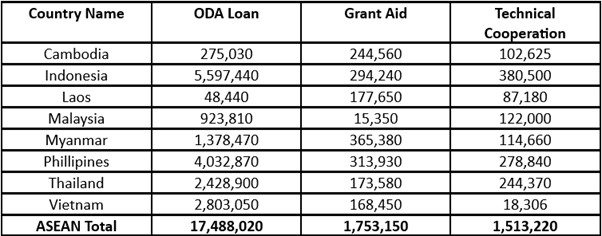
The presence of populist campaigns could direct Japan’s foreign policies into an inward-looking stance. Questions have arisen about whether this may adversely affect foreign aid to recipient countries, notably, the members of ASEAN. A review of the figures (Table 1) indicates that a huge proportion of Japan’s ODA is distributed among Southeast Asian countries.


Japan’s ODA to ASEAN (in million yen)

Source: ODA Data Book by Country 2023, MOFA,  in
the
Ministry of Foreign Affairs of Japan (MOFA), 2025.


These concerns are not without basis. Shortly after being re-elected, President Trump instructed the suspension of U.S. foreign aid to other countries. The White House (2025) argued that the halt was intended to reassess the programme, which is distributed through various schemes of humanitarian issues. The policy itself is in line with Trump’s America First campaign. A populist proposal proved successful in securing his victory in the 2024 presidential election.

Sanseito, a rising populist opposition party in Japan, has consistently aligned with populist rhetoric that mobilizes the masses who are insecure about the current socioeconomic reality of today’s Japan (Takao, 2025). This faction later antagonizes the elite, whom they believe are responsible for the problems faced by Japanese society. In this context, Sanseito’s Japanese First slogan is a direct rendering of Trump’s America First. Both campaigns share the same characteristics. They embrace the ultra-conservative and nationalist ideologies while blaming the immigrants, liberal elites, and foreign capital (McCurry, 2025). The question that arises is whether Sanseito would also target Japan’s ODA scheme?

The short answer is no. As of today, Sanseito has never directly expressed any objection towards Japan’s ODA programme. Nevertheless, they repeatedly express their pessimistic stance towards globalism, which they view as a large corporation and the ideology of capital owners. From their view, globalism only produces economic injustice, undermines democracy, weakens the middle class, and erodes national sovereignty and identity (Sugawara, 2025).

If Sanseito decides to oppose the ODA programme, they would not be able to push for any substantial change of said policy, given the small size of their coalition inside the government. Here lies the major difference between Trump’s America First and Sanseito’s Japanese First: one represents a ruling regime, while the other is a minority opposition. Nevertheless, Sanseito’s popularity has increased in the last three elections. The party managed to increase the size of its seat in the House of Representatives to fifteen in the latest general election (Sonobe et. al., 2026). If this tendency continues, then Sanseito can be a game changer in Japanese foreign policy-making.


Putting Takaichi in the Equation

Our focus now turns to Sanae Takaichi. As the Prime Minister of Japan, her stance on Japanese ODA is significant. On various occasions, Takaichi has campaigned in line with Sanseito’s sentiments (see Simpson, 2025). Despite her use of populist rhetoric, Takaichi cannot be simply labelled as a populist actor. We need to differentiate between a populist and an opportunist who use general populist themes (such as conservatism and nationalism) to secure their vote.

As Prime Minister Shinzo Abe’s protégé, Takaichi is likely to continue the legacy of her mentor, the existing Free and Open Indo-Pacific strategy (Anindya, 2025). Takaichi will not deliberately sever ties with ASEAN, given its centrality to Japan’s economy and regional stability. Developing countries that act as an economic engine for ASEAN, such as Indonesia, Vietnam, and the Philippines, are expected to continue receiving assistance for domestic infrastructure and institutional initiatives.

Through the ODA programme, Japan has actively contributed to the development of ASEAN member states. In Jakarta and Manila, Japan has supported public transportation projects. In disaster risk management, the Japan-ASEAN Integration Fund has supported ASEAN’s humanitarian assistance and disaster management efforts. In terms of health cooperation, Japan has assisted ASEAN in strengthening the association’s capacity to respond to public health emergencies (MOFA, 2025).

In our analysis, Takaichi would respond to the citizens of Japan’s opinion on the issue of international cooperation funding. A poll from the Ministry of Foreign Affairs (2026) showed that 50,3% of Japanese respondents believe that the ODA scheme plays a role in securing resources and food. Some respondents also agree that ODA helped to promote peace, stability, and increase the prosperity of Japan while also increasing Japan’s exports. This highlights the positive sentiment of Japan’s citizens towards the ODA strategy.

To conclude, the generally positive sentiment among citizens validates the government’s policy on ODA spending. The populist actor Sanseito has also not targeted international assistance policy on a large scale, in contrast to the Trump administration in the United States. Populist in Japan have instead focused primarily on domestic socioeconomic issues, such as immigration and the economy. This helps explain the near absence of campaigns against ODA in Japan, which in turn supports the continuation of the program.

Securitizing Migration: Political Polarization and the Institutionalization of ICE Enforcement in the United States

Securitizing Migration: Political Polarization and the Institutionalization of ICE Enforcement in the United States

Vol. VII / No. 8 | May 2026

Authors:

Clarissa Aldora Simamora – Undergraduate Student, Department of International Relations, Brawijaya University


Summary

Following the 2024 U.S. presidential election, Immigration and Customs Enforcement (ICE) arrests increased sharply, with enforcement intensity varying widely across states. This article argues that these disparities reflect the securitization of migration within a polarized political environment. Immigration governance has shifted from routine regulation toward institutionalized security enforcement embedded in detention systems and local policing. Drawing on enforcement data and empirical research on social impacts, the article shows how political polarization and public performance politics normalize extraordinary measures. While intensified enforcement is justified in the name of sovereignty and public safety, its consequences extend beyond arrest figures, affecting immigrant communities and student achievement. The article ultimately highlights a tension between state-centered security and human security, questioning whether current enforcement strategies reinforce long-term stability or generate deeper structural insecurity.

Keywords: Migration, Securitization, ICE, Politics of Fear, Human Security

Political Polarization and Uneven Enforcement

It is not only partisan divides that shape immigration enforcement on the ground. Enforcement patterns are also influenced by institutional capacity, prosecutorial discretion, and the willingness of local law enforcement agencies to cooperate with federal authorities. Democratic-led states such as California generally support sanctuary policies and limit cooperation with federal immigration agencies, thereby reducing the operational reach of ICE within local jurisdictions. By contrast, Republican-led states such as Texas often mandate collaboration with federal authorities, prohibit sanctuary protections, and strengthen federal–local enforcement partnerships. These differing political orientations shape whether immigration enforcement becomes more constrained or normalized within state governance. As a result, federal immigration enforcement is implemented unevenly across states and is significantly influenced by domestic political dynamics and partisan alignments.

Such fragmentation has broader implications. It generates inconsistent exposure to enforcement risks, meaning that the lived experience of immigration policy differs dramatically depending on state of residence. This territorial unevenness reinforces the perception that migration governance is not merely legal administration but an arena of political contestation. Enforcement intensity becomes a symbolic extension of partisan identity, deepening polarization rather than producing uniform regulatory outcomes.

ICE arrest data show a sharp increase following the 2024 election, as documented by the UCLA Center for Neighborhood Knowledge (2025).  However, enforcement intensity differs dramatically across states. In some states, arrest rates remain below one per 1,000 non-citizens, while in others they exceed twenty per 1,000—an extraordinary disparity detailed in State Variations in ICE Arrests (2025). These differences are too large to be explained simply by demographic distribution or uniform federal statutes.

A closer comparison between California and Texas illustrates this divergence. Despite California having a comparable or larger non-citizen population, Texas recorded significantly higher arrest rates after adjusting for exposure risk, as shown in the California limits cooperation with federal immigration authorities, while Texas mandates collaboration and prohibits sanctuary-style protections, as also discussed in the ICE Arrests in California and Texas (2025). These differences demonstrate how immigration enforcement is shaped not only by federal law, but also by state-level political priorities and local institutional cooperation.

These patterns demonstrate that immigration enforcement is not merely the mechanical execution of federal law. Instead, it is filtered through local political will, institutional cooperation, and partisan alignment. Immigration policy becomes territorially differentiated, reflecting ideological divides rather than uniform administrative practice. In this sense, enforcement intensity operates as an extension of political identity.

Framing Migration as a Security Threat

Securitization theory provides a framework for understanding how migration shifts from policy issue to perceived existential threat. As explained in Security Studies: An Introduction (4th ed.), securitization occurs when political actors frame an issue as requiring extraordinary measures beyond normal democratic procedures.

The conceptual foundations of this approach are elaborated in Regions and Powers: The Structure of International Security (2003), which argues that security is socially constructed rather than objectively determined. Migration does not inherently threaten state survival. It becomes threatening when framed as endangering sovereignty, identity, or social cohesion.

Debates within contemporary security scholarship, summarized in Modern Schools of Thought in Security Studies (2023), further show how migration is often placed within the societal security sector. Here, concerns about cultural change and national identity become central to political discourse.

In the U.S. context, decades of rhetoric linking immigration to crime, border disorder, and demographic anxiety have contributed to this framing. Once migration is accepted as a security issue, expanded enforcement powers become politically defensible. Emergency language justifies extraordinary measures.

This idea is supported by what securitization scholars call “audience acceptance,” in which security narratives become influential once they are accepted and reproduced by the public. In contemporary securitization theory, threat narratives gain power not only because political elites promote them, but also because they resonate with segments of society that perceive demographic shifts, economic competition, or cultural change as destabilizing forces. This dynamic is further discussed in The US Deportation System: History, Impacts, and New Empirical Research (2025). Threat narratives gain power not simply because political elites articulate them, but because they resonate with segments of the public who perceive demographic change, economic competition, or cultural transformation as destabilizing forces. This dynamic is reflected in recent public opinion research on immigration enforcement in sensitive locations. A national survey conducted by In polarized political environments, such narratives become self-reinforcing. Media ecosystems amplify selective incidents, transforming isolated events into generalized patterns of perceived insecurity.

Over time, repeated exposure to such framing can normalize the assumption that migration inherently carries risk. The boundary between exceptional emergency and routine governance begins to blur. Once migration is widely understood as a security matter, resistance to enforcement expansion becomes politically costly, further entrenching securitized logic within institutional practice.

From Expansion to Institutionalization

Securitization becomes entrenched when embedded in bureaucratic structures. Evidence from The Landscape of Immigration Detention in the United States (2018) shows that detention capacity expanded dramatically over the past three decades, creating a dense nationwide enforcement infrastructure.

The growth of interior enforcement programs is examined in The Impact of Interior Immigration Enforcement on the Lives of Undocumented Immigrants (2024), which highlights how federal–local cooperation integrated immigration control into routine policing practices. Programs such as 287(g) blurred distinctions between civil immigration law and criminal enforcement.

The longer legislative trajectory of enforcement escalation is traced in From IIRIRA to Trump: Connecting the Dots to the Current U.S. Immigration Policy Crisis (2018), which documents how policy reforms steadily broadened deportation authority and normalized detention expansion.

What emerges is not a temporary reaction to crisis but a durable enforcement architecture. Securitization is no longer rhetorical; it is institutionalized through budgets, detention contracts, and interagency cooperation.

Politics of Fear and Executive Performance

Immigration enforcement also operates as political theater. Executive Spectacle Policing: Protest, Immigration, and Lessons from the Performance of State Power in the Trump Era (2025) describes enforcement actions as public displays of executive strength designed to convey authority and decisiveness.

Media amplification plays a crucial role in this process. Highly publicized raids and deportations circulate images of state control. Enforcement becomes visible reassurance to supporters that perceived threats are being managed.

Yet empirical research complicates the narrative linking immigrants to crime. Debunking the Myth of Immigrants and Crime (2020) finds limited evidence supporting claims that immigrants increase criminal activity. The persistence of threat framing therefore relies more on political communication than on statistical reality.

Language contributes symbolically. Beliefs and Opinions about “Illegal” and “Undocumented” Immigrants (2025) shows that terminology alone does not significantly change public attitudes, but reflects partisan alignment. Words signal identity more than they transform perception.

Together, these dynamics reveal how fear operates as a political resource. Enforcement is justified not only through law but through spectacle and narrative reinforcement.

Human Security and Intergenerational Consequences

Research on local immigration enforcement has also identified measurable educational consequences. ICE at the Door, Tests on the Floor: Student Achievement and Local Immigration Enforcement (2025) found that large-scale ICE arrest operations were associated with declining standardized test scores among Hispanic students, particularly in communities directly exposed to immigration enforcement activities. The study suggests that fear, stress, and disruptions within immigrant households can negatively affect students’ academic performance.

The consequences of immigration enforcement affect not only undocumented youth but also U.S. citizen children living in immigrant households. The same study suggests that increased absenteeism, stress, and fear within these communities can negatively affect students’ educational performance and contribute to broader intergenerational consequences. As a result, immigration enforcement produces indirect but tangible disruptions that may hinder long-term educational outcomes.

Broader psychological consequences are documented in The Impact of Immigration and Customs Enforcement on Immigrant Health (2011), which reports heightened anxiety, social withdrawal, and distrust toward public institutions. Fear extends beyond legal status and reshapes everyday life.

From a human security perspective, these findings raise normative concerns. As argued in The New Security Studies and Soft Power (2011), security should not be confined to state survival but encompass emancipation and individual well-being. When enforcement policies generate structural educational and psychological harm, the meaning of security becomes contested.

Conclusion: Competing Logics of Security

The surge in ICE arrests following the 2024 election reflects more than policy recalibration. It reveals how migration has been securitized, embedded in institutional practices, and normalized through political performance.

Territorial disparities demonstrate that enforcement intensity reflects partisan governance. Detention expansion shows bureaucratic entrenchment. Public spectacle reinforces narratives of threat. Empirical research reveals measurable social costs.

Migration governance thus becomes a site of competing security logics. One prioritizes sovereignty, control, and deterrence. The other emphasizes dignity, stability, and long-term social cohesion. The central question is not whether security matters, but whose security is prioritized—and whether the pursuit of state-centered security ultimately undermines the human foundations upon which it depends.

References

Ong, P., Ong, J., & Pech, C. (2025, July 30). State variations in ICE arrests. UCLA Center for Neighborhood Knowledge. https://knowledge.luskin.ucla.edu/2025/07/30/state-variations-in-ice-arrests-following-the-2024-election/

Ong, P., & Ong, J. (2025, September). ICE arrests in California and Texas: Polarized politics and outcomes. UCLA Center for Neighborhood Knowledge. https://knowledge.luskin.ucla.edu/wp-content/uploads/2025/09/UCLA_CNK_ICE_Arrests_CA_TX_Sept2025.pdf

Nyman, J. (2023). Securitization. In P. D. Williams & M. McDonald (Eds.), Security studies: An introduction (4th ed., pp. 219–242). Routledge. https://doi.org/10.4324/9781003247821-9

Ryo, E., & Peacock, I. (2018). The landscape of immigration detention in the United States. American Immigration Council. https://www.americanimmigrationcouncil.org/wp-content/uploads/2025/01/the_landscape_of_immigration_detention_in_the_united_states.pdf

Hacker, K., Chu, J., Leung, C., Marra, R., Pirie, A., Brahimi, M., English, M., Beckmann, J., Acevedo-Garcia, D., & Marlin, R. P. (2011). The impact of Immigration and Customs Enforcement on immigrant health: Perceptions of immigrants in Everett, Massachusetts, USA. Social Science & Medicine, 73(4), 586–594. https://doi.org/10.1016/j.socscimed.2011.06.007

Buzan, B., & Wæver, O. (2004). Regions and powers: The structure of international security. Cambridge University Press.

Wong, T. K., & Shklyan, N. (2024). The impact of interior immigration enforcement on the lives of undocumented immigrants. The Journal of Race, Ethnicity, and Politics, 6(3), 669–687. https://doi.org/10.1017/rep.2024.19

Zhirkov, K., & Brehm, R. H. (2025). Beliefs and opinions about “illegal” and “undocumented” immigrants: Conceptual replication of a null result. Research and Politics, July-September 2025, 1–5. https://doi.org/10.1177/20531680251355233

Sorg, E. T. (2025). Executive spectacle policing: Protest, immigration, and lessons from the performance of state power in the Trump era. Policing and Society. https://doi.org/10.1080/10439463.2025.2535670

Al-Rasheed, M. A. A., & Al-Saeedi, U. M. B. (2023). Modern Schools of Thought in Security Studies. Migration Letters, 20(S5), 646–660.

Bennett, C., Graves, V., & Meadows, B. (2025). ICE at the Door, Tests on the Floor: Student Achievement and Local Immigration Enforcement. RSF: The Russell Sage Foundation Journal of the Social Sciences, 11(4), 104–122. https://doi.org/10.7758/RSF.2025.11.4.05

Kerwin, D. (2018). From IIRIRA to Trump: Connecting the Dots to the Current US Immigration Policy Crisis. Journal on Migration and Human Security, 6(3), 192-204. https://doi.org/10.1177/2331502418786718

Reshad, A. (2011). The new Security Studies and Soft power. Journal of American Science, 7(12), 1031-1036.

American Immigration Council. (2024). Debunking the myth of immigrants and crime (Fact Sheet). https://www.americanimmigrationcouncil.org/wp-content/uploads/2025/01/debunking_the_myth_of_immigrants_and_crime.pdf

Blackburn, C. C., & Callaghan, T. (2025). U.S. public opinion about immigration enforcement in sensitive locations. Journal of Immigrant and Minority Health, 28(1), 9–22. https://doi.org/10.1007/s10903-025-01772-0

Patler, C., & Jones, B. (2025). The US deportation system: History, impacts, and new empirical research. RSF: The Russell Sage Foundation Journal of the Social Sciences, 11(4), 1–24. https://doi.org/10.7758/RSF.2025.11.4.01

Accessibility