Rethinking ASEAN’s Role in Protecting Migrant Workers under the Kafala System

Rethinking ASEAN’s Role in Protecting Migrant Workers under the Kafala System

Vol. VII / No. 12 | August 2026

Authors:
Muhammad Atiqurrahman, Sania Idayu Virginia & Izzadin Rashaad Lubis – Undergraduate Program Department of International Relations, Faculty of Social and Political Sciences, Universitas Indonesia

Summary

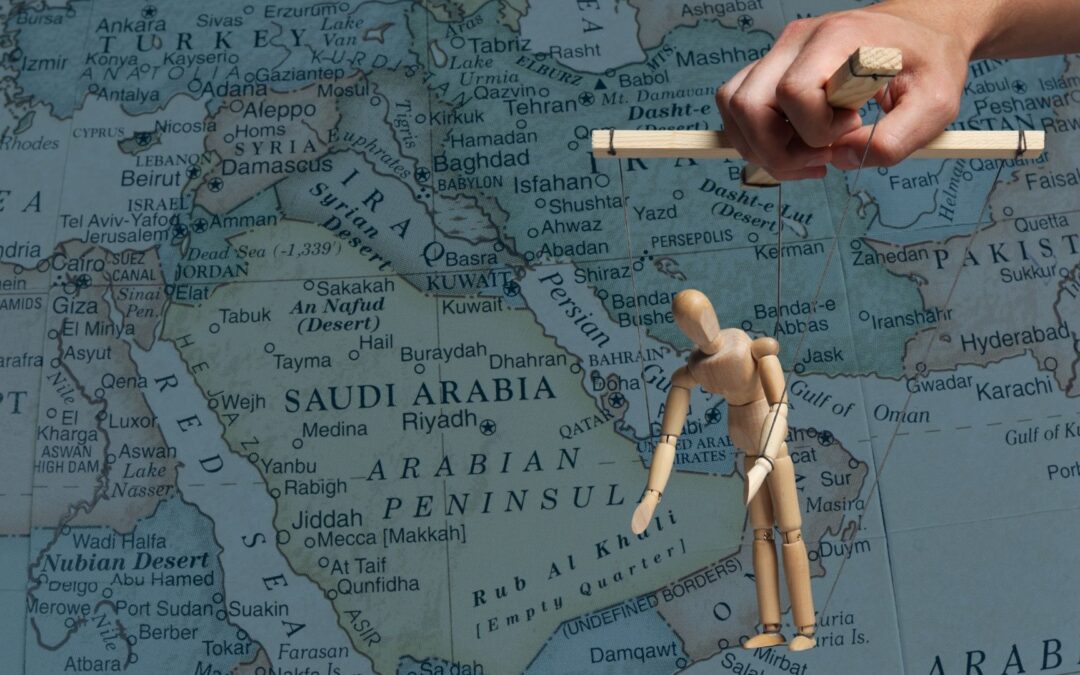
Gulf countries have consistently remained as a major destination for migrant workers from Southeast Asia. Despite ASEAN’s longstanding commitments to migrant worker protection, exploitation and violation of migrant workers continue to happen under a sponsorship mechanism known as the Kafala System. This article showcases ASEAN’s institutional challenges in protecting its citizens abroad. Existing regional mechanisms rely heavily on non-binding norms and bilateral diplomacy, limiting ASEAN’s ability to collectively influence labour governance beyond Southeast Asia.

Keywords: Kafala system, Gulf country, Migrant Worker, Rights, Consensus

Introducing The Kafala System

Over the past few decades, Gulf countries such as Saudi Arabia, the United Arab Emirates, Qatar, Kuwait, Bahrain, and Oman have become major destinations for migrant workers from Southeast Asia (Varia, 2008). In 2024, around 4.3 million ASEAN migrants were located in Western Asia, with the Gulf states serving as key destinations particularly for Filipino and Indonesian workers (International Labour Organization, 2025).

An important point to highlight is that many of these workers are employed under the Kafala system, a labor sponsorship system widely practiced across the Gulf countries. Under this system, migrant workers are only allowed to enter and work in a Gulf country if they have a sponsor who is responsible for their visa, residence permit, employment contract, and repatriation (Malaeb, 2015). As a result, migrant workers become highly dependent on their sponsors and are often unable to freely change jobs, leave the country, or maintain their legal status without employer approval.

Domestic workers often face greater exposure to exploitation and abuse under this system. As domestic work is often viewed as low-skilled labor, legal protections for domestic workers tend to be much weaker than those in formal sectors. Their vulnerability is further intensified by the fact that they work within private households, where state oversight is limited, access to legal assistance remains constrained, and cases of abuse are often difficult to detect (Malaeb, 2015). Many workers also remain trapped in exploitative working conditions due to migration-related debt, fear of losing income, or concerns about being sent home without financial gains (Longva, 1999).

The high number of human rights violations against migrant workers in Gulf countries, which include forced labor, unpaid wages, human trafficking, physical abuse, and sexual harassment, highlights a prevalent issue with said system (Malaeb, 2015). Data from the International Organization for Migration (IOM) shows that human trafficking has become a serious threat along migration routes to GCC countries. In the UAE, for example, the government identified 121 trafficking victims between 2024 and 2025, including victims from Indonesia, Myanmar, and the Philippines (U.S. Department of States, 2025). This situation is particularly ironic given that recent data shows Gulf countries remain highly dependent on migrant labor (International Organization for Migration, 2024). By exposing millions of ASEAN migrants to persistent exploitation and human rights violations, the Kafala system presents a challenge that extends beyond individual states and demands a more coordinated regional response.


ASEAN’s Framework for Migrant Protection

ASEAN’s institutional response to migrant worker protection rests on two principal instruments, the 2007 Cebu Declaration  (Association of Southeast Asian Nations, 2012) and the 2017 ASEAN Consensus (Association of Southeast Asian Nations, 2017), both of which set out shared principles for sending and receiving states within Southeast Asia. Neither instrument imposes binding legal obligations on member states, and both remain confined in practice to intra-regional labour flows rather than the far larger corridors connecting Southeast Asia to the Gulf.

Adopted at the 12th ASEAN Summit in January 2007, the Cebu Declaration asked receiving and sending states to uphold the dignity of migrant workers, cooperate on cases involving undocumented workers through no fault of their own, and facilitate consular access for workers in detention (Association of Southeast Asian Nations, 2007). As a declaration rather than a treaty, it carried no enforcement mechanism and explicitly avoided regularising the status of undocumented workers. By tasking ASEAN bodies with developing a follow-up instrument, a mandate that took a full decade to fulfil. That same follow-up process led to the establishment of the ASEAN Committee on the Implementation of the ASEAN Declaration on the Protection and Promotion of the Rights of Migrant Workers (ACMW), the sectoral body that has carried this agenda ever since (Association of Southeast Asian Nations, 2022).

The ASEAN Consensus on the Protection and Promotion of the Rights of Migrant Workers was eventually signed at the 31st ASEAN Summit in Manila on 14 November 2017, under the Philippines’ ASEAN chairmanship (International Labour Organization, 2017). The consensus affirms protection against passport confiscation and excessive recruitment fees, guarantees fair remuneration and safe working conditions, and recognises migrant workers’ right to join trade unions (Association of Southeast Asian Nations, 2017). Yet it remains, by ASEAN’s own description, a “living and evolving document” precisely because it is not legally binding (Association of Southeast Asian Nations, 2017). Implementation was left to a subsequent Action Plan (2018-2025) which the ACMW oversees and periodically reviews through member states’ self-assessments (International Labour Organization, 2020).

The ACMW convenes regularly as a subsidiary body under the ASEAN Labour Ministers Meeting, its sixteenth meeting in Jakarta in 2023 being one recent example, to track the Action Plan’s progress and coordinate new instruments (Association of Southeast Asian Nations, 2023). In recent years, ASEAN has adopted several supplementary declarations that broaden this framework’s scope, including instruments on the portability of social security benefits, the protection of migrant workers and their families during crises, and the placement of migrant fishers (Association of Southeast Asian Nations, 2023). ASEAN has also institutionalised the ASEAN Forum on Migrant Labour, an annual multi-stakeholder platform, first convened in 2008, that brings together governments, employers, workers’ organisations, and civil society to generate policy recommendations (Association of Southeast Asian Nations, 2022). These developments show a framework that keeps expanding in ambition. Yet, every instrument in it remains a declaration, a consensus, or a work plan rather than a binding legal commitment, and its design still centres on labour mobility within Southeast Asia.

In practice, however, the protection of ASEAN migrant workers in the Gulf has continued to depend primarily on bilateral diplomacy. Following the 2018 diplomatic dispute over the treatment of Filipino domestic workers, the Philippines negotiated a bilateral agreement with Kuwait that introduced stronger protections for domestic workers (Government of the Republic of the Philippines & Government of the State of Kuwait, 2018). Likewise, Indonesia resumed the deployment of domestic workers to Saudi Arabia only after securing additional labour protection measures through bilateral negotiations after the enforcement of its moratorium (Naila, 2026). These initiatives demonstrate that bilateral diplomacy can improve protections for migrant workers, but their benefits remain confined to the nationals of individual negotiating states rather than establishing common regional standards across ASEAN.

Only recently has ASEAN begun engaging the Gulf as a bloc. The inaugural ASEAN-GCC Summit, held in Riyadh in October 2023, produced a joint statement in which both sides agreed to encourage cooperation on orderly and safe labour mobility and to jointly counter trafficking linked to recruitment practices (Association of Southeast Asian Nations and Gulf Cooperation Council, 2023). This commitment sits within the broader GCC-ASEAN Framework of Cooperation (2024-2028), and the relationship was elevated again at the second ASEAN-GCC Summit in Kuala Lumpur in May 2025, though its accompanying declaration concentrated overwhelmingly on trade, investment, and energy cooperation rather than labour protection (Association of Southeast Asian Nations, 2025). Neither summit has yet produced a dedicated instrument on migrant worker protection comparable to the Cebu Declaration or the ASEAN Consensus.


ASEAN’s Future Role in Migrant Worker Protection

Given these institutional limitations, ASEAN’s most realistic contribution lies not in creating new legal obligations, but in strengthening regional coordination. Because labour-sending states continue to negotiate separately with Gulf countries, ASEAN member states have yet to leverage their collective position as one of the world’s largest sources of migrant labour (Association of Southeast Asian Nations, 2023). A more coordinated regional approach could help harmonize protection standards, facilitate information sharing among member states, and strengthen ASEAN’s collective voice in engagements with Gulf Countries. By coordinating common priorities before engaging external partners, ASEAN would also be better positioned to reduce disparities in protection among its member states and encourage more consistent labour governance across migration corridors to the Gulf.

Rather than establishing new institutions, ASEAN could make greater use of existing mechanisms such as the ACMW. Although the ACMW currently functions primarily as a consultative body, its existing mandate provides a foundation for deeper cooperation among member states. Beyond facilitating dialogue, it could serve as a platform for exchanging best practices, coordinating responses to emerging labour rights concerns, and promoting more consistent approaches to migrant worker protection in engagements with destination countries. Expanding the ACMW’s coordinating role would strengthen regional cooperation without departing from ASEAN’s principle of non-interference.

The 2026 Philippine Chairmanship presents a timely opportunity to advance this agenda. As one of ASEAN’s largest migrant-sending countries, with around 10% of its population working abroad, the Philippines has a robust repertoire of migrant protection mechanisms (Asis, 2017). Its leading role in regional cooperation, such as the Cebu Declaration, serves as a paramount proof of this nation’s commitment to protecting migrant workers (Presidential Communication Office, 2026). Although ASEAN cannot reform the Kafala system on its own, strengthening the role of the ACMW could enable it to serve as a pivotal mechanism for coordinating ASEAN member states’ diplomatic leverage and aligning their external engagement with the region’s longstanding commitment to protecting millions of Southeast Asian migrant workers.

Stabilization Without Transformation: Why UN Peacekeeping in Liberia Failed to Deliver Human Security?

Stabilization Without Transformation: Why UN Peacekeeping in Liberia Failed to Deliver Human Security?

Vol. VII / No. 11 | August 2026

Authors:
Lanja Manohisoa Epifaniah – Master’s Programme in International Relations, Faculty of Social and Political Sciences, Universitas Indonesia

Summary

Between 2003 and 2020, The United Nations Mission in Liberia (UNMIL) was one of the largest and most expensive peacekeeping operations in UN history. It suppressed large-scale violence, organized credible elections and formally rebuilt state institutions. Yet by 2020, Liberia’s Human Development Index stood at 0.48, more than half the population lived in poverty, and the health system had collapsed under the stress of the 2014 Ebola crisis. This article argues that UNMIL’s limited human security outcomes are explained by a structural deficit of local ownership: the failure to transfer decision-making authority, ensure inclusive participation, build autonomous institutional capacity, and align reforms with Liberian social and political realities. Applying Donais’s (2012) Local Ownership Framework to 15 years of UNMIL documentation and post-conflict evidence, it appears that the mission achieved stabilisation without transformation: institutions were formally rebuilt, but lacked the legitimacy and autonomy to endure international withdrawal.

Keywords: UNMIL, Human Security, Local Ownership, Peacebuilding, United Nations Peacekeeping

A Warning from Monrovia

In December 2025, Sweden announced it would close its embassy in Monrovia and wind down decades of development aid to Liberia, following earlier cuts by the United States and the European Union. For a country whose police, courts and clinics still lean heavily on money from the United States, mainly through USAID, and a small group of European partners such as Sweden and Ireland (AllAfrica, 2025).

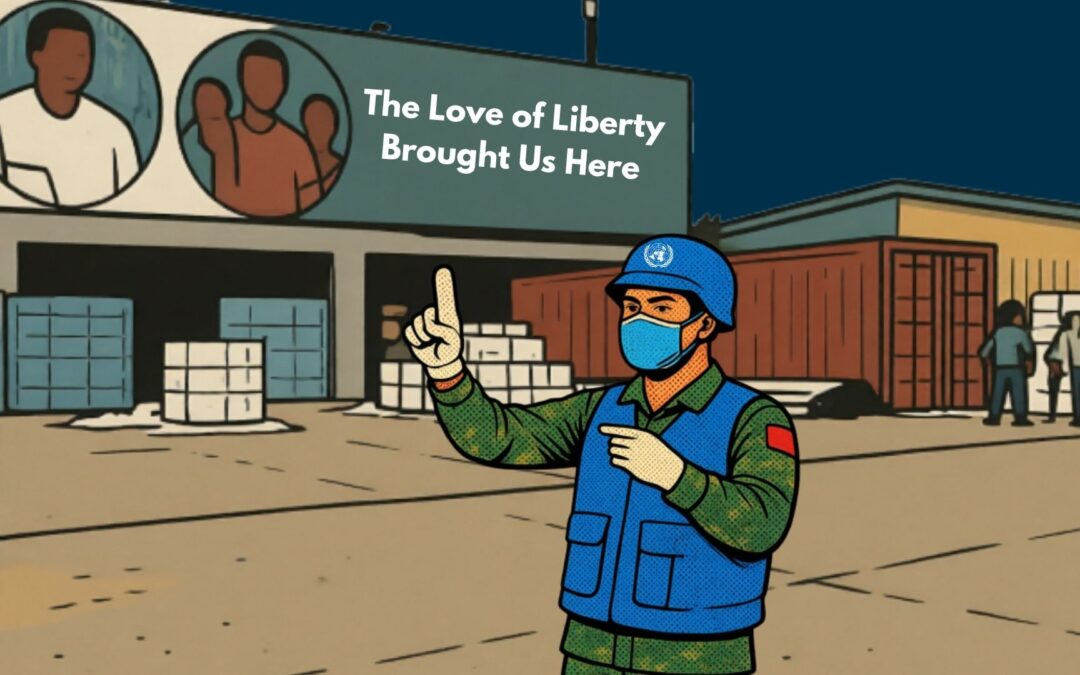
The United Nations Mission in Liberia, known as UNMIL, was at its peak one of the largest and most expensive peacekeeping operations in UN history. It ended fourteen years of civil war, organised three peaceful elections, and helped rebuild a national army and police force from collapse. On paper, it worked. Yet by 2020, when UNMIL packed up and left, Liberia’s Human Development Index, the United Nations’ composite score for health, education and income, stood at just 0.48, placing the country among the ten least developed nations on Earth (UNDP, 2020). More than half the population lived in poverty (World Bank, 2024).


The Peacekeeping Paradox in Liberia

Liberia presents a puzzle standard peacekeeping metrics cannot resolve. UNMIL ended two decades of civil war, established a transitional government, ran three elections with minimal violence, and rebuilt the Armed Forces of Liberia (AFL) and Liberian National Police (LNP) from collapse. By the measures that peacekeeping evaluation typically privileges—violence suppression, institutional reconstruction, electoral facilitation—UNMIL performed well. Liberia’s Human Development Index score of 0.48 in 2020 ranked it among the 10 least developed nations globally, showing little change from the post-war benchmark despite international investment exceeding US$4 billion over 15 years by 2022 (UNDP, 2020; World Bank, 2024).

Liberia’s development indicators barely moved. This same gap, real success at stopping violence paired with institutions too fragile to stand alone, has shown up elsewhere: Congolese police posts fell into disrepair within weeks of each peacekeeper handover in the Democratic Republic of Congo (Africa Center for Strategic Studies, 2024), and security gains in South Sudan have unravelled wherever peacekeepers drew down without a transition plan (United Nations University, 2026). The question worth asking is not whether UNMIL succeeded, but why on-paper success failed to translate into a Liberia that could stand on its own two feet.


Why Rebuilding Institutions Wasn’t Enough

Political scientist Timothy Donais offers one answer through the idea of local ownership (Donais, 2012). His argument, in brief: post-conflict rebuilding only lasts if the people who will live inside the resulting institutions genuinely control them, not merely staff them. Donais breaks ownership into four ingredients: who actually holds decision-making power, whose voices shape reform, whether local institutions can function without permanent outside support, and whether reforms fit a country’s real social and political life rather than an imported template. Reform that ticks these boxes on paper while failing them in practice is what he calls nominal ownership, performed for outsiders rather than built for insiders. Applying this lens to fifteen years of UNMIL’s record shows the mission built exactly that.


Four Ways Local Ownership Was Weakened

Authority. UNMIL operated under a UN Security Council mandate that gave its head, the Special Representative of the Secretary-General, sweeping oversight of the mission, while donor funding rules kept reform priorities answerable to international budgets rather than Liberian needs. The police were rebuilt under a model designed largely by DynCorp International, a private US security contractor regularly hired by the American government to train foreign police and military forces (Devex, n.d.), with little input from Liberian security culture (Search for Common Ground & SIPRI, 2011). The LNP remained 60% donor-dependent in its operational budget by 2024, relying primarily on funding from the United States through USAID, along with support from European partners such as Sweden and Ireland (UNDP, 2018).

Inclusiveness. UNMIL’s outreach machinery was built for people already visible to international institutions: politicians in Monrovia, registered civil-society groups, English speakers. Rural communities, women’s and youth groups, and customary authorities like the Poro and Sande societies—which have long governed land and dispute resolution across rural Liberia (Immigration and Refugee Board of Canada, 2016)—were treated as recipients of reform, not sources of it. Fifteen years was enough time to build a genuinely participatory process; the evidence suggests that effort never happened.”.

Institutional capacity.  The police force was trained up to roughly 4,000 officers using a US-derived model, yet by 2024 only 30 per cent of officers had received adequate post-reform training. With only one officer for every 850 citizens across a predominantly rural country, police coverage remained thin and operational capacity limited. That thin, undertrained force is also part of why the 2014 Ebola outbreak hit so hard: the same reliance on external capacity that left policing hollow had also left the health system without enough trained staff and functioning local institutions to respond once a shock arrived. All ten primary healthcare indicators fell during the crisis, and more people ultimately died from the collapse of routine care than from Ebola itself (Wagenaar et al., 2018). The outbreak did not create this fragility; it revealed capacity that had never really been there.

Contextual alignment. Liberia’s post-war institutions were often built to look right rather than fit right. Land reform frameworks implemented throughout much of UNMIL’s mandate resulted in 40.9% of Liberia’s traditionally held land being formally unrecognised as of 2020. Anti-corruption bodies were established on paper, and Liberia’s score on the Corruption Perceptions Index rose to a peak of 41 out of 100 in 2012 before falling back into the mid-20s within a decade, as international oversight receded (Transparency International, 2024). Reintegration programmes for ex-combatants were designed around a formal job market that absorbed under 8.7 per cent of young workers (International Labour Organization, 2017). Also, Liberia held three credible elections without ever confronting the patronage politics, the exchange of political loyalty for jobs, favours and protection, that had helped fuel the war in the first place and continues to entrench corruption in Liberian politics today (ISS Africa, 2025).


Stabilization Without Transformation

The cumulative effect of these four ownership deficits was a peacebuilding architecture that functioned adequately while external support was present and fragmented progressively when it was reduced. A youth non-employment rate of 23 per cent, a Human Capital Index of 0.32, poverty exceeding 50 per cent — these are not post-withdrawal failures attributable to Liberian governance after UNMIL departed. They are the downstream effects of institutional designs that never built the social embeddedness, financial autonomy, organizational capacity, and contextual legitimacy that self-sustaining institutions require.

The argument I am making is ultimately not about UNMIL specifically. The structural logic of UN peace operations is based on how they are institutionally positioned: accountable to member states rather than the host population, evaluated on quantifiable outcomes rather than social integration, and organised around the assumption that international expertise is both superior to and replaceable by local knowledge. These assumptions did not originate with UNMIL. The liberal peacebuilding framework within which UNMIL operated includes these features.Evidence from Liberia, based on fifteen years of documentation across five institutional domains, illustrates their consequences with unusual empirical clarity. Changing these assumptions requires not better implementation of the existing model, but a fundamental rethinking of what ownership means in practice.


Lessons for Future UN Mission

Four changes could help. Mandates should set binding, time-bound targets for transferring real authority, over agendas, budgets and decisions, throughout a mission’s life, not only as an exit condition. Participation should be rebuilt around community and customary structures, not just urban, English-speaking counterparts. Security reform should start by mapping what security arrangements already exist and enjoy local legitimacy, rather than importing a foreign template. And financing strategies should build toward fiscal independence from day one, since donor dependence on Liberia’s scale never appears suddenly; it accumulates from choices made across a mission’s lifespan.

Accessibility