Australia-Indonesia’s New Security Treaty: A Blast from the Past

Australia-Indonesia’s New Security Treaty: A Blast from the Past

Vol. VI / No. 8 | December 2025

Authors:
Ristian Atriandi Supriyanto
Lecturer, Department of International Relations, FISIP, Universitas Indonesia.
His doctoral thesis analyses Australia-Indonesia relations during the Cold War

Summary

The 2025 Australia-Indonesia Treaty on Common Security (TCS) represents a “blast from the past”—a significant yet retrospective development in bilateral relations. Much like the 1995 Agreement on Maintaining Security (AMS), the TCS prioritizes mutual consultation regarding ambiguous “adverse challenges” rather than committing to specific common actions. While the treaty allows leaders to jointly meet external security challenges, it remains distinct from the 2024 Defence Cooperation Agreement (DCA), which focuses on practical interoperability. However, the TCS relies heavily on the personal rapport between Australia’s Prime Minister Anthony Albanese and Indonesia’s President Prabowo Subianto, mirroring the Keating-Suharto relationship that underpinned the short-lived AMS. Given elite trust is often transient, the TCS cannot rely solely on top-down political signals. Instead, successful security cooperation requires “ground-up” institutionalization to address concrete external threats and ensure the relationship survives beyond current political tenures.

Keywords: Australia-Indonesia Relations, Treaty on Common Security (TCS), Security Cooperation, Strategic-Trust, Institutionalization

Australia-Indonesia’s New Security Treaty: A Blast from the Past

Takaichi’s Rise in Japan: Navigating the Future of Japan-Indonesia Relations

Vol. VI / No. 8 | December 2025

Authors:
Chaula Rininta Anindya
Lecturer at the Department of International Relations, Universitas Indonesia, focusing on Strategic Studies. The views expressed are her own

Summary

Japan has elected its very first Female Prime Minister, Takaichi Sanae.  Takaichi went through a great deal in securing the prime minister’s seat. She finally won the ruling party, the Liberal Democratic Party (LDP)’s presidential position after her third bid. Following her victory in the LDP’s presidential election, she witnessed the collapse of the 26-year coalition between LDP and Komeito (Kamata, 2025). She almost failed to secure the necessary number of votes to become the prime minister. Yet, the last-minute deal with Nippon Ishin no Kai revived her chance (The Japan Times, 2025). What will be the future of Japan under Takaichi’s leadership? This commentary will focus on the prospect of Indonesia-Japan relations under PM Takaichi. The article will firstly discuss the background of PM Takaichi. Then, it will analyse the plausible regional dynamics by identifying Takaichi’s prior actions before the election. Lastly, this commentary will examine the future of Indonesia-Japan relations, emphasising two issues: Takaichi’s ambition on Japan’s regional defence posture and the growing sentiment of foreigners in Japan.

Keywords: Japan, Indonesia, Takaichi Sanae, Free and Open Indo-Pacific (FOIP), Immigration Policy

Australia-Indonesia’s New Security Treaty: A Blast from the Past

Strategic Cyber Diplomacy: Indonesia’s Path

Vol. VI / No. 7 | December 2025

Authors:
Ali A. Wibisono, Ph.D.
Associate Professor of International Security Studies, Department of International Relations, Universitas Indonesia

Summary

Cyber diplomacy is a critical tool for managing digital opportunities and risks, extending statecraft into the borderless virtual domain. Indonesia’s approach is spearheaded by the National Cyber and Crypto Agency (BSSN), which focuses on national security and technical capacity, and the Ministry of Foreign Affairs (MFA), which promotes international law and a peaceful cyberspace. Globally, Indonesia supports the UN’s efforts, including the transition to a permanent “Global Mechanism” for dialogue on ICTs in international security. However, the nation faces a strategic gap: despite extensive diplomatic cooperation, including agreements with countries like China focused on capacity building, Indonesia remains a primary target for state-sponsored cyberattacks, such as those attributed to the China-linked Winnti APT. This highlights that “soft” diplomatic closeness has not prevented “hard” cyber aggression. To bridge this gap, the article recommends strategic reforms: deepening multilateral engagement by formally detailing its stance on international cyber law , strengthening the domestic legal framework with a comprehensive Cyber Security Bill , and shifting focus from reactive defense to proactive threat hunting and technical attribution. Ultimately, a “Whole-of-Nation” approach is mandatory to achieve digital sovereignty.

Keywords: Cyber Diplomacy, Digital Sovereignty, Cyber Attribution, Confidence Building Measures (CBMs), Advanced Persistent Threats (APT), Indonesia

Indonesia and South Korea Explore Collaborative Responses to Digital Terrorism

Indonesia and South Korea Explore Collaborative Responses to Digital Terrorism

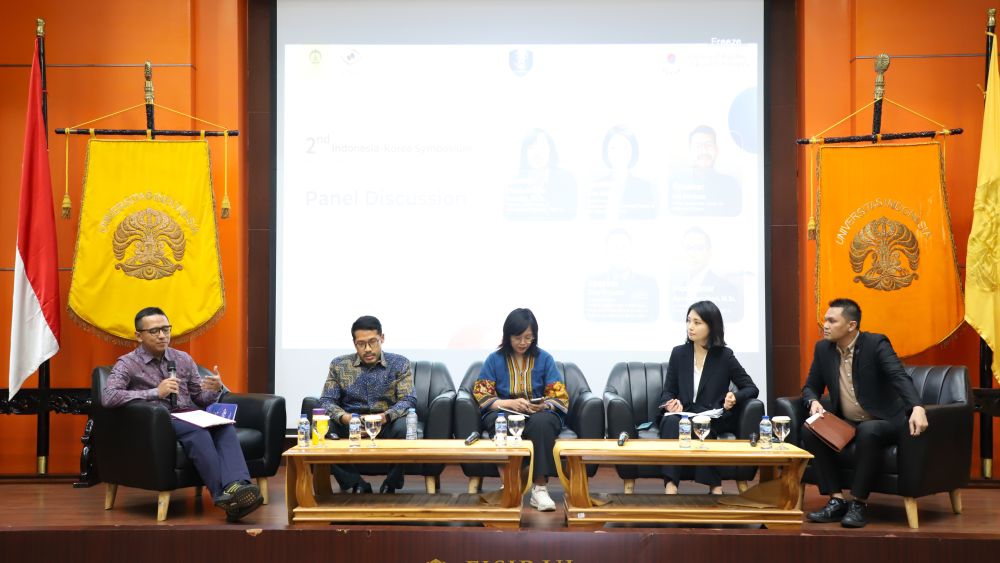
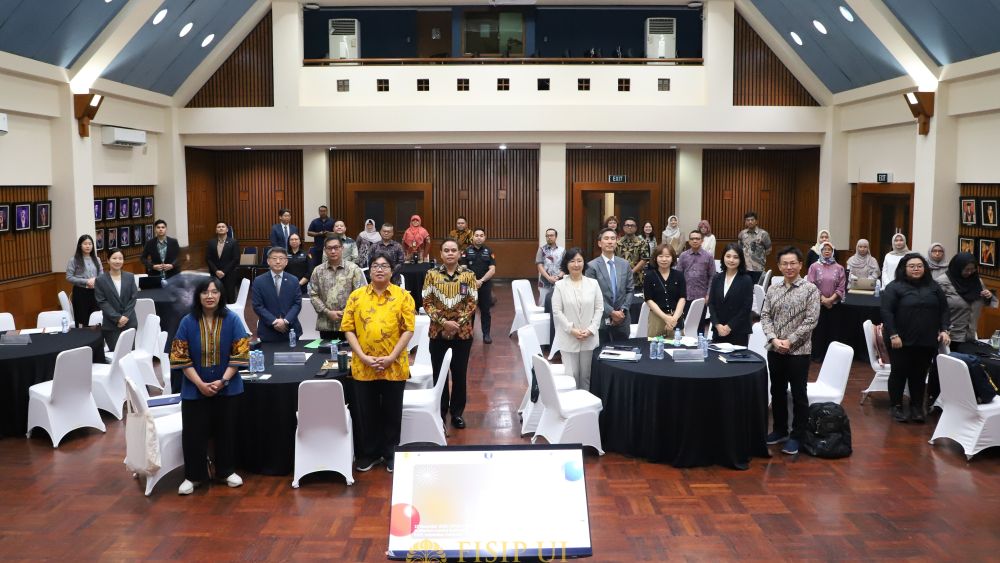
Depok, 10 December 2025 – The Department of International Relations, Faculty of Social and Political Sciences, Universitas Indonesia (IR UI), hosted a public discussion titled “Indonesia–Korea: United Against Digital Terrorism”, bringing together academics, practitioners, and students to examine the evolving challenges of terrorism in the digital era and the importance of international cooperation in addressing emerging security threats.

As digital technologies continue to reshape communication, governance, and social interaction, terrorist networks have increasingly adapted their strategies to exploit online platforms for propaganda, recruitment, financing, and operational coordination. Against this backdrop, the discussion highlighted the need for stronger cooperation between Indonesia and the Republic of Korea in strengthening resilience against digital extremism and cyber-enabled terrorism.

The event provided a platform for participants to explore how technological developments have transformed the security landscape. Speakers emphasized that contemporary terrorism can no longer be understood solely through conventional security frameworks. Instead, governments, academic institutions, technology companies, and civil society organizations must work together to address the multidimensional nature of digital threats.

A key theme throughout the discussion was the growing convergence between cybersecurity and counterterrorism. While digital technologies offer significant opportunities for economic development and social connectivity, they also create new vulnerabilities that can be exploited by extremist actors. Participants noted that social media platforms, encrypted communication channels, and emerging technologies have expanded the operational reach of terrorist organizations beyond traditional geographical boundaries.

The discussion also highlighted the importance of international cooperation in developing effective responses to digital terrorism. Indonesia and South Korea were identified as valuable partners in promoting knowledge exchange, capacity building, and policy innovation in addressing security challenges in the digital domain. Both countries have demonstrated growing commitments to strengthening digital governance while safeguarding democratic values and individual freedoms.

Beyond policy discussions, the event underscored the role of higher education institutions in contributing to public understanding of contemporary security issues. Universities play an important role in fostering critical thinking, promoting digital literacy, and encouraging informed dialogue on emerging global challenges. Through academic engagement and public outreach, institutions such as Universitas Indonesia contribute to building societal resilience against misinformation, radicalization, and extremist narratives.

For IR UI, the discussion reflects its ongoing commitment to examining the intersection of technology, security, and international cooperation. As digital transformation continues to reshape global politics, understanding the implications of cyber-enabled threats has become increasingly important for policymakers, researchers, and future practitioners of international relations.

The event concluded with a shared recognition that addressing digital terrorism requires more than technological solutions alone. Sustainable responses must combine effective governance, international collaboration, public awareness, and inclusive approaches that address the underlying conditions that enable extremist narratives to spread online.

In an increasingly interconnected world, the fight against terrorism is no longer confined to physical spaces. It has expanded into the digital realm, making collaboration, innovation, and knowledge-sharing essential components of contemporary security strategies.

Download Report

Pameran Mata Kuliah Jejaring dan Ruang Transnasional HI UI Angkat Isu Krisis Iklim dan Perebutan Ruang Hidup di Pulau Pari

Pameran Mata Kuliah Jejaring dan Ruang Transnasional HI UI Angkat Isu Krisis Iklim dan Perebutan Ruang Hidup di Pulau Pari

Depok, 2 Desember, 2025 – Departemen Hubungan Internasional (HI) Fakultas Ilmu Sosial dan Ilmu Politik (FISIP) Universitas Indonesia (UI) akan menyelenggarakan sebuah pameran bertajuk #SavePulauPari: Krisis Iklim, Perebutan Ruang Hidup, dan Daya Resiliensi Masyarakat Meraih Keadilan Sosial.

Kegiatan ini merupakan puncak dari pelaksanaan Ujian Akhir Semester (UAS) mata kuliah Jejaring dan Ruang Transnasional, yang bertujuan untuk mendalami isu-isu global melalui lensa lokal, khususnya dampak perubahan iklim dan dinamika sosial yang terjadi di Pulau Pari, Kepulauan Seribu.

Pameran ini akan berlangsung selama tiga hari  dari tanggal 4–5 Desember 2025 pukul 09.00 – 16.00 WIB di Selasar Gedung Nusantara, Kampus FISIP UI, Depok, Jawa Barat

Melalui pameran ini, mahasiswa HI UI berupaya menyoroti tantangan signifikan yang dihadapi masyarakat Pulau Pari akibat kenaikan muka air laut, abrasi, serta konflik lahan yang melibatkan pihak swasta. Isu-isu ini tidak hanya dipahami sebagai masalah lingkungan semata, tetapi juga sebagai persoalan keadilan sosial dan hak asasi manusia yang mendesak.

“Pameran ini merupakan bentuk pembelajaran konkrit yang bukan hanya berhenti pada pengajaran/ perkuliahan di kelas, tetapi mahasiswa diajak untuk turun langsung ke kasus empirik yang ada di lapangan (Pulau Pari) di mana terdapat persoalan dalam pemenuhan hak-hak dasar masyarakat setempat (politik, ekonomi, sosial, lingkungan),” ujar Prof. Ani Widyani selaku Dosen Koordinator Mata Kuliah JRT dan sekaligus Guru Besar FISIP UI Bidang HAM & Gender. Pameran akan menampilkan berbagai materi edukatif, termasuk:

  • Dokumentasi visual dan fotografi hasil riset lapangan
  • Infografis mengenai dampak krisis iklim dan dinamika kepemilikan lahan di Pulau Pari
  • Narasi tentang daya resiliensi dan perjuangan hukum masyarakat lokal

Publik, akademisi, aktivis lingkungan, dan rekan media diundang untuk hadir dan berpartisipasi dalam pameran ini untuk mendapatkan wawasan yang lebih mendalam mengenai salah satu isu lingkungan dan sosial paling relevan di Indonesia saat ini. Direktur Eksekutif WALHI Jakarta, Suci F. Tanjung menyatakan bahwa “Dengan semangat #SavePulauPari, kami ingin menunjukkan bagaimana jejaring transnasional, antara MEDIA, ORGANISASI LINGKUNGAN, AKADEMISI, dan PUBLIK mampu bersinergi, membangun komunikasi, berkampanye, serta melakukan pendidikan dalam bentuk gerakan sosial maupun advokasi, yang memainkan peran krusial dalam upaya masyarakat untuk mempertahankan ruang hidup dan mencari keadilan.” Lebih jauh Jenny Sirait selaku Urban Justice Campaigner Greenpeace Indonesia menyatakan bahwa “solusi berbasis komunitas ala Pulau Pari menjadi inspirasi bagi komunitas yang bekerja demi melawan krisis iklim dan lingkungan, serta ancaman korporasi.

Accessibility