May 1, 2025 | event
Depok, 30 April 2025 – Departemen Hubungan Internasional, Fakultas Ilmu Sosial dan Ilmu Politik Universitas Indonesia (DHI FISIP UI), telah resmi meluncurkan Program Studi Doktoral Hubungan Internasional (HI) melalui seminar akademik bertajuk “Keberlanjutan Strategi Hedging Asia Tenggara dalam Menghadapi Proteksionisme dan Memperkuat Ekonomi Hijau”, yang diselenggarakan di Auditorium Mochtar Riady, Kampus UI Depok.
Acara ini dihadiri oleh kalangan akademisi, mahasiswa, diplomat, peneliti, dan praktisi hubungan internasional baik dari dalam maupun luar kampus UI. Seminar ini menjadi langkah strategis DHI FISIP UI dalam memperkuat posisi Indonesia sebagai pusat pengembangan studi Hubungan Internasional yang kritis, reflektif, dan kontekstual terhadap tantangan global.
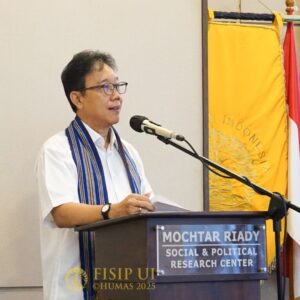
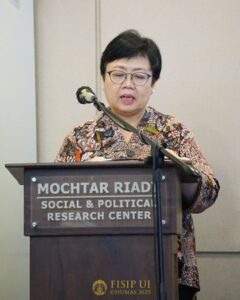
Acara dibuka dengan sambutan dan keynote speech dari Prof. Dr. Ani W. Soetjipto, M.A., yang menekankan pentingnya dekolonisasi dalam studi hubungan internasional serta peran Asia dan Afrika dalam memperjuangkan hak asasi manusia global. Prof. Ani mengingatkan bahwa Indonesia perlu membongkar logika pembangunan yang monolitik demi memberi ruang bagi kelompok marginal.


Diskusi utama seminar menghadirkan para pakar dari dalam dan luar negeri:
- Kuik Cheng-Chwee (National University of Malaysia) menjelaskan bahwa hedging merupakan strategi aktif berbasis diversifikasi dan adaptasi, sangat relevan dalam menghadapi dinamika kekuatan besar dunia.
- Shofwan Al Banna Choiruzzad, Ph.D. menambahkan bahwa Indonesia perlu beranjak dari strategi bertahan ke arah visionary hedging—yakni kebijakan luar negeri yang proaktif, tidak hanya merespons krisis, tetapi mampu mengantisipasi perubahan jangka panjang.
- Evi Fitriani, Ph.D. menekankan bahwa sentralitas ASEAN sangat bergantung pada kesatuannya. Ia juga menyatakan bahwa diplomasi bilateral Indonesia sering kali lebih efektif ketimbang menunggu konsensus kawasan.
- Dr. Alexius Djemadu membahas kecenderungan sistem perdagangan global yang kian deal-based dan tanpa kepemimpinan (G-Zero), sementara Prof. Dr. Fredy B. L. Tobing menggarisbawahi bahwa proteksionisme justru dapat menghambat kemajuan ekonomi hijau, dan kerja sama Selatan-Selatan perlu dihidupkan kembali.
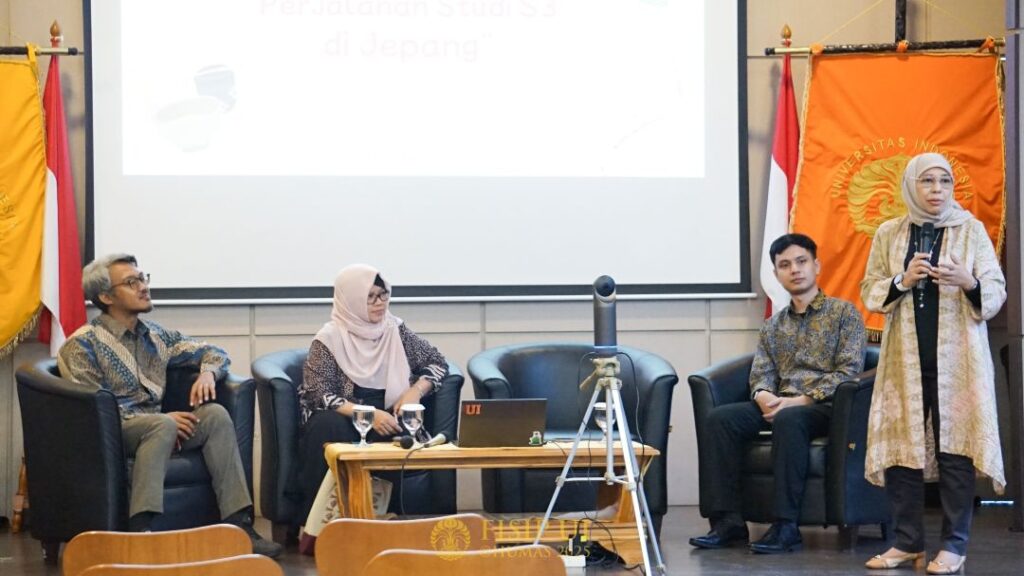
Dalam sesi khusus mengenai pendidikan doktoral, para pembicara merefleksikan realitas akademik dan tantangan dalam menempuh studi tingkat doktoral.
- Asra Virgianita, Ph.D. berbagi pengalaman studi doktoral di Jepang, termasuk tantangan dalam publikasi akademik dan pentingnya kesiapan mental.
- Nurul Isnaeni, Ph.D. menyampaikan bahwa kurikulum program doktoral HI FISIP UI dirancang untuk menghasilkan riset akademik yang unggul dan berdampak nyata.
- Sementara itu, Dr. phil. Yandry Kurniawan menyoroti kelemahan mendasar dalam sistem pendidikan tinggi nasional, khususnya minimnya budaya riset dan penulisan akademik yang kuat.

Dalam kegiatan seminar ini, dihadirkan pula Mahasiswa Program Doktor HI FISIP UI angkatan pertama yang memulai studi mereka pada Semester Genap Tahun Akademik 2024/2025. Mahasiswa Program Doktor yang bertindak sebagai moderator dan penanggap diskusi setiap sesi, yaitu: Vahd Nabyl Achmad Mulachela, S.IP., M.A., Indra V. A. Krishnamurti, S.Sos., M.AsianSt., dan Kevin Ali Sesarianto, S.Sos., M.Si. Selain itu, beberapa mahasiswa lainnya doktoral juga berkontribusi sebagai penanggap, diantaranya Nida Nidyarti Rubini, S.IP., M.Si., dan Aditya Permana, S.Fil., M.Hum.
Seminar peluncuran Program Doktoral HI FISIP UI ini menjadi tonggak awal dalam membentuk komunitas akademik yang tidak hanya unggul secara intelektual, tetapi juga mampu memberi kontribusi nyata (impactful) bagi Indonesia dan masyarakat dunia dalam menjawab tantangan global, baik di level kawasan maupun internasional.
Untuk informasi lebih lanjut mengenai program doctoral HI FISIP UI ini, kunjungi:
🌐 ir.fisip.ui.ac.id
📸 Instagram: @internationalrelationsui
📍 IR FISIP UI
✉️internationalrelations@ui.ac.id
Apr 24, 2025 | event
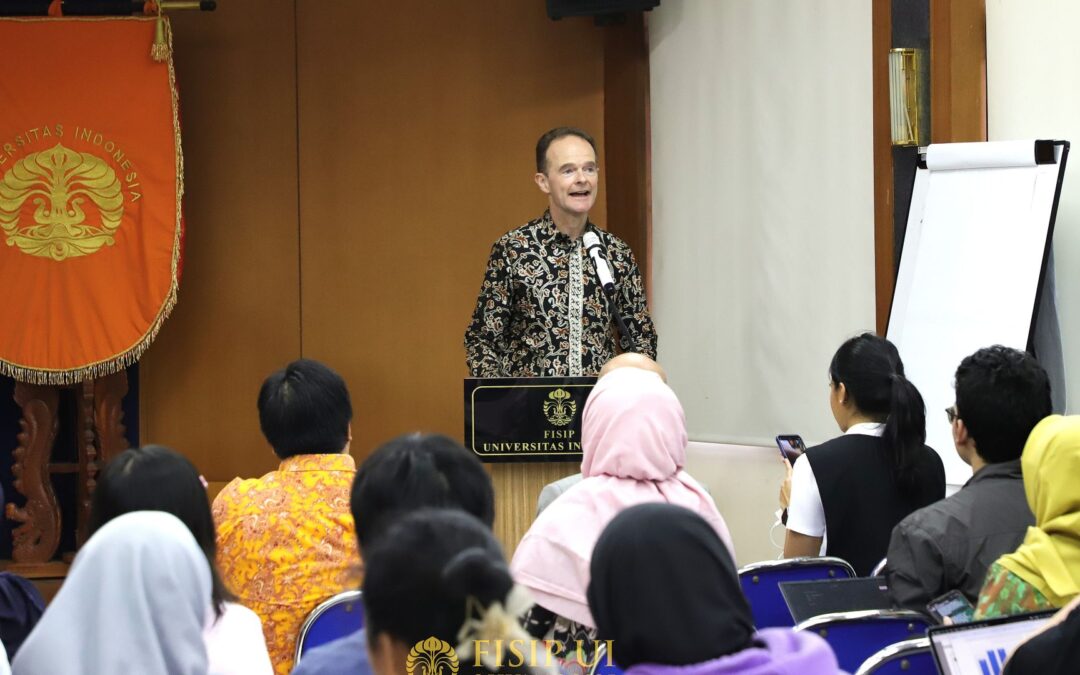
Depok — On April 23, 2025, Graduate Program of International Relations, FISIP Universitas Indonesia, held a studium generale with H.E. Dominic Jermey, British Ambassador to Indonesia and Timor-Leste. The event, titled “UK Foreign Policy in Contemporary Global Affairs,” brought together students and academics to explore how the UK is responding to today’s global challenges.
In his speech, Ambassador Jermey explained how current global issues like economic instability, climate change, and social division are shaping the UK’s foreign policy. He highlighted four major concerns: global economic risks, climate change, rising misinformation and social polarization, and the use of artificial intelligence—both its benefits and potential dangers.

Ambassador Jermey also shared the UK’s six key foreign policy priorities: economic growth, security, international partnerships (especially post-Brexit), migration management, climate action, and inclusive development. The Ambassador emphasized the UK’s commitment to strong partnerships, including with Indonesia, especially in trade, education, climate, and ocean conservation.
Ambassador Jermey praised Indonesia’s growing global role and welcomed President-elect Prabowo Subianto’s recent meeting with the UK Prime Minister as a sign of stronger ties. The UK supports Indonesia’s efforts to join the OECD, grow its blue economy, and improve education and healthcare.
During the Q&A session, the Ambassador discussed how the UK is adapting after Brexit, cooperating with ASEAN more directly, and tackling illegal migration and regional security threats. He also expressed support for a peaceful solution to the conflict in Gaza and emphasized the importance of protecting civilians.
Mar 6, 2025 | event
Depok, 5 March 2025 — The Department of International Relations, Faculty of Social and Political Sciences, Universitas Indonesia, welcomed Prof. Ian Roberge, Ph.D., from York University, Toronto, Canada, as the distinguished speaker for its March 2025 edition of the IR UI Monthly Discussion series. The event, titled “Asymmetric Neighbours & International Relations: Canadian Foreign Policy in a Trumpian North America,” took place at the HI UI Meeting Room, Gedung Nusantara 2, FISIP UI Campus.
With a timely relevance theme, Prof. Roberge explored the complex and evolving nature of Canadian foreign policy in light of rising political asymmetries and the populist undercurrents characterizing U.S. politics, especially during and after the Trump era. The session attracted academics and students who engaged in thoughtful dialogue on Canada’s strategic dilemmas.
The session concluded with a vibrant Q&A discussion, drawing comparisons to Indonesia’s own foreign policy challenges in dealing with asymmetric regional and global powers. The event served as a timely reminder of the importance of foreign policy discourse in navigating complex international landscapes, reinforcing IR FISIP UI’s dedication to academic engagement with real-world global issues.
Dec 2, 2024 | event
Leeds, Inggris – Pada akhir November 2024, Departemen Hubungan Internasional (DHI) FISIP Universitas Indonesia melakukan kunjungan kerja ke University of Leeds, Inggris. Kunjungan ini bertujuan untuk memperkuat kerja sama internasional dan meningkatkan kualitas pendidikan melalui program Kelas Khusus Internasional/Double-Degree.
Latar Belakang
Kunjungan ini merupakan tindak lanjut dari minat University of Leeds untuk bekerja sama dengan FISIP UI dalam penyelenggaraan program kelas internasional. Sebelumnya, Dekan FISIP UI telah mengunjungi University of Leeds dan menandatangani Perjanjian Kerja Sama yang mencakup berbagai program kolaborasi di tingkat sarjana dan pascasarjana. Kunjungan ini bertujuan untuk membahas lebih lanjut persiapan pembukaan Kelas Khusus Internasional/Double-Degree Program, sebagai bagian dari misi internasionalisasi FISIP UI.

Series of Activities
Kegiatan kunjungan kerja ini dilaksanakan pada 25 November hingga 1 Desember 2024 dengan agenda sebagai berikut:
- 25 November 2024: Keberangkatan ke London.
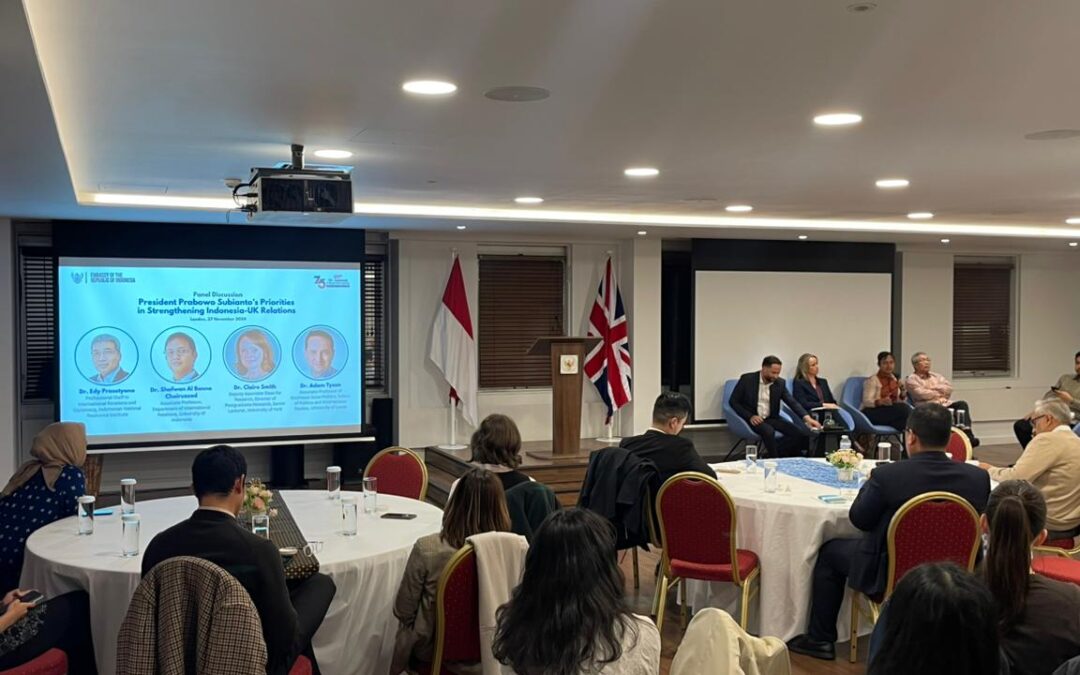
- 27 November 2024: Pertemuan dan diskusi di Kedutaan Besar Republik Indonesia (KBRI) London.
- 28-29 November 2024: Pertemuan di University of Leeds untuk membahas persiapan pembukaan Kelas Khusus Internasional/Double-Degree Program.
- 30 November 2024: Penandatanganan Kesepakatan (Letter of Implementation) di University of Leeds.
- 1 Desember 2024: Kepulangan ke Jakarta.
Delegasi dan Agenda Kerja
Delegasi FISIP UI yang mengikuti kegiatan ini terdiri dari lima orang, yaitu Asra Virgianita, Ph.D. (Ketua Departemen), Ardhitya Eduard Yeremia, Ph.D. (Sekretaris Departemen),Broto Wardoyo, Ph.D. (Ketua Program Pascasarjana), Shofwan Al Banna Choiruzzad (Manajer Riset dan Publikasi FISIP UI) serta Edy Prasetyono, Ph.D. (Dosen Senior HI UI). Agenda utama kunjungan ini meliputi:
- University of Leeds: Pembahasan persiapan pembukaan Kelas Khusus Internasional/Double-Degree Program. Hasil dari pertemuan ini adalah penandatanganan kesepakatan terkait roadmap target pembukaan kelas internasional dan kegiatan-kegiatan yang akan dilakukan.
- KBRI London: Diskusi mengenai program internasionalisasi DHI FISIP UI dan identifikasi dukungan yang dapat diberikan oleh KBRI. Selain itu, dilakukan diskusi mengenai kebijakan luar negeri Indonesia pasca pemerintahan Joko Widodo dari perspektif akademisi, yang bertujuan memberikan masukan kepada kedutaan dan pemangku kepentingan terkait.


Hasil dan Pembelajaran
Kunjungan kerja ini menghasilkan beberapa output penting, antara lain:
- Kesepakatan: Kesepakatan dengan University of Leeds terkait pembukaan Kelas Khusus Internasional/Double-Degree Program.
- Surat Dukungan dari KBRI London: Dukungan untuk program internasionalisasi DHI FISIP UI.
- Policy Brief: Masukan kebijakan luar negeri Indonesia untuk KBRI London.
Kegiatan ini menunjukkan komitmen DHI FISIP UI dalam meningkatkan kompetensi dan jejaring internasional mahasiswa, serta memperkuat kerja sama akademik dengan institusi luar negeri. Dengan adanya program Kelas Khusus Internasional/Double-Degree, diharapkan mahasiswa DHI FISIP UI dapat memperoleh pengalaman dan wawasan global yang lebih luas, mendukung upaya mencerdaskan kehidupan bangsa.
Oct 19, 2024 | event
Depok, 19 Oktober 2024 – The Department of International Relations at Universitas Indonesia, in collaboration with Yonsei University, the Ban Ki Moon Foundation, and SMA Budi Cendekia Islamic School, Depok, as contributors to international development, recognize the need for education on the Sustainable Development Goals (SDGs) as a foundation for the development of countries worldwide. Under the direction of Dr. Asra Virgianita supported by the team of Dr. Gracia Paramitha and Ahmad Hidayat, the SDG 12 contribution promotion and internalization program has been running since July 2024, until the peak event this October.
This contribution is implemented through the organization of the “Implementation of a Culture and Arts Education Model based on SDGs,” integrated with the Art and SDGs Film Festival on Saturday (19/10) at SMA Budi Cendekia Islamic School. This event celebrates the power of art in influencing social change, in line with the Ban Ki Moon Foundation’s mission to promote global citizenship and sustainable development. The event is expected to be an innovative educational platform that combines creativity with education.
The festival facilitate the high school students to presents their talents and creativity for social change by showcasing a series of short films created by the students, focusing on one of the United Nations’ Sustainable Development Goals (SDGs), Goal 12: Responsible Consumption and Production, with a special emphasis on the issue of food waste.

The festival aims to raise awareness about the growing importance of food waste issues and their impact on the environment. By encouraging students to explore this theme through the art of filmmaking, the event hopes to inspire the younger generation to be more creative and take action in sustainable living and responsible consumption practices.
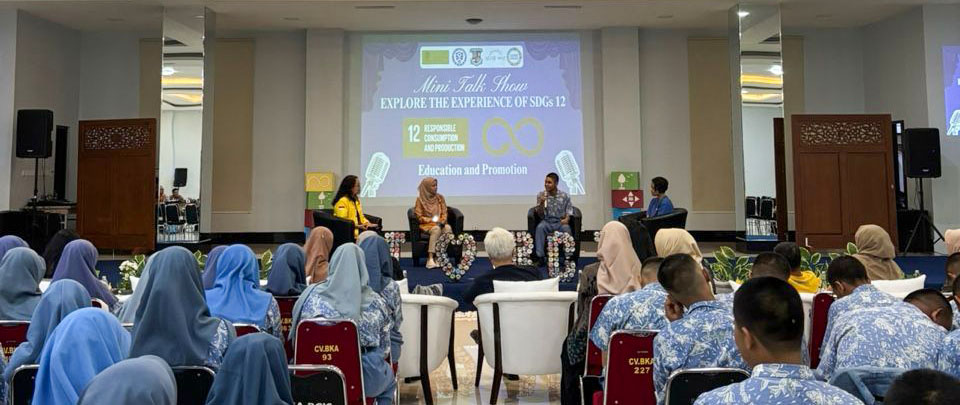
The event began with remarks from representatives including the Principal of SMA Budi Cendekia Islamic School, Bayu Indah Susanti, S.Pd., the Vice Dean for Academic Affairs, Publications, and Student Affairs of FISIP UI, Nurul Isnaeni, Ph.D., a representative from Yonsei University - Professor Jung Tae Yong, and also the Regional Secretary of Depok City, represented by the Expert Staff for Economic and Development Affairs of the Regional Secretary of Depok City, Mrs. Agung Sugih Arti. The activities continued with a talk show featuring student representatives, teachers from SMA Budi Cendekia Islamic School, and Hasta Trida, a young filmmaker from In-Docs. This discussion highlighted impressions and messages related to the making of short films, as well as the implementation of SDG 12 in activities at SMA Budi Cendekia Islamic School.
The event culminated with the screening of short films and the announcement of six winners in each evaluation category: best editing, best director, best videography, best substance, best concept, and best video all-rounder. By organizing this festival, students are expected to gain a deeper understanding of the importance of reducing food waste and highlight initiatives that young people can take to contribute to global sustainability efforts.
Oct 4, 2024 | event
Seoul, Korea Selatan – Dalam upaya memperkuat kolaborasi akademik internasional dan meningkatkan pengaruh global dalam studi gender dan masyarakat transnasional, Departemen Hubungan Internasional FISIP Universitas Indonesia mengirimkan Dr. Ani Widyani Soetjipto sebagai Visiting Fellow ke Yonsei University. Kegiatan ini berlangsung pada 24-28 September 2024 dan berfokus pada isu gender dan masyarakat transnasional Indonesia.
Yonsei University, salah satu universitas riset terkemuka di Korea Selatan, memiliki reputasi global yang kuat dalam bidang sosial dan politik. Kerja sama ini bertujuan untuk memperdalam kolaborasi dalam pendidikan, penelitian, dan pengembangan program akademik antara kedua institusi. Program ini juga sejalan dengan Memorandum of Understanding (MoU) yang telah disepakati antara Departemen Hubungan Internasional FISIP UI dan Yonsei Graduate School of International Studies (GSIS).
Series of Activities
Kegiatan dimulai dengan keberangkatan Dr. Ani pada 24 September 2024 dari Bandara Internasional Soekarno Hatta menuju Bandara Internasional Incheon, Korea Selatan. Setibanya di Seoul pada 25 September, Dr. Ani disambut oleh pejabat Kedutaan Besar Indonesia di Seoul yang juga alumni Departemen Hubungan Internasional FISIP UI.


Pada 26 September, Dr. Ani mengadakan diskusi santai dengan alumni, staf, dan dosen Yonsei University GSIS serta Ewha Women University. Diskusi ini membahas potensi kolaborasi dan kerja sama akademik di masa depan.
Puncak acara berlangsung pada 27 September dengan kegiatan public lecture yang diselenggarakan oleh Center of International Studies, Yonsei GSIS. Dr. Ani memberikan paparan mengenai demokrasi yang menurun dan HAM di Indonesia. Acara ini dihadiri oleh mahasiswa, dosen, dan staf terkait, termasuk mahasiswa asal Indonesia.
Kegiatan diakhiri dengan kepulangan Dr. Ani ke Indonesia pada 28 September, dibantu oleh staf KBRI Seoul.
Poin-Poin Penting dan Pembelajaran
- Memperkuat Kolaborasi Akademik Internasional: Kegiatan ini memperdalam kerja sama antara Departemen Hubungan Internasional FISIP UI dan Yonsei University, khususnya dalam bidang studi gender dan masyarakat transnasional.
- Memanfaatkan Reputasi Global Yonsei University: Kerja sama ini meningkatkan visibilitas dan pengaruh studi yang dilakukan oleh kedua institusi.
- Berbagi Kepakaran: Dr. Ani berbagi pengetahuan dan pengalaman mengenai isu-isu HAM, demokrasi, gender, dan transnasionalisme, memperkaya wawasan peserta dan mendorong diskusi konstruktif.
- Membangun Jaringan Akademik: Melalui kegiatan seperti public lecture dan diskusi, Dr. Ani memperluas jaringan profesional, membuka peluang untuk kolaborasi penelitian di masa depan.
- Mendorong Keterlibatan Akademisi Indonesia: Sebagai akademisi Indonesia pertama yang memberikan paparan di Yonsei GSIS, Dr. Ani menjadi inspirasi bagi rekan-rekan akademisi lainnya.
- Membuka Komunikasi dan Potensi Kolaborasi: Kegiatan ini membuka peluang kerja sama dengan lembaga terkait seperti Ewha Women University dan Kedutaan Besar Indonesia di Seoul.
Kegiatan ini menunjukkan pentingnya menjalin kerja sama internasional, berbagi kepakaran untuk kemajuan bersama, dan terus memperluas jaringan akademik guna meningkatkan kualitas pendidikan dan penelitian.