Sep 24, 2024 | event
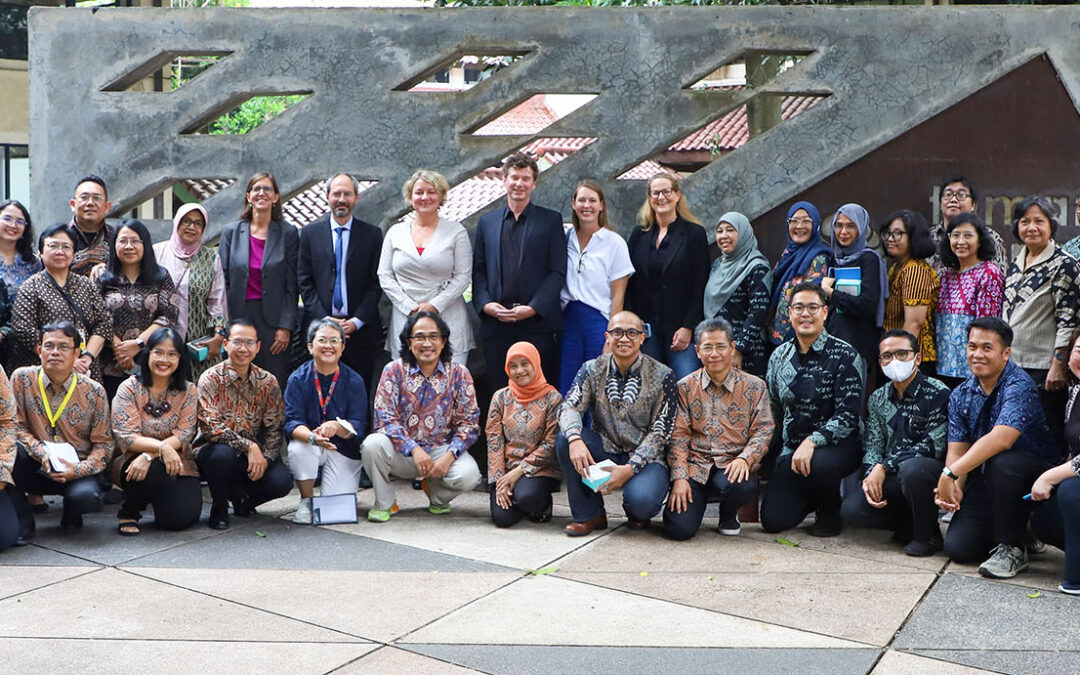
Depok – In an effort to enhance the quality of education globally and ensure that the programs offered meet standards, the Department of International Relations has undergone an international accreditation process that began in early 2023. The culmination of this process was a site visit by Accreditation Agency in Health and Social Sciences (AHPGS), which took place from September 23 to 24, 2024. AHPGS is a highly reputable German accreditation agency that provides comprehensive assessments of various disciplines at the undergraduate and postgraduate levels. Their evaluations cover aspects such as curriculum, teaching quality, infrastructure, and academic support for students.
This visit involved two prominent assessors, Prof. Dr. Sandra Destradi from Albert-Ludwigs-University Freiburg and Prof. Dr. Jakob Lempp from Rhine-Waal University of Applied Sciences, who have extensive experience in evaluating International Relations programs in various countries.

Series of Activities
On the first day, Monday, September 23, 2024, the two assessors were officially welcomed at the University Administration Building by the leadership of FISIP UI, namely Prof. Dr. Semiarto Aji Purwanto, Dean of FISIP UI, accompanied by Nurul Isnaeni, Ph.D., and Dwi Ardhanariswari Sundrijo, Ph.D., Vice Deans of FISIP UI. The visit also involved university leaders who were present to warmly welcome the assessors. After the welcoming session, the assessors proceeded to the Mochtar Riady Building on the 2nd floor to conduct a series of in-depth interviews with teaching staff at the undergraduate and postgraduate levels from the Department of International Relations. The participating lecturers included Prof. Dr. Fredy B.L. Tobing, Prof. Evi Fitriani, Ph.D., Ali Abdullah Wibisono, Ph.D., Ardhitya E. Yeremia Lalisang, Ph.D., Asra Virgianita, Ph.D., Emir Chairullah, Ph.D., Edi Prasetyono, Ph.D., Dr. Ani Widyani Soetjipto, Hariyadi Wirawan, Ph.D., and Gracia Paramitha, Ph.D. The lecturers shared information about the curriculum, research, and their teaching experiences in the Department of International Relations.
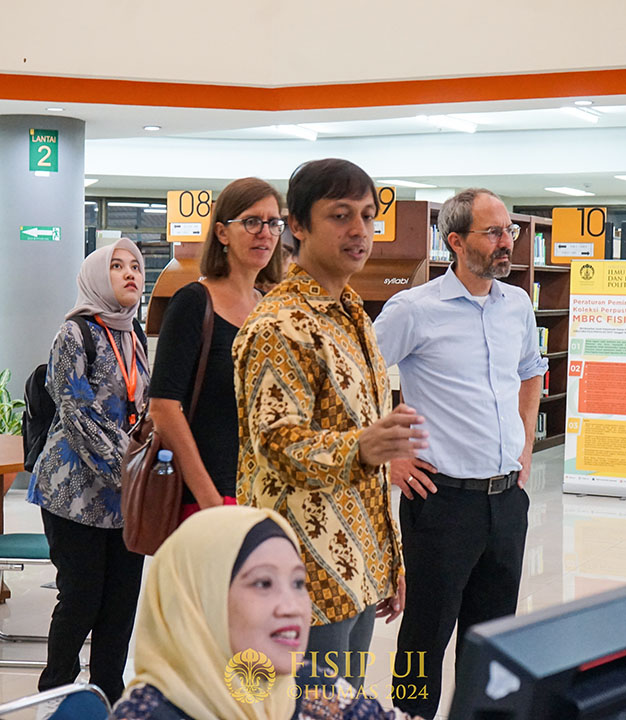
 After the intensive interview sessions, the assessors were invited to take a campus tour around the UI Depok campus. The tour started from the FISIP area, followed by visits to the Central Unit of the Department of International Relations (UPDHI) and the UI International Office. This tour provided the assessors with the opportunity to see firsthand the academic facilities, laboratories, and various other support services available to students on the UI campus. This accreditation visit is an important part of the Department of International Relations’ efforts to continuously innovate and ensure that the academic standards applied are competitive at the international level.
After the intensive interview sessions, the assessors were invited to take a campus tour around the UI Depok campus. The tour started from the FISIP area, followed by visits to the Central Unit of the Department of International Relations (UPDHI) and the UI International Office. This tour provided the assessors with the opportunity to see firsthand the academic facilities, laboratories, and various other support services available to students on the UI campus. This accreditation visit is an important part of the Department of International Relations’ efforts to continuously innovate and ensure that the academic standards applied are competitive at the international level.
Sep 13, 2024 | event
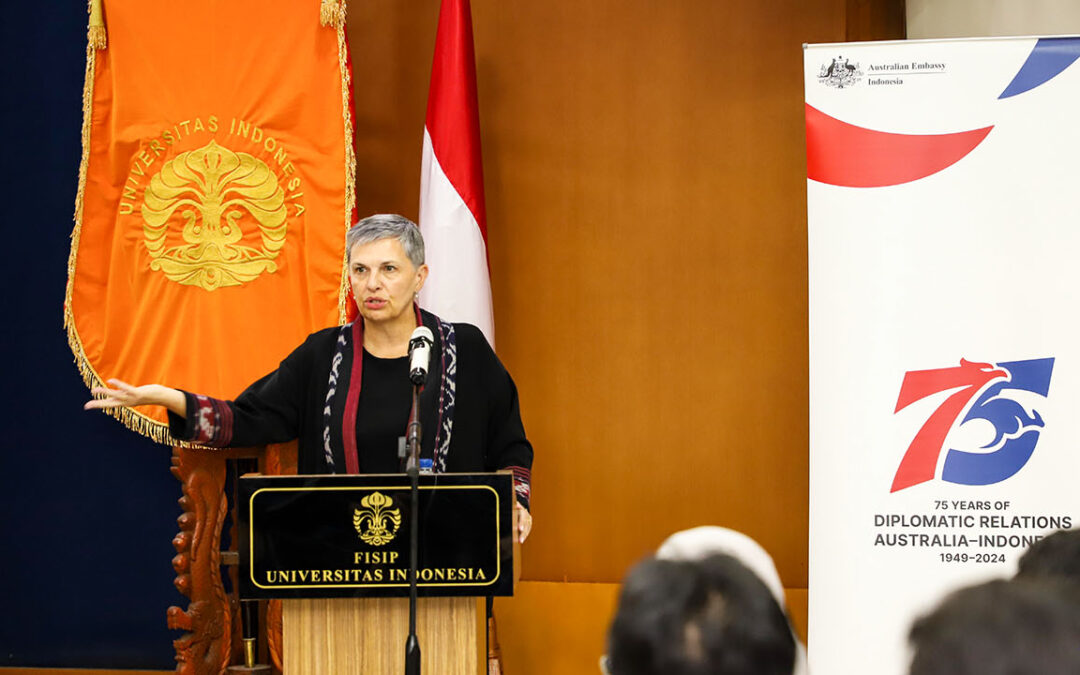
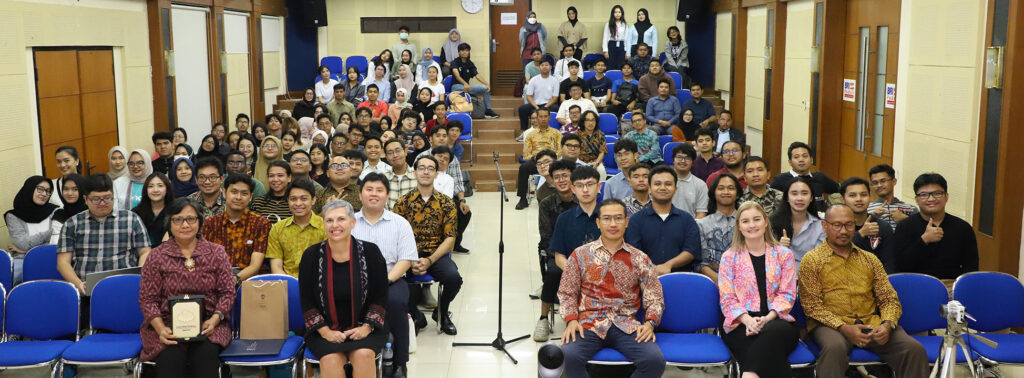
Depok, September 13, 2024 – The Department of International Relations at the Faculty of Social and Political Sciences, University of Indonesia, proudly hosted a studium generale titled “Modern Australia and Its Role in the World,” featuring the Australian Ambassador to Indonesia, H.E. Penny Williams PSM. This public lecture was held on Friday, September 13, 2024, at the Communication Science Auditorium, FISIP UI, and was attended by a large number of students from the International Relations Study Program. The event aimed to provide a deeper understanding of Australia’s role in the international arena, particularly in terms of its diplomacy and foreign policy that influence the global order and bilateral relations with other countries, including Indonesia.
The public lecture was opened by Professor Evi Fitriani, Ph.D., a Professor of International Relations, who stated that Indonesia and Australia have a good relationship. Therefore, this public lecture is expected to broaden insights into Australia and its foreign policy, leading to more collaborations in the future. Following this, Dr. phil. Yandry Kurniawan, the Head of the Undergraduate Program in International Relations, also delivered a welcome speech. In his remarks, he expressed hope that the visit of the Australian Ambassador to Indonesia, H.E. Penny Williams PSM, could be the first step in strengthening relations with the Department of International Relations, as many students focus on Australia in their final projects.

The event continued with an opening by Ristian Atriandi Supriyanto, M.Sc., a lecturer in the Department of International Relations who acted as the moderator. He facilitated the public lecture by guiding an interactive discussion between the Ambassador and the participants. During her presentation, H.E. Penny Williams PSM highlighted various important aspects of Australia, from the cultural diversity that characterizes the country to Australia’s foreign policy based on its values, interests, and national identity. H.E. Penny Williams PSM emphasized that Australia prioritizes not only regional cooperation but also inter-regional relations, including with Indonesia. Additionally, in the context of evolving international relations, Australia, as part of the Pacific region, faces several global challenges such as climate change, maritime security, and other issues that require special attention.
After the presentation by Ambassador H.E. Penny Williams PSM, the public lecture continued with a Q&A session with the students. The public lecture concluded with the presentation of a souvenir from the Department of International Relations to Ambassador H.E. Penny Williams PSM as a token of appreciation for her presence. This event is expected to strengthen the relationship between Australia and Indonesia and contribute positively to the development of knowledge in the field of international relations.
Aug 12, 2024 | event
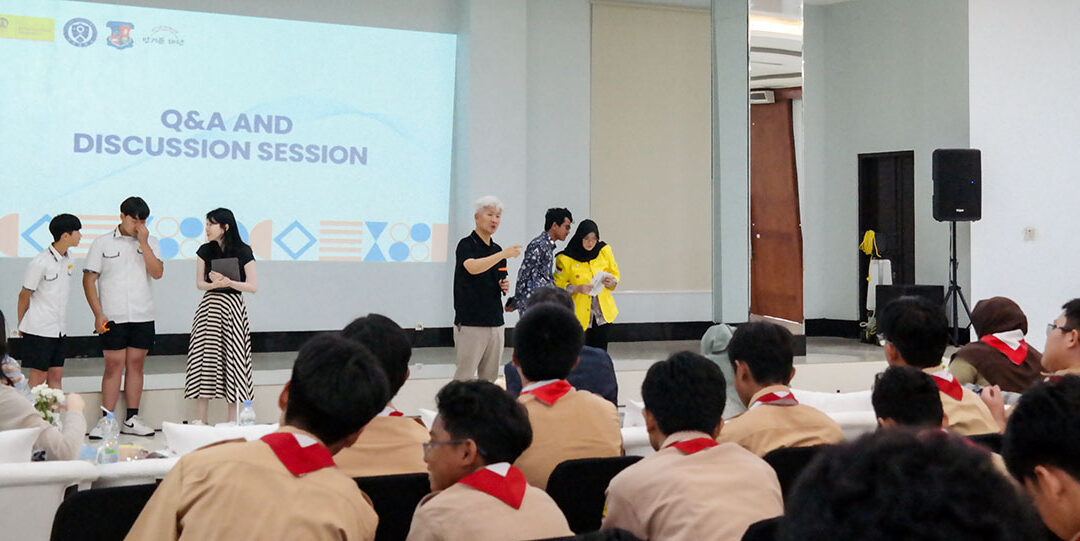
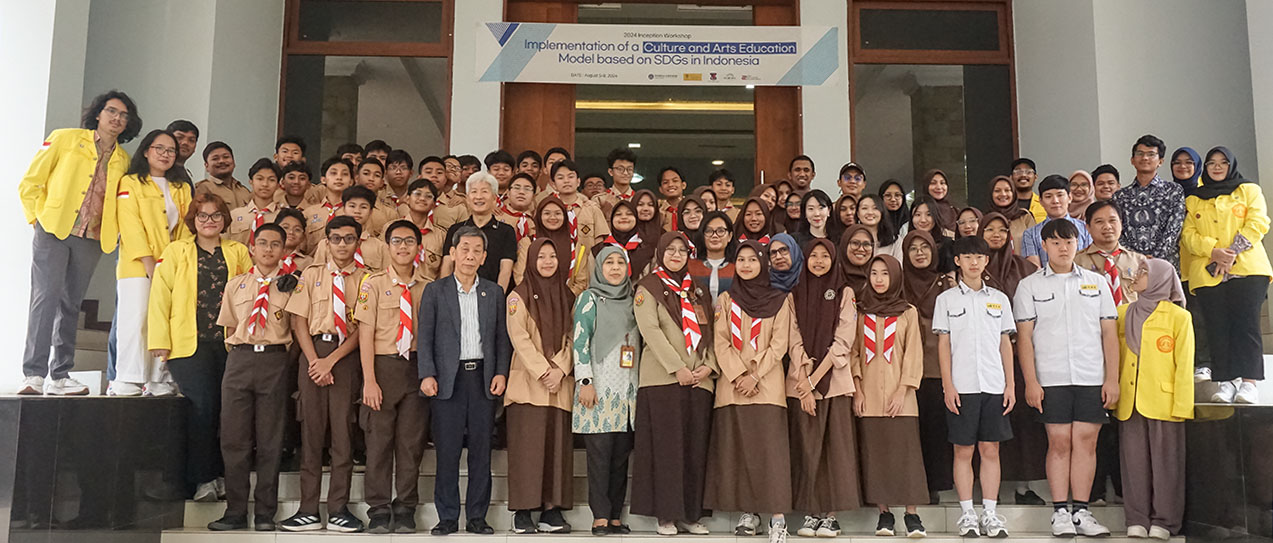
Depok, August 7, 2024 – The Department of International Relations, Faculty of Social and Political Sciences, University of Indonesia (HI FISIP UI) in collaboration with Yonsei University Graduate School of International Studies (Yonsei GSIS) Korea, Ban Ki-Moon Foundation, and Budi Cendekia Islamic High School (BCI) Depok, held a seminar on promoting the Sustainable Development Goals (SDGs), specifically SDG No. 12 on responsible consumption and production. This event took place in the BCI High School Hall, Depok, on Wednesday, August 7, 2024, from 09:30 to 12:00 WIB. A coordination meeting was held face-to-face at the FISIP UI Dean’s Office the day before the socialization activity, attended by Prof. Dr. Semiarto Aji Purwanto, Dean, and Nurul Isnaeni, Ph.D., Vice Dean of FISIP UI, the committee from the HI UI Department, Yonsei University, Ban Ki-Moon Foundation, and representatives of BCI High School teachers.
The socialization activity was opened by the Head of BCI High School, Mrs. Bayu Indah Susanti, who warmly welcomed the delegation from Korea and the organizing committee from HI FISIP UI. She emphasized the importance of raising high school students’ awareness of SDGs issues, especially the problem of food waste, which is one of the main environmental issues in Indonesia. The Head of the HI FISIP UI Department, Asra Virgianita, Ph.D., conveyed the importance of learning about SDGs for high school students as future leaders to care about the environment while enjoying the process of activities.
Prof. Tae Yong Jung from Yonsei University and Director Lee from the Ban Ki-Moon Foundation also gave their remarks. They appreciated the enthusiasm of the school and students, which is expected to be the key to the success of promoting SDG No. 12 through cultural arts activities that have been carried out by schools in Korea. All of this is a voluntary action and inspiration from the former Secretary-General of the United Nations (UN), Ban Ki-Moon, who is also a major promoter of the 2030 SDGs agenda.

This program also aims to show the importance of achieving the SDGs for global welfare. High school students can contribute to realizing this through campaign actions, creating songs, videos, or other promotional tools that are creative and culturally artistic. This event was attended by student representatives from each class X of BCI High School, as well as teachers, the student parent association, and the Budi Cendekia Foundation.
In this activity, Ahmad Hidayat, M.Sc., a lecturer at HI FISIP UI, presented material related to the SDGs, including the 17 goals agreed upon globally since 2015. The focus of the presentation was SDG 12 (Sustainable Consumption and Production), accompanied by photos and videos that attracted students’ attention. This session was interactive, with students expressing their opinions and accompanied by the screening of an SDGs promotional music video created by Gracia Paramitha, Ph.D., a lecturer at HI FISIP UI. The students enthusiastically sang the SDGs song along with its movements.
Additionally, students from Daeje Middle School Korea participated by introducing their campaign on reducing food waste through a choir project. They shared their experiences and works in implementing SDG 12 at their school.
The event concluded with a question-and-answer session and interactive discussion between BCI High School students and the speakers. This session was very enthusiastic, with questions exploring deeper into the motivation, inspiration, process, challenges, and other important notes for successfully promoting SDGs through arts and cultural activities.
With the implementation of this event, it is hoped that BCI High School students in Depok can understand and implement the values of the SDGs in their daily lives and become active agents of change in creating a better world.
This activity is part of a series of activities to implement the SDGs mainstreaming program for BCI High School students with arts and cultural works in the form of a film festival to be held in October 2024. It is hoped that this program can run smoothly and be beneficial for students and have a positive impact on the surrounding and global environment in the future.
Jul 26, 2024 | event
On Tuesday, 23 July 2024, Universitas Indonesia hosted a momentous occasion, the “2024 Universitas Indonesia Degree Awarding Ceremony for International Students,” which brought together 53 graduates from various disciplines across the university. This special event, a highlight of the academic calendar, not only celebrated the accomplishments of these international graduates but also showcased Universitas Indonesia’s commitment to global education and cultural diversity.
The Department of International Relations is proud to be the only department to represent FISIP UI in the ceremony. The department was proudly represented by four international graduates from the master’s degree program. They are from Mexico, Madagaskar, Iran, and Timor Leste. They were congratulated for their degree by the secretary of the university, dr. Agustin Kusumayati, M.Sc., Ph.D. and the Dean of FISIP UI, Prof. Semiarto Aji Purwanto.
In the ceremony, the students were accompanied by the Head of Graduate Program, Broto Wardoyo Ph.D. Currently, the Graduate Program hosts another seven international students from diverse countries in Africa, Asia, and the Middle East. This number is expected to increase along with the Department of International Relations internationalisation goal. The department has been working on this goal through the ongoing international accreditation and the partnership on student mobility with international universities. In the future, the Department of International Relations will continue to broaden its international network by creating programs to establish more engagement with international institutions.
Beyond its celebratory nature, the ceremony served as a platform for Universitas Indonesia to strengthen its international partnerships and showcase its academic progress toward an internationally celebrated university. Distinguished guests including deans, vice deans, lecturers, as well as representatives from partner universities, embassies, and other academic institutions across Indonesia, attended, highlighting the university’s role in fostering global connections and collaborations.
For the Department of International Relations, the ceremony marked a significant milestone in their ongoing efforts to host and support international students, contributing to a vibrant and inclusive campus environment. It highlighted the department’s dedication to delivering world-class education and nurturing future global leaders.
In essence, the 2024 Universitas Indonesia Degree Awarding Ceremony for International Students not only celebrated academic excellence but also reinforced Universitas Indonesia’s position as a leading institution dedicated to fostering international understanding and academic excellence.
Jul 3, 2024 | event
The Department of International Relations at the Faculty of Social and Political Sciences, Universitas Indonesia (FISIP UI), completed a major international visit from June 17-23, 2024. Led by Dr. Asra Virgianita, Dr. Ardhitya Eduard Yeremia Lalisang, and Dr. Broto Wardoyo, the delegation visited two universities in Japan: Ritsumeikan Asia-Pacific University in Fukuoka, and Ritsumeikan University in Osaka, as well as two universities in China: the Chinese University of Hong Kong in Shenzhen and Xiamen University in Xiamen.
The visit aimed to strengthen academic collaborations and foster relationships with prominent universities in Japan and China. Discussions at each institution focused on potential research partnerships, academic exchange programs, and participation in international conferences. The delegation actively engaged with faculty members and administrators to explore avenues for mutual learning and cooperation in the field of international relations.


A significant milestone during the visit was the signing of collaborative agreements with Ritsumeikan Asia-Pacific University, Japan and Xiamen University, China. These documents solidify commitments to mutual academic support and exchange, laying the groundwork for future collaborations in research, education, and professional development.
A conversation regarding the future collaborative project between the Department of International Relations FISIP and Asia-Japan Research Institute, Ritsumeikan University Japan was also an important first step in forming an international research environment. The similar plan was also brought in the meeting between the department and School of Social Science and Humanities, the Chinese University of Hong Kong to build a subject specific to social sciences research collaboration.
The delegation also participated in the "Indonesia and the World Interdisciplinary, Interregional, and Intersectoral Conference" at Xiamen University, where they presented research papers and engaged in scholarly discourse on related global issues. This conference provided a platform to network with scholars from various disciplines, promoting cultural understanding and academic synergy.
The international visit highlighted the Department of International Relations FISIP UI’s commitment to expanding its global presence and advancing academic excellence through international partnerships. The department looks forward to building upon these collaborations to enrich academic opportunities and deepen understanding in international relations.
Jun 13, 2024 | event
Depok, 30 May 2024 – The Department of International Relations, Faculty of Social and Political Sciences, Universitas Indonesia, held a seminar on "Searching for the Midpoint of Democracy: Between National Security and Civil Liberties" on 30 May 2024. This event took place from 13.30 to 16.00 WIB at the Auditorium Ilmu Komunikasi and presented several speakers to discuss how to find a balance between the needs of the authorities to maintain national security and ensure that the rights to free-speeches are still fulfilled regarding the issue of the use of spyware in Indonesia.

Broto Wardoyo, Ph.D., lecturer in the Department of International Relations, as moderator, opened the discussion by providing a brief overview of how the issue of spyware in the context of national security and civil liberties is becoming increasingly relevant in society. From a regulatory perspective, Dr. Sulistyo, Deputy for Cyber and Crypto Security for Government and Human Development at BSSN RI, explained the importance of data protection as a national issue.
Brig. Pol. I Made Astawa, Deputy Head of Densus 88 AT Polri, explained that wiretapping carried out by Densus 88 is an important instrument in countering terrorism and emphasized that the main principle in implementing wiretapping is respecting the civil rights while maintaining national security. From a journalist's perspective, Herik Kurniawan, Editor-in-Chief of GTV and Chair of the Indonesian Television Journalists Association (IJTI), explained the role of the media as the fourth pillar of democracy with the challenge of facing regulations that limit the movement of journalists. Mabda Haerunnisa Fajrilla Sidiq, researcher at The Habibie Center, discussed the visibility of the use of cyber as a surveillance tool from a cyber security perspective.

Dr. A. J. Simon Runturambi, Chair of the SKSG UI National Resilience Study Program, underlined the importance of intelligence reform to accommodate civil liberties without disrupting institutions' authority to maintain national security. Ali Abdullah Wibisono, Ph.D., International Security lecturer at the HI Department of FISIP UI, closed the session by discussing in depth the cyber security landscape in Indonesia, which is influenced by the condition of unfinished nation-building and the importance of answering the fundamental question: "Security for whom?" and “Security for what?” –
Download Record Note


 After the intensive interview sessions, the assessors were invited to take a campus tour around the UI Depok campus. The tour started from the FISIP area, followed by visits to the Central Unit of the Department of International Relations (UPDHI) and the UI International Office. This tour provided the assessors with the opportunity to see firsthand the academic facilities, laboratories, and various other support services available to students on the UI campus. This accreditation visit is an important part of the Department of International Relations’ efforts to continuously innovate and ensure that the academic standards applied are competitive at the international level.