
Autonomy and Rebellion at the China-Myanmar Border: Political Aspirations of the Coup and Conflicts in Myanmar and Their Implications for ASEAN
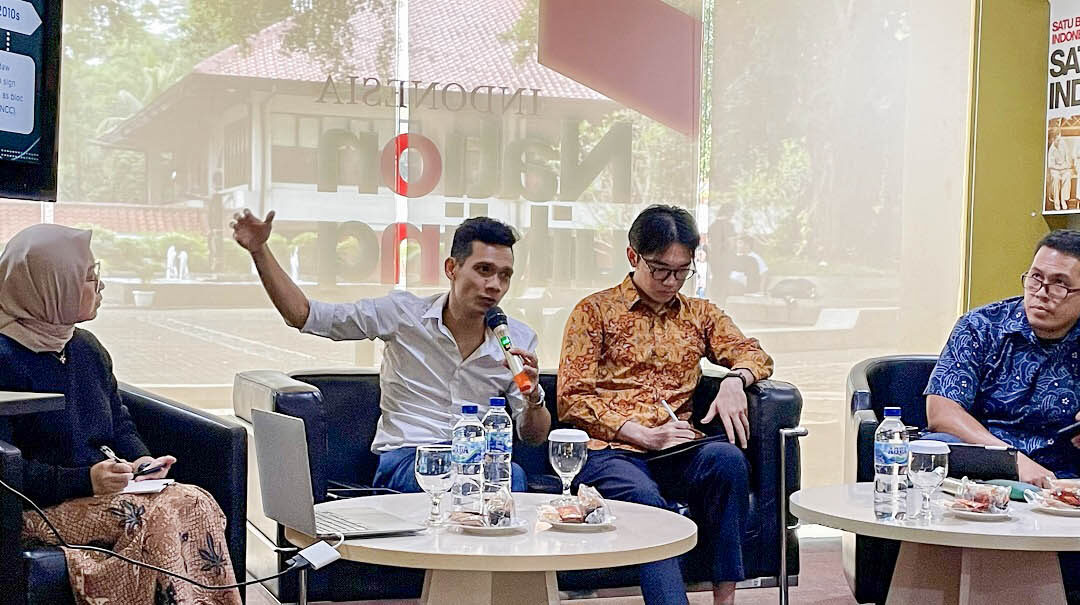
Depok, April 30, 2024 , The Department of International Relations organized a Book Discussion as part of the IR-UI Monthly Discussion series for April, addressing the issue of autonomy and rebellion at the China-Myanmar border due to the Rohingya conflict. The IR-UI monthly discussion took place offline at the Miriam Budiardjo Library (MBRC) at the FISIP UI Campus. Dozens of participants from various study programs attended the event, focusing on the latest book that explores the phenomenon of rebel autonomy in Myanmar post-coup by Singaporean researcher Andrew Ong. In the book titled “Stalemate: Autonomy and Rebellion at the China-Myanmar Border,” the author, a Harvard graduate researcher, deeply examines the case of the United Wa State Army (USWA), which has 30,000 members at the Myanmar-China border. This ethnographic study reveals how diverse forms of autonomy in Myanmar’s border areas have reshaped the political order post-coup, raising questions about the country’s integrity.
The book discussion was moderated by Nida Rubini, a young researcher in the Department of International Relations, who guided the book discussion by first listening to Andrew Ong’s presentation on his work. This was followed by responses and discussions attended by two experts, namely Ali A. Wibisono, Ph.D. – Lecturer in International Relations at UI and researcher at the Habibie Research Center UI, and Patrick Kurniawan, Ph.D. In this book discussion, participants had the opportunity to hear summaries of important cases and stories presented in the book. One of the main points raised was how rebel autonomy in the mountains is not only about defense against the lowland state but also a relational relationship maintained through the management of politics and the flow of capital and people to the mountainous areas. This discussion provided deep insights into the political dynamics in Myanmar and their implications for the country’s political future, as well as potential implications for security and stability in the Southeast Asia/ASEAN region.
This book is not only an in-depth analysis of the political realities in Myanmar but also offers important reflections on various visions of autonomy by different armed groups in the country. Using the concrete case of the United Wa State Army, this book becomes an important guide to understanding the political complexities in Myanmar’s border areas and makes a valuable contribution to the study of international relations and comparative politics. The book discussion event concluded with a group photo with all participants, which is expected to serve as a medium for further collaboration in the future between the FISIP UI academic community and external researchers related to human rights issues, conflicts, and Myanmar. For more information about this book and the IR-UI monthly discussion, please contact the event committee through the press contact listed below.