[HI-NSIGHTS Global Affairs #1] Gereja dalam Gaung Geopolitik: Relevansi Konsep Diplomasi Kepausan (Papal Diplomacy)

Bernadeta Dinar Maharani Hasnadi

HI UI 2023


Menurut Bartz (2022), “Paus… adalah salah satu sosok paling menonjol di dunia hari ini karena sangat banyak orang yang memperhatikan perkataannya”. Lebih dari 1.900 tahun telah berlalu sejak Yesus Kristus menitipkan Gereja Katolik kepada Petrus, para Paus tetap menjadi sosok masyhur dalam tampuk perpolitikan dunia.

Keistimewaan Paus tidak terlepas dari kedudukan gandanya sebagai ketua Gereja Katolik: kepala negara, sekaligus pemimpin umat. Di satu sisi, Paus merupakan simbol formal yang berkuasa beserta Kuria Roma, dewan administratifnya di Vatikan (Araujo, 2011). Di sisi lain, Paus juga dimaknai sebagai naungan bagi lebih kurang 1,4 miliar pemeluk Katolikisme. Hal ini memberikan Paus daya ungkit (leverage) yang dahsyat dalam mempraktikkan soft power secara luas. Paus merupakan aktor negosiasi serta diseminasi makna, nilai, dan norma kemanusiaan secara transnasional.

Sejumlah literatur akademik menyepakati bahwa ciri ini merupakan pembeda Paus dari pemimpin negara pada umumnya yang berjalan seturut logika kuasa (power) dan kepentingan (interest) (Maluwa, 1986; Troy, 2008; Araujo, 2011; Bartz, 2022; Rozario, 2024). Dengan demikian, praktik diplomasi yang dilakukan oleh Paus sebagai aktor internasional, atau disebut pula dengan diplomasi kepausan (papal diplomacy), merupakan sejenis diplomasi berbasis nilai (value-based diplomacy). “Ketidaklaziman” dari diplomasi kepausan ialah intensi yang cenderung “tidak politis”. Dalam mengkritik kebijakan luar negeri sebuah negara besar yang dianggap melanggar hak asasi manusia, misalnya, Paus tidak bertindak selaku politisi, tetapi seorang uskup yang berupaya menegakkan ajaran agamanya. Atribut ini memperkuat kredibilitas Paus sebagai otoritas moral, khususnya tatkala menyikapi dinamika dunia sesuai konteks waktu pada saat itu.

Sepanjang sejarah, para Paus, yang kian identik dengan upaya penciptaan perdamaian (peace-making), ulet mempertahankan haluan Gereja melalui berbagai media: surat pastoral, kunjungan, pidato publik, hingga unggahan daring. Yohanes Paulus II (masa kepausan 1978–2005), misalnya, melalui permintaan untuk menerbitkan Kompendium Ajaran Sosial yang diterbitkan pada 2004, mengidentikkan Gereja sebagai “komunitas”, “interaksi”, “harmoni”, dan “relasi antarmanusia”. Tindakan ini tidak terlepas dari “kacau”-nya dunia seiring Perang Dingin usai, mengakibatkan fragmentasi tatanan multilateral, gelombang demokratisasi, dan krisis moralitas yang Huntington (1996) juluki sebagai “benturan peradaban” (clash of civilizations), khususnya pasca-9/11. Perang Teluk dan konflik besar lain dinilainya sebagai “petualangan tanpa jalan pulang” (“adventure with no return”) yang sia-sia.

Sementara itu, Paus Fransiskus (masa kepausan 2013–2025), lebih tersohor karena keberpihakannya terhadap kemanusiaan. Tindakannya mencuci kaki narapidana pada peringatan Kamis Putih, misalnya, merupakan sinyal tersirat kepada dunia bahwa Gereja berpihak terhadap kelompok termarginalisasi. Melalui ensiklik seperti Laudato Si’ and Fratelli Tutti, Paus Fransiskus turut bersuara seputar humanisme dan lingkungan hidup, mengutip kembali Deklarasi Universal Hak Asasi Manusia (UDHR), yang, tampaknya, kian kehilangan relevansinya imbas gesekan geopolitik.

Tak lama setelah Paus Fransiskus berpulang, Paus Leo XIV keluar untuk menyapa umat di balkon Basilika Santo Petrus. Hegemoni Amerika Serikat yang melemah, tetapi pada saat bersamaan masih “menciprat” ke banyak negara dalam wujud tarif unilateral hingga melemahnya komitmen terhadap institusi internasional, kian menggesernya ke bawah lampu sorot. Tak ayal, ia adalah Paus pertama kelahiran Amerika Serikat, sekaligus saksi terhadap pergeseran geopolitik yang terjadi dalam derajat volatilitas yang kian tak terbayangkan. Karena latar belakangnya, ia tampil sebagai sosok yang “pas” dan betul-betul memahami esensi hegemoni yang dikritiknya.

Salah satu tantangan kontemporer yang paling vokal diulas oleh Paus Leo XIV adalah perubahan makna menjadi manusia (human-ness) secara “radikal”. Terorisme oleh aktor non-negara, represi pers, dan masih banyak fenomena lain turut memperlihatkan bahwa krisis human-ness telah menjamur secara transnasional, serta harus dilawan dengan persebaran norma kemanusiaan yang transnasional pula. Dalam ensiklik perdananya, Magnifica Humanitas, Paus Leo XIV lalu menetapkan kecerdasan buatan sebagai salah satu ancaman utama terhadap autentisitas pemikiran manusia. Dalam ruang siber yang sarat akan akal imitasi, manusia bukan hanya sekumpulan algoritma biokimia, melainkan makhluk yang harus memberdayakan diri melalui interaksi dengan sesamanya. Gagasan ini juga beresonansi dalam tingkatan yang lebih besar. Terjadinya globalisasi secara VUCA (volatile, uncertain, complex, ambiguous), yang mengakibatkan penggunaan LAWS (lethal autonomous weapons systems), atau senjata berbasis kecerdasan buatan dalam perang, telah cukup lama menimbulkan pertanyaan mengenai moralitas dalam hukum humaniter.

Dalam segala keterbatasan (constraints) yang ditimbulkan krisis geopolitik hari ini, Paus Leo XIV tetap kukuh pada tiga prinsipnya, yakni perdamaian positif, keadilan, dan kebenaran yang tecermin melalui tanggung jawab sosial dan pelibatan masyarakat sipil (Leo XIV, 2025). Ia pun tampil sebagai kontrahegemoni. Keberaniannya mengkritik Trump, sambil berhati-hati untuk tidak terkesan terlalu ikut campur, menunjukkan kehendaknya menjadi mediator yang moderat. Pada saat bersamaan, Paus Leo XIV memperlihatkan inklusivitas terhadap aktor yang selama ini tersisihkan dalam bahasan geopolitik dunia. Lawatannya ke beberapa negara Afrika pada pertengahan 2026, misalnya, secara implisit menyampaikan keberpihakan Gereja terhadap titik panas (hotspots) konflik dan negara kecil (Hasnadi, 2026).

Tinjauan historis menandakan bahwa setiap Paus memiliki pembawaan masing-masing. Namun, hakikat diplomasi kepausan tetap sama: normativitas dan kesetiaan terhadap ajaran Gereja. Hal ini membuktikan adanya pendirian yang netral, tetapi tetap adaptif dalam menyeimbangkan tradisi keagamaan dan sesuatu yang lebih “sekuler”, yaitu perubahan sistem internasional.

Konsep diplomasi kepausan memang kerap menuai kritik. Pengaruh Paus sering dinilai terlalu dibesar-besarkan karena nyatanya sangat bergantung pada eksposur media massa serta persepsi masyarakat global terhadap Gereja (Byrnes, 2017). Akibat sekularisasi ilmu pengetahuan, yang marak terjadi selama Abad Pencerahan sekitar tahun kelahiran bentuk negara Westphalian, konsep ini juga kerap dinilai terlalu normatif dan idealistis (Troy, 2008). Diplomasi kepausan ditengarai tidak berguna ketika gencatan senjata masih jauh dari genggaman dan banyak daerah yang dikunjungi oleh para Paus masih mengalami eskalasi konflik.

Terlepas dari kritiknya, diplomasi kepausan berperan krusial dalam menanamkan keyakinan bahwa agama bukanlah sumber kekerasan secara mutlak, tetapi sebaliknya, justru berpotensi menjadi pupuk bagi bertumbuhnya spirit kemanusiaan universal. Diplomasi kepausan menjadi salah satu cara untuk “memanusiakan manusia” dan meringankan ketegangan geopolitik tanpa perlu melibatkan artileri. Para Paus menunjukkan bahwa studi hubungan internasional sudah selayaknya melihat individu, dan bukan hanya negara, sebagai aktor yang berdampak (impactful). Di atas segalanya, kajian diplomasi kepausan menawarkan alternatif bagi studi hubungan internasional yang selama ini dipahami sebagai arena ketakutan, ketidakpastian, realpolitik, dan anarki. Mengutip Kardinal Jean-Louis Tauran (2002), hubungan internasional tidak lagi dapat dipahami sebagai “fatalisme sejarah”; disiplin ini, sebaliknya, harus yakin bahwa “manusia bisa mengubah jalan dunia”.

Daftar Pustaka

Araujo, R. J. (2011). The Holy See – International Person and Sovereign. Ave Maria International Law Journal, 1(1), 1–60. https://ssrn.com/abstract=2141779.

Bartz, J. (2022). The Holy See: An Institution Like No Other. Claremont-UC Undergraduate Research Conference on the European Union, 2022(1), 1–8. https://doi.org/10.5642/urceu.RSYU8632.

Byrnes, T. A. (2017). Sovereignty, Supranationalism, and Soft Power: The Holy See in International Relations. The Review of Faith & International Affairs, 15(4), 6–20. https://doi.org/10.1080/15570274.2017.1392140.

Francis (2020, Okt 3). Fratelli Tutti: Encyclical Letter of the Holy Father on Fraternity and Social Friendship. The Holy See. https://www.vatican.va/content/francesco/en/encyclicals/documents/papa-francesco_20201003_enciclica-fratelli-tutti.html.

— (2015, Mei 24). Laudato Si’: Encyclical Letter of the Holy Father on Care for Our Common Home. The Holy See. https://www.vatican.va/content/francesco/en/encyclicals/documents/papa-francesco_20150524_enciclica-laudato-si.html

Hasnadi, D.M. (2026, Jul 9). Is the Clock Finally Striking the Hour of ‘the African Moment’? Modern Diplomacy. https://moderndiplomacy.eu/2026/07/09/is-the-clock-finally-striking-the-hour-of-the-african-moment/.

Huntington, S.P. (1996). The clash of civilizations and the remaking of the world order. New York: Simon and Schuster.

Leo XIV (2025, Mei 16). Audience to Members of the Diplomatic Corps Accredited to the Holy See: Audience of the Holy Father Leo XIV. The Holy See. https://www.vatican.va/content/leo-xiv/en/speeches/2025/may/documents/20250516-corpo-diplomatico.html.

— (2026). Magnifica Humanitas: Encyclical Letter on Safeguarding the Human Person in the Time of Artificial Intelligence. Vatikan: Libreria Editrice Vaticana.

Maluwa, T. (1986). The Holy See and the concept of international legal personality: some reflections. The Comparative and International Law Journal of Southern Africa, 19(1), 1–26. https://www.jstor.org/stable/23905611.

Pontifical Council for Justice and Peace (2004). Compendium of the Social Doctrine of the Church to His Holiness Pope John Paul II, Master of Social Doctrine and Evangelical Witness to Justice and Peace. Vatican Publishing House. https://www.vatican.va/roman_curia/pontifical_councils/justpeace/documents/rc_pc_justpeace_doc_20060526_compendio-dott-soc_en.html.

Rozario, M. (2024). Theorizing Catholicism in International Relations: An English School Framework. The Review of Faith & International Affairs, 22(1), 75–86. https://doi.org/10.1080/15570274.2024.2303290.

Tauran, J-L. (2002, Apr 22). The Presence of The Holy See in the International Organizations [Lecture at the Catholic University of the Sacred Heart, Milan]. The Holy See. https://www.vatican.va/roman_curia/secretariat_state/documents/rc_seg-st_doc_20020422_tauran_en.html.

Troy, J. (2008). The Catholic Church: An Underestimated and Necessary Actor in International Affairs. Georgetown Journal of International Affairs, 9(1), 65–73. https://www.jstor.org/stable/43134169.
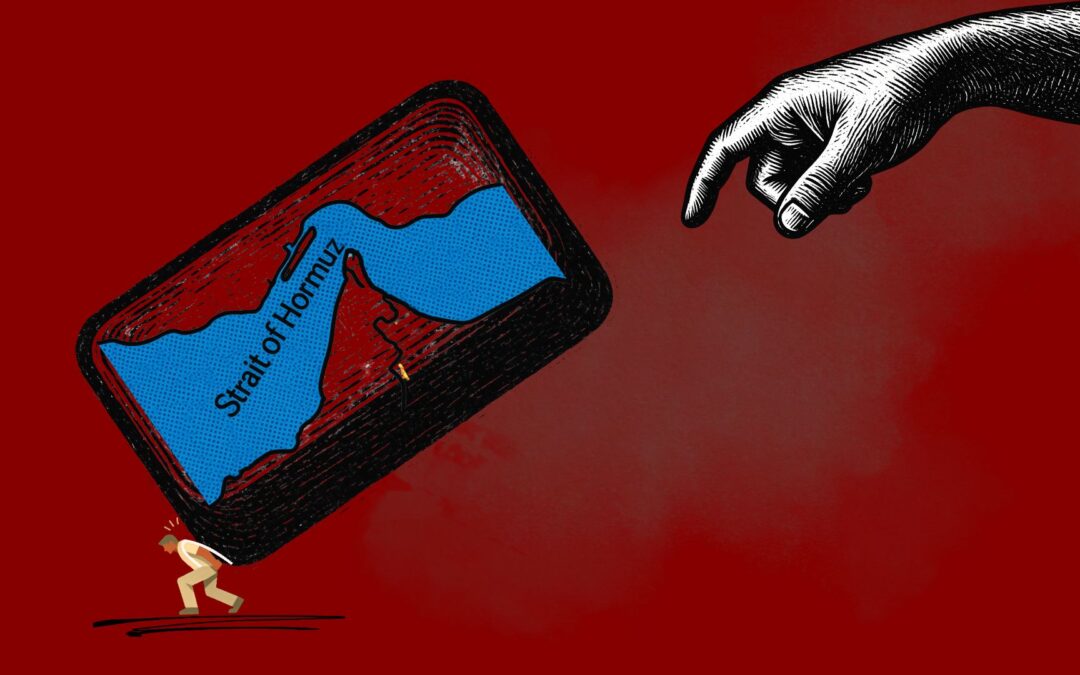
Down on The Southern Coast: Iran’s Maritime Strategy in the Strait of Hormuz

Down on The Southern Coast: Iran’s Maritime Strategy in the Strait of Hormuz

Vol. VII / No. 16 | October 2026

Authors:

Bilqiis Ayu Syifa – Undergraduate Student, Department of International Relations, Universitas Indonesia


Summary

Following the initial strike from the United States (U.S.) and Israel, Iran effectively closed The Strait of Hormuz in response. Despite the presence of a relatively stronger U.S. navy based near the strait, questions arise as to how Iran can launch its military operation in the strait. Using the framework of  ‘Grey Zone Operations’, Iran’s closure of the Strait of Hormuz can be deconstructed into three main variables (the ends, the ways, and the means) that are going to explain how Iran’s actions were a maritime strategy. Evidenced by the economic pressure that Iran generates through, at least, four avenues (international engagement, lawfare, influence operations, and integrated approach) utilizing instruments and resources that Iran developed on their own. This deconstruction illustrates how Iran’s maritime strategy enables it to counter a more superior naval force, achieve its strategic objective, and avoid any disproportionate damage.

Keywords: Iran, Hormuz Strait, Grey Zone Operations

Introduction

In February 2026, the United States of America (U.S.) and Israel launched strikes against several Iran facilities, including nuclear facilities, military bases, and missile infrastructure. The strike pushed Iran to use its primary strategic leverage: closing the Strait of Hormuz waterway. Although the U.S. maintains a naval base in Bahrain (which is not far from the Strait of Hormuz), Iran’s closure can not be easily countered, even by a conventionally superior naval presence. Therefore, it raises a question as to how Iran could launch its maritime strategy in the Strait of Hormuz with the U.S. navy shadowing the area. This article addresses the question using the ‘Grey Zone Operations’ framework by Geoffrey Till through one of his books Seapower: A Guide for the Twenty-First Century (2026). In order to deconstruct a study case, the Grey Zone Operations framework uses an ‘Ends-Ways-Means’ approach to illustrate how Iran defends its country using coercive force below a full-scale military operation to fulfill its objective without facing excessive damage.


The Ends: Economic Pressure

The Strait of Hormuz is a vulnerable waterway as it acts as the only door from and to the Persian Gulf. In 2025, around 25% of the world seaborne oil trade and 19% of the world seaborne liquified natural gas (LNG) trade pass through this waterway. By the second month of the closure, shipments of crude oil, LNG, and fertilizer-related products (the commodities that dominate the trade in this waterway) dropped sharply, almost touching zero. Crude oil vessel transit declined by up to 95%, representing 30%-33% of the world trade volume. LNG vessel transits dropped extremely up to 99%, almost stopping the whole shipment through the strait, representing 20% of the world trade volume.  Vessel transits carrying fertilizer-related products also fell sharply, almost to zero in March. Although trade in this commodity shifted somewhat, the decline still reached as much as 87%, and the affected flows represent 30% of world trade volume.

As the U.S. continues to plan its military action in the strait, Iran has responded by closing off the strait and any aggression from the U.S. will result in further strikes. As of October 2026, the numbers of vessel attacks continue to plunge. Resulting in slowing down oil exports and spiking crude oil prices, that has touched $100 per barrel. Besides oil, food security issues are also rising as the trade flow of fertilizer-related products is jammed. The impact is no longer in regional scope with countries along the Persian Gulf facing direct hindrance of their trade, it has become a global concern, even for the U.S.

Beyond exerting pressure on global trade, the closure imposed significant costs to the U.S. military as the opponent of Iran in the war. With the combination of geographical gain and an unconventional method, Iran with cheap drones and sea mines was able to withhold U.S. attempts on penetrating the Strait of Hormuz.


The Ways and Methods: Iran’s Endeavor to Reach Its Objective 

Iran’s endeavor can be divided into four: international engagement, lawfare, influence operations, and integrated approach. First, Iran engaged several countries to cultivate international support. Iran openly declared to welcome countries in the Strait of Hormuz except for the U.S. and its alliances, pushing some countries (Pakistan, India, Turkey, China, France, and Italy) to pursue diplomatic efforts with Iran in exchange for a safe passageway for their vessels.  Besides building support from countries that it has already established a good relationship with, Iran also collects support from Oman (U.S. alliance) with a ‘non-discriminative fee’ offer for ships that are passing through the Strait of Hormuz. 

Second, Iran utilized the legal ambiguities around the Persian Gulf jurisdiction. Iran’s navy (Islamic Revolutionary Guard Corps Navy [IRGCN]) made use of the overlapping rule of law in the Strait of Hormuz, including the complicated narrow and congested Strait of Hormuz from the oil rig, dispute on overlapping jurisdiction claim, and traffic separation schemes for sudden ambushes.  Additionally, Iran made a GPS signal spoofing that makes it difficult for law-abiding victims by puzzling them on where they are and what they are allowed to do.  Beside that, to maintain the legal status on its control above The Strait of Hormuz, Iran rejected lawsuits against their country: Iran’s action is not a form of closing the waterways, but merely an adjustment during a war; The requirements that Iran gave such as  giving an early notification, special line, monitoring, up to vessels check to determine neutrals and nonneutrals party; Iran stated that its action was legal by law.  Iran’s maneuver that is still considerably legitimate under the law makes it impossible for them to get legal sanctions.

Third, Iran shaped a doctrine that strengthened domestic support while weakening their opponent. This doctrine was built through a long history of Iran as an Islamic Shiah country with a martyrdom complex. In fact, Ali Khamenei who was loathed before he was killed by the Israeli bomb, came to be viewed as a martyr by many Iranians.  This doctrine is maintained by the IRGCN that challenged opponents with a more conventional approach.

Therefore, the three components that have been explained before need one commando to run it. An integrated approach is needed to make sure there is one common objective. This point is depicted in Iran’s military operation that is cohesive between components, both Iran’s government and military have one common objective that is taking control of the strait. The cohesion between components is manifested through Iran’s effort to dam the international support while using the legal loopholes and navy power.


The Means and Resources: Utilization of Iran’s Benefit

Sufficient resource capacity is one of the requirements to work out a military operation. However, the war between the U.S. and Iran displayed a clear capacity gap between the navies. This asymmetrical position can be put into good use, if Iran utilizes it well. Instead of chasing what the U.S. has, Iran innovated its own tactic and developed their own technology. Since the 1980s, the IRGC has been investing to develop drones and owning an armory with 41 different types of missile, drone, torpedo, and drone carrier.  Deployments also included sea mines and ‘mosquito fleet’, a small vessel that is harder to detect by a traditional navy device.  Iran sought to turn its adversary’s strength into a vulnerability by developing military technologies targeted at U.S. capital ships that operate around Iran’s water and U.S. naval base around the Persian Gulf as it acts as the U.S. naval command center in the region.

Aside from making a great use out of the resources, Iran’s hold of the Strait of Hormuz is backed by the fact that the closure is responsible for, at least, a few percent of the world’s energy trade that is also impacting the U.S. The weaponization of the energy supply chain does not only affect the global economy, but it also increased security hostility around U.S. alliances.


Conclusion

Therefore, Iran military operation in The Strait of Hormuz is understood as Grey Zone Operations maritime strategy through fulfillments of every three main variables from the Ends-Ways-Means approach. Iran adopted a Grey Zone Operations maritime strategy that doesn’t aim a one-on-one war with the U.S. and made a good use out of its resources by developing unconventional instruments that are far different from the U.S. conventional instruments. Iran reached its objective by not following standards that the U.S. set, but using a maritime strategy that put their country at advantage.

Aside from that, the Iran-U.S. war with the closure of The Strait of Hormuz becomes an interesting perspective for other strategic waterways, such as chokepoints in other areas. The Strait of Hormuz becomes a contemporary example of how sensitive the global economy is to chokepoint and how a maritime strategy can be applied to a grey area with overlapping claims. This case underscores the likelihood that similar strategies could be deployed in other strategic maritime chokepoints.

AUKUS’s Acceleration of Pillar II in Responding to Threats from China and Japan’s Dilemma

AUKUS’s Acceleration of Pillar II in Responding to Threats from China and Japan’s Dilemma

Vol. VII / No. 15 | October 2026

Authors:

Lavanya Eliana Yudhistira – Undergraduate Student, Department of International Relations, Universitas Indonesia


Summary

AUKUS is a trilateral security partnership between Australia, the United Kingdom, and the United States, established to strengthen power in the Indo-Pacific region. During Pillar I, the ambition was to build nuclear-powered submarines for Australia. However, the long and complex process of developing these submarines created challenges for AUKUS in achieving its goals, especially in creating immediate deterrence to China. China’s growing technological capabilities leading to security threats have led AUKUS to prioritize and accelerate Pillar II. This prioritization aims to develop advanced capabilities faster and create immediate effect against China’s expanding power in the area. Pillar II opens room for external partners, including countries like Japan, whose advanced technological base and geographic position make it a valuable asset. This commentary uses Stephen M. Walt’s Balance of Threat theory to explain why the trilateral security partnership was created and why it prioritized Pillar II. It then examines why Japan, despite its strategic value, remains an external partner rather than a member, arguing that institutional and domestic constraints explain this.

Keywords: AUKUS, Balance of Threat, Pillar I, Pillar II, Japan.

Introduction

As great power competition continues, the dynamics of state security evolve. The growing importance of advanced dual-use technologies has expanded how states assess military and strategic power beyond the quantity of conventional military assets. The growing technological dimension of security threats has transformed the way states approach alliance politics and has grown awareness of the digital sector in national defense. Traditional, rigid military alliances are now being complemented by functional minilateral cooperation focusing on technology development and cybersecurity.

China is seen as having a strong naval power in the Indo-Pacific area, granting them easier access to project power across the Indo-Pacific. The response to threats in the area is clearly illustrated by the formation of AUKUS in 2021, a trilateral security pact between Australia, the United Kingdom, and the United States. As seen on the Pillar I agreement, AUKUS focuses on building Australia’s capacity for nuclear-powered submarines to ensure deterrence against China. AUKUS takes advantage of Australia’s strategic location in the Indo-Pacific. However, the lengthy process of Pillar I has limited AUKUS’s ability to provide immediate deterrence against China.

This condition has led to the implementation of AUKUS Defense Ministerial Joint Statement on 30 May 2026. The ministers of defense from each AUKUS member met to accelerate the implementation of Pillar II (Advanced Capabilities). AUKUS’s acceleration of Pillar II is due to high tech being seen to advance faster and hold more tangible results than the submarine project in Pillar I. AUKUS’s Pillar II shows strategies such as the acceleration of AI technology, quantum technologies, undersea capabilities, and advanced cybersecurity. Pillar II’s focus on advancing technology needed for defense has opened opportunities for external actors, and reflects back AUKUS’ original intention in making Japan a member. Japan’s involvement in AUKUS’ development of military technology projects also raises questions as to why Japan, with great strategic value and who also faces threats from China, is not part of AUKUS by 2026. This commentary first uses the Balance of Threat Theory to explain the formation of AUKUS and its acceleration on the Pillar II. It then explains why Japan, despite its strategic value, has remained an external partner in selected AUKUS projects rather than becoming a member.


The Formation of AUKUS: A Balance of Threat Response to China

According to Stephen M. Walt’s Balance of Threat theory, an alliance is formed to respond to perceived threats and not only to power alone, with threats determined by aggregate power, geographic proximity, offensive capability, and aggressive intentions. The formation of AUKUS is the manifestation of that calculation. The aggregate power is seen through the spike of China’s defense budget as high as 7% and has reached 277 billion USD (Rp. 4,650 trillion). The US Department of War indicates that the number for China’s defense spending is greater, reaching 388-526 billion USD. This isn’t seen merely as statistics, but as a warning of how China’s maritime power is restructuring and becoming a threat to stability around the area.

China’s offensive capability poses a threat through its military advancement. Intercontinental Ballistic Missiles (ICBM) like the DF-61 and DF-31BJ contribute to the broader threat perception among AUKUS members. These capabilities, combined with China’s advancement in Unmanned Undersea Vehicles and Unmanned Aerial Vehicles (UAV), pushes AUKUS to accelerate its own technological development. Even though aggressive intentions are impossible to confirm, militarization in the South China Sea and the constant pressure on Taiwan contribute to the perception of a growing threat. Geographic proximity operates indirectly for AUKUS, since the US is far from China, Australia’s position on the southern edge of the Indo-Pacific gives the US access to sea lanes and straits in Southeast Asia that Chinese military activity could disrupt. Together, these factors lead AUKUS to focus more on deterrence against China.


The Acceleration of Pillar II: Prioritising Dual-use Technology

When it was first formed in September 2021, AUKUS focused primarily on Pillar I, aiming to provide Australia with nuclear-powered attack submarines (SSNs) to deter aggression and preserve stability in the Indo-Pacific. Australia’s commitment is seen through the massive investment of four billion Australian dollarA$ at the start, which can later reach up to thirty billion A$ for the submarine’s infrastructure. However, the implementation of Pillar I is generational and long-term, and it’s estimated to be completed by 2040. The long process limits AUKUS’s ability to respond to China’s rapidly evolving threats. Therefore, AUKUS has prioritized its focus through the acceleration of Pillar II (Advanced Capabilities) as a balancing strategy which offers a faster yet more effective response.

The acceleration of Pillar II reflects the adaptive nature of balancing. AUKUS countries through Pillar II give greater priority to dual-use technologies than to the quantity of military assets. Encompassing eight core areas, including artificial intelligence (AI), cyber capabilities, quantum technologies, undersea capabilities, hypersonics, and electronic warfare, Pillar II serves as a balancing strategy against China while Australia awaits its nuclear-powered submarines. By launching its first Signature Project in mid 2026, the development of AI-driven Unmanned Undersea Vehicles, AUKUS has simplified its technology transfer bureaucracies to generate immediate deterrence, allowing AUKUS to signal to China that its technological integration into military operations has advanced and grown to be an important part of AUKUS’s deterrence strategy.


Japan and AUKUS: Strategic Value versus Domestic and Institutional Constraints

Japan was once seen as one of the strongest candidates to be a part of AUKUS. While Balance of Threat explains AUKUS’s formation, Japan’s absence from membership could be explained by domestic and institutional factors. Since AUKUS’s formation, Washington has signaled interest in integrating Tokyo to strengthen deterrence in the Indo-Pacific. U.S. Ambassador to Japan, Rahm Emanuel (2022-2025), once noted that Japan was projected to become AUKUS’s first partner in Pillar II’s functional projects. Japan’s defense industry, critical geographical position, and advanced technological capabilities are what make Japan a strategic asset in balancing China’s military expansion. The reality says otherwise, the geopolitical urgency of the AUKUS alliance collides with fragile domestic and institutional constraints.

Japan is strategically strong but its institutional framework is not yet compatible with AUKUS. An analysis by Professor Michito Tsuruoka from Keio University in 2024 stated that Japan’s cyber defense architecture and information protection standards have not met the same standard as AUKUS’s members. Japan’s cyber regulations do notdon’t meet information security and anti-espionage standards, especially when Pillar II focuses on highly sensitive military technology sectors such as AI and quantum computing. Even though Japan established a new law back in May 2026 and has launched a new National Intelligence Bureau (NIB), these developments indicate that Japan still has a long way to go before it can be considered to be integrated into the alliance. Japan’s Atomic Energy Law also reflects Japan’s sensitivities around nuclear-related technology. The historical experience of Japan with nuclear weapons also suggests that resistance from the nation might emerge knowing that Pillar I is focused on nuclear-powered submarines. The combination of domestic and institutional limitations explains why Japan stays as an external partner for selected AUKUS rather than becoming a member of AUKUS.


Conclusion and Reflection

AUKUS can be understood as a balancing response to the threat China poses in the Indo-Pacific. Through the Balance of Threat theory, it is seen that the formation is made not only to strengthen power between the three countries, but as a response to China’s spike of rising defense spending, offensive capabilities, technology, and military advancement. AUKUS’s acceleration on Pillar II, focusing more on advanced technological capabilities, shows that balancing is adaptive. AUKUS prioritizes advancing their technology rather than the quantity of conventional military assets seeing the rise of China and how Pillar I will take a long period of time to deliver.

Japan, despite its strategic value, remains an external partner rather than a member of AUKUS. Institutional and domestic reasons such as low standards in regulation, security, and domestic constraints are seen as the reason. Japan’s cyber defense and information protection standards have not reached the same as AUKUS members, which is important since Pillar II involves many uses of sensitive technology. Japan’s law also reflects the possibility that there will be resistance from its people, knowing that AUKUS in Pillar I focuses on nuclear powered submarines. Through Japan, it is proven that a modern alliance doesn’t require a formal format, but can be done through involvement in selected projects, done individually or collectively. Based on the analysis, Japan needs to update their cyber and information security so that they will not lose chances of gaining access to protection and better military technology from other countries, especially AUKUS countries.

Accessibility