
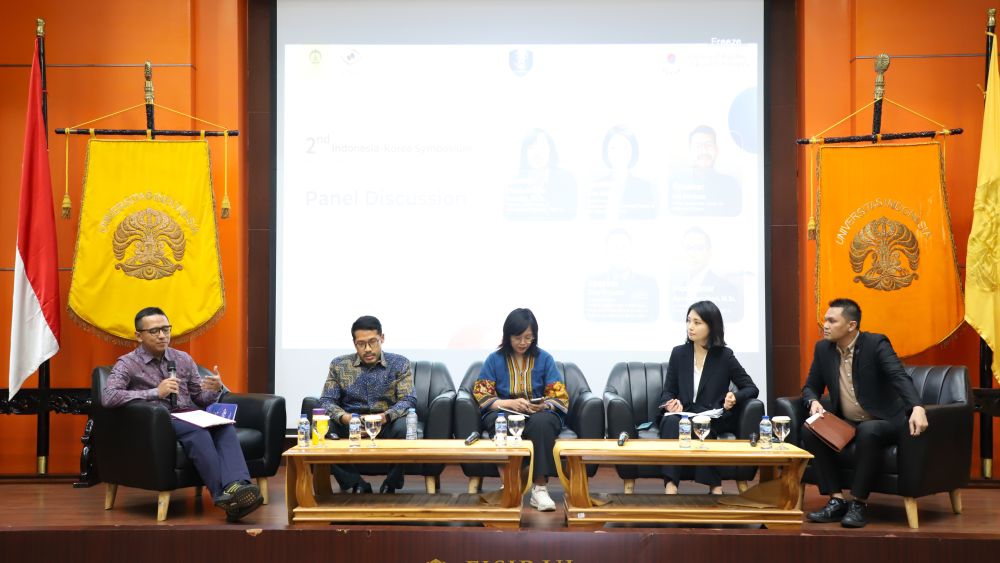
Depok, 10 December 2025 – The Department of International Relations, Faculty of Social and Political Sciences, Universitas Indonesia (IR UI), hosted a public discussion titled “Indonesia–Korea: United Against Digital Terrorism”, bringing together academics, practitioners, and students to examine the evolving challenges of terrorism in the digital era and the importance of international cooperation in addressing emerging security threats.
As digital technologies continue to reshape communication, governance, and social interaction, terrorist networks have increasingly adapted their strategies to exploit online platforms for propaganda, recruitment, financing, and operational coordination. Against this backdrop, the discussion highlighted the need for stronger cooperation between Indonesia and the Republic of Korea in strengthening resilience against digital extremism and cyber-enabled terrorism.
The event provided a platform for participants to explore how technological developments have transformed the security landscape. Speakers emphasized that contemporary terrorism can no longer be understood solely through conventional security frameworks. Instead, governments, academic institutions, technology companies, and civil society organizations must work together to address the multidimensional nature of digital threats.
A key theme throughout the discussion was the growing convergence between cybersecurity and counterterrorism. While digital technologies offer significant opportunities for economic development and social connectivity, they also create new vulnerabilities that can be exploited by extremist actors. Participants noted that social media platforms, encrypted communication channels, and emerging technologies have expanded the operational reach of terrorist organizations beyond traditional geographical boundaries.
The discussion also highlighted the importance of international cooperation in developing effective responses to digital terrorism. Indonesia and South Korea were identified as valuable partners in promoting knowledge exchange, capacity building, and policy innovation in addressing security challenges in the digital domain. Both countries have demonstrated growing commitments to strengthening digital governance while safeguarding democratic values and individual freedoms.
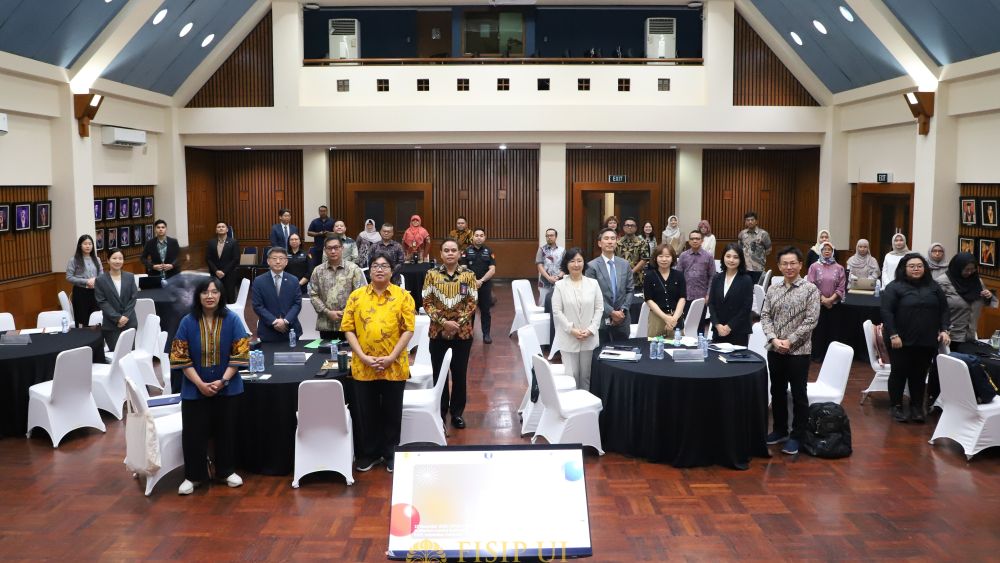
Beyond policy discussions, the event underscored the role of higher education institutions in contributing to public understanding of contemporary security issues. Universities play an important role in fostering critical thinking, promoting digital literacy, and encouraging informed dialogue on emerging global challenges. Through academic engagement and public outreach, institutions such as Universitas Indonesia contribute to building societal resilience against misinformation, radicalization, and extremist narratives.
For IR UI, the discussion reflects its ongoing commitment to examining the intersection of technology, security, and international cooperation. As digital transformation continues to reshape global politics, understanding the implications of cyber-enabled threats has become increasingly important for policymakers, researchers, and future practitioners of international relations.
The event concluded with a shared recognition that addressing digital terrorism requires more than technological solutions alone. Sustainable responses must combine effective governance, international collaboration, public awareness, and inclusive approaches that address the underlying conditions that enable extremist narratives to spread online.
In an increasingly interconnected world, the fight against terrorism is no longer confined to physical spaces. It has expanded into the digital realm, making collaboration, innovation, and knowledge-sharing essential components of contemporary security strategies.